
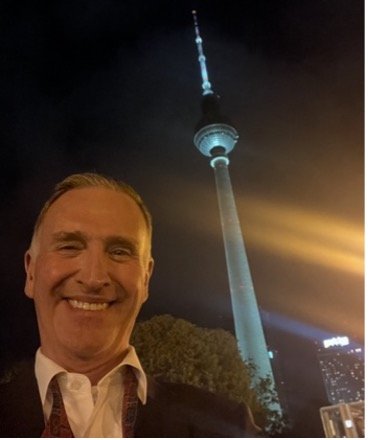
John Pertzborn, KTRS 550 AM, St. Louis, Missouri
It was a week in May that I will never forget. I had the incredible opportunity to participate in the RIAS Fellowship program in Berlin along with a day visit to Leipzig. Having last visited Berlin with RIAS in 1995, it was remarkable to witness firsthand how much Germany- and Berlin in particular- has transformed over the past 30 years. The city’s growth, modernization and renewed energy were evident everywhere, while still preserving the deep historical significance that makes Germany, such an important partner and ally.
One valuable aspect of the fellowship was the opportunity to meet with Germany’s major political party leaders. These conversations provided meaningful insight into the countries, current political climate, the challenges, Germany faces today, and the strong relationship between Germany and the United States. hearing directly from policy makers helped deepen my understanding of how Germany is currently navigating issues such as security, immigration, energy, and the future of a rapidly changing Europe.
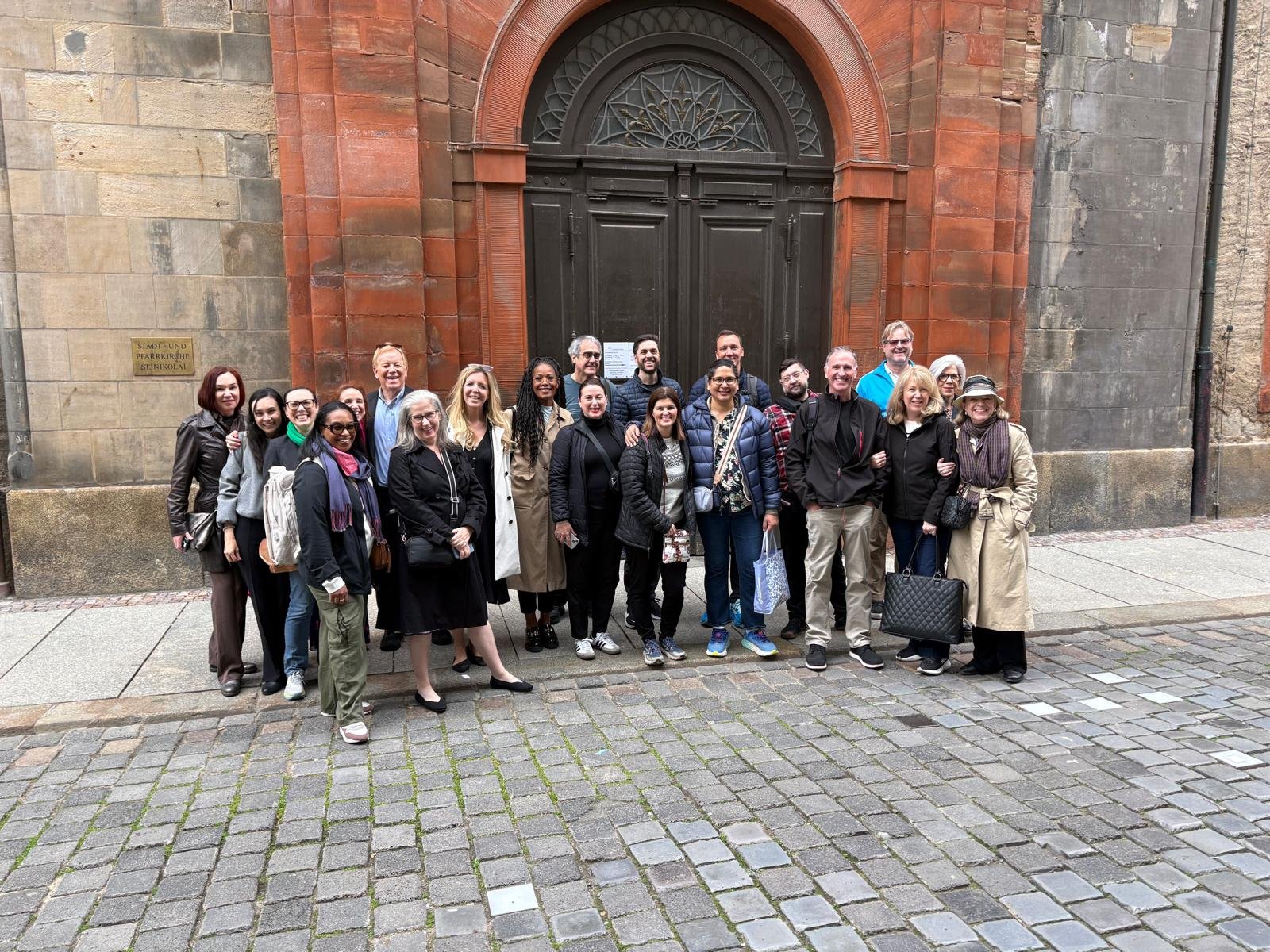
Our visit to Leipzig was especially memorable and deeply moving. The highlight was visiting the only synagogue in Germany, not destroyed by the Nazis prior to World War II. Speaking with the rabbi‘s wife about her family history and her experiences as a Jewish woman living in Germany in 2026, offered a powerful and personal perspective on both the progress Germany has made, and the importance of continuing to confront the lessons of history. It was a conversation I will never forget.
Another important part of the fellowship was meeting with the members of the German Navy and Air Force. As Germany debates the possibility of reinstating mandatory military service for young people at age 18., these discussions provided valuable insight into the country‘s evolving security priorities, and the broader geopolitical reality facing Europe today. It was fascinating to hear directly from military officers about how Germany is preparing for the future while balancing it’s historical legacy.
On a personal level, I learned volumes from our German hosts about everyday life in Germany in 2026 compared to my first visit in 1995. The openness of the conversations, the exchange of ideas, and the willingness to discuss both successes and challenges made this experience, especially meaningful.
Thank you for offering this RIAS program which helps strengthen understanding and cooperation between the United States and Germany, particularly through the work of journalist and media professionals. In a time when global partnerships matter more than ever, these exchanges help, build, trust, perspective, and mutual respect.
I am deeply grateful for this opportunity and for everyone who helped make this RIAS fellowship, such a memorable and impactful experience.
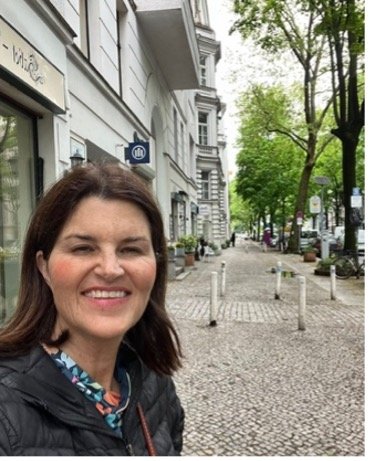
Katherine Bennett, CNN, Atlanta, Georgia
The RIAS Berlin alumni exchange provided participants, like me, with an immersive look at Germany’s political, media, historical, and cultural landscape through a packed week of discussions and behind-the-scenes access in Berlin and Leipzig.
This exciting RIAS program brought journalists face-to-face with leaders and experts from Germany’s media, government, defense, and foreign policy sectors. We met with representatives from the Bundestag, Ministry of Defense, U.S. Embassy, news organizations, and policy institutions to discuss topics ranging from transatlantic relations and security challenges to public opinion and media coverage.
A major highlight, for me, included attending the RIAS Media Awards ceremony and mixing/meeting with so many incredible journalists and friends of RIAS. I also enjoyed viewing the documentary “The Spies Among Us” and meeting with Peter Keup.
I am thankful for this incredible opportunity and enjoyed meeting new friends along the way. A special shout-out to Chris, Pam and Christina for all the hard work they did behind the scenes to make this experience possible.
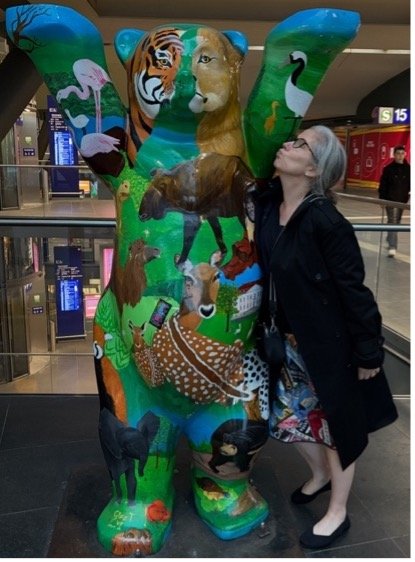
Kristin Fraser, Freelance Journalist, Seattle, Washington
I was a RIAS fellow for the first time in 2003. That trip helped to broaden my worldview and connected me with a cohort of amazing journalists. It was foundational for my journalism career. My return trip 23 years later as a RIAS alumni fellow had all those same big picture ideas, rockstar colleagues and aha moments, including meeting with politicians, journalists, military leaders and think tank luminaries. This time around has me reflecting on some of the smaller, more intimate moments the program has given me.
Walking from speaker to speaker, RIAS Berlin Program Coordinator Christina Reif shared her story of growing up in the communist East Germany and her first trip into the West just after the Wall fell was fascinating. Her family connections in the Soviet Union and her time there as a ballerina brought a deeper understanding of our VE Day trip to the Soviet WWII Memorial.
One evening over drinks, RIAS Executive Director Christoph Jumpelt shared a play-by-play of the day the Wall came down from the perspective of a television journalist. Being able to talk through the complications and the danger with a colleague that was there made the historic moment so much more real for me.
Watching Peter Keup’s story through the documentary ‘The Spies Among Us’ produced by former RIAS alumni was amazing, but being able to sit across the table from him at dinner and talk about life around the film continues to percolate in my head. His honesty and strength had me looking at the people impacted by the Stasi in a new light.
What a gift, not only to just hear these stories, but to be able to ask all the questions buzzing around in my journalist brain. For the second time, I was lucky enough to get another once in a lifetime experience.
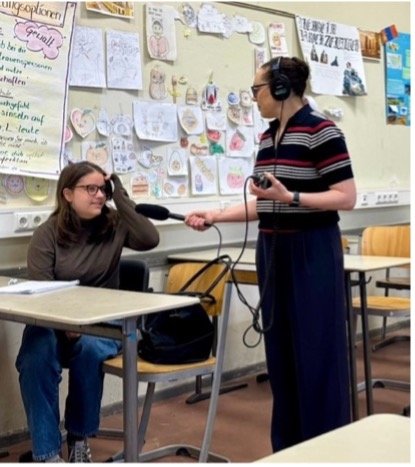
Stephanie Wolf, Colorado Public Radio, Denver, Colorado
Over the last decade, RIAS has immersed me in German history, culture, politics and media, taking my curiosity and career in directions I could not have imagined. That’s why it was so special to return to Berlin in May 2026 for this alumni trip. It was interesting going back to the Bundestag — my first time there was in 2017 also with RIAS — to hear perspectives from some members of Parliament on current geopolitics and what’s ahead for Germany. I appreciated the visits to German newsrooms, like MDR in Leipzig, and the opportunity to learn how journalists are thinking about the current shifting media landscape. I’m grateful for the opportunity to report abroad again, this time visiting with German families, students, educators and experts on the topic of young people and digital technology. And what an honor to attend the RIAS Media Award ceremony at the Rotes Rathaus and celebrate this year’s awardees as RIAS marked 80 years. But I especially enjoyed meeting the other RIAS alumni on this trip, learning about their past experiences with the fellowship and how their careers have unfolded since. I was also able to reconnect with journalist friends in Germany and make news ones. I feel journalistically rejuvenated and inspired after many conversations over meals or cocktails — I also got a nice injection of motivation from the screening of a documentary at the Stasi Museum produced by RIAS fellows called “The Spies Among Us.” The central figure in the film, former Stasi prisoner and now historian Peter Keup, was in attendance and generously shared more about his story and experiences. But I want to end this note with again emphasizing what, for me, has been an extraordinary aspect of RIAS, being a part of a transatlantic network of thoughtful and engaged journalists. This is what I always carry with me after I’ve returned home and go back into my newsroom, the people you meet through this program who have all made me a better person and a better journalist.
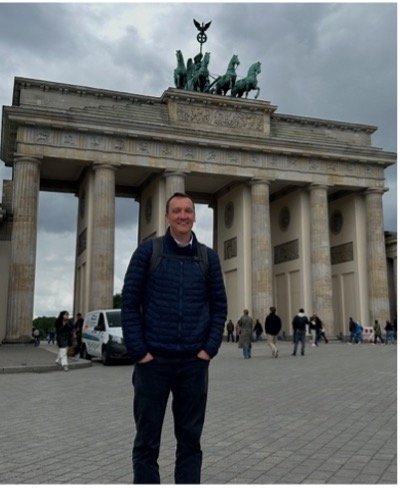
Chuck Johnston, CNN, Atlanta, Georgia
In the aftermath of World War II, my family—like many in Germany—struggled to find work. My grandmother, who was a homemaker, began writing children’s books for a small Catholic publisher in Kassel. One of her books, Anne und das Tor zur Welt, (Anne and the Gateway to the World), told the story of a girl from a small village who found adventure by hitching a ride on a local milk truck. That journey opened little Anne’s eyes to the larger world. Thinking about her adventures all those years ago made me smile, as opening my own worldview during the RIAS Berlin Alumni Fellowship felt remarkably similar. (Though, when running on schedule, Deutsche Bahn certainly makes better time across the countryside than a milk truck!) My last visit to Berlin was in 2013 with the RIAS Summer Fellowship. Returning thirteen years later, I was struck by how drastically the media landscape and geopolitics were different. It was a fascinating time to be in Berlin, witnessing America’s evolving global role and its direct impact on European leadership and alliances. Germany’s media challenges also hit close to home, echoing the outdated financial structure and growing political pressures we face in American journalism.
During the program, we reconnected with German RIAS alumni who had visited CNN in Atlanta over the years. It was wonderful to see the impact those station visits left on them. The RIAS coordinators did a phenomenal job assembling a diverse group of American and Canadian freelance, national, and local journalists. We quickly became fast friends. That is the true magic of RIAS: the connections stay with you long after the program ends. My ultimate full-circle moment came when our alumni group screened The Spies Among Us, a new documentary about the East German Stasi secret police. The film explores the opening of “Pandora’s box”—the public release of secret files that forced families to confront the truth about who had informed on their private conversations. The documentary was produced by Jamie and Gabe, two RIAS fellows I met during my 2013 trip and have stayed close with ever since. It was incredible to realize that their visit to a Stasi prison all those years ago sparked the project we were now screening. That is the power of RIAS: building and bridging relationships within the American and German media, confronting challenging history, and leaning into tough conversations about our present and future. It has been an eye-opening journey—just like Anne on her milk truck.
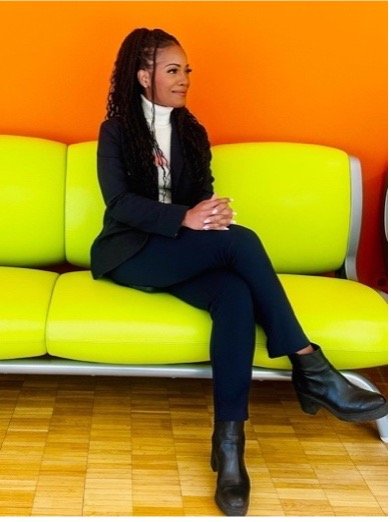
Faith Jessie, 11 Alive, Atlanta, Georgia
This year’s RIAS Alumni program created a space for reconnecting with people who genuinely care about journalism and are truly interested in building lasting relationships.
Since my initial RIAS program in 2018, so much has changed in the world. As someone who now spends nearly every day covering politics in Georgia, it was fascinating stepping into conversations in Germany and realizing just how connected some of these global political trends really are.
One of the most memorable moments for me was sitting down with politicians across Germany, including the 1.5 hour on the record conversation with Markus Frohnmaier of the AfD party. His concerns about immigration, his push for nationalism, and distrust in the media, sounded very familiar to words from those on the right here at home. It was an eye-opening conversation that piqued my interest in reporting more on the rise of the right in Germany and the striking similarities to the MAGA movement in America as it continues reshaping parts of U.S. politics.
The day trip to Leipzig to visit MDR was another highlight for me, to hear from those in the east and visit the workplace of Felix Schlagwein, who I hosted in Atlanta. Visiting MDR showed me even though our systems are different, so many of the newsroom conversations felt the same. We’re all trying to answer many of the same questions as, how do you maintain trust, reach younger audiences, and report fairly in politically tense moments?
But honestly, one of the most special parts of the trip had nothing to do with politics. It was reconnecting with the people who hosted me in Berlin years ago and seeing journalists I’ve had the pleasure of hosting in Atlanta through RIAS over the years. It reminded me that this program creates real relationships at a time when journalism can feel exhausting, RIAS reminded me why this work matters.
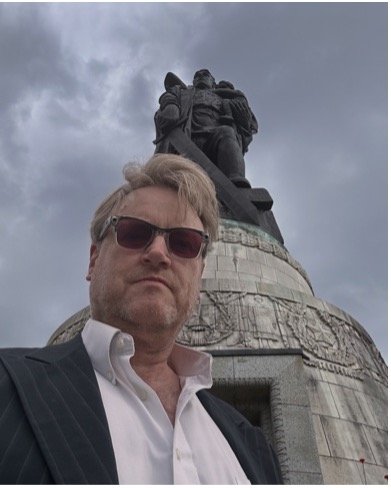
Scott Fralick, City News Network, Alberta, Canada
Amazing.That’s still the first word that comes to mind when I reflect on the people I met and the insights I gained during my week in Berlin with the RIAS Berlin Commission.
The tone for the week was set in our very first meeting with Hildegard Müller, president of the German Association of the Automotive Industry. She spoke candidly and thoughtfully about the challenges facing one of Germany’s most important and culturally significant industries, particularly amid growing competition from China. Her openness and willingness to engage honestly with difficult questions immediately established the spirit of the program.
That same candor continued throughout the week in conversations with leaders, experts, and journalists from a wide range of sectors. As journalists from across the Atlantic, we came away with a deeper understanding of how Germany is grappling with innovation, economic transformation, and global competitiveness. We also gained a valuable perspective on the ways bureaucracy, tradition, and cultural caution can both strengthen and complicate efforts to adapt in a rapidly changing world shaped by competition from China and the United States.
Those conversations challenged assumptions, broadened perspectives, and will undoubtedly influence the stories we pursue and the questions we ask going forward.
I also cannot say enough about our outstanding hosts — Christoph Jumpelt, Christina Reif, and Pam Ortega. Their knowledge, patience, generosity, and genuine care for our group made the experience exceptional. They went above and beyond to create a welcoming and engaging environment, while also showcasing the warmth and hospitality that made the week in Berlin both professionally rewarding and personally memorable.
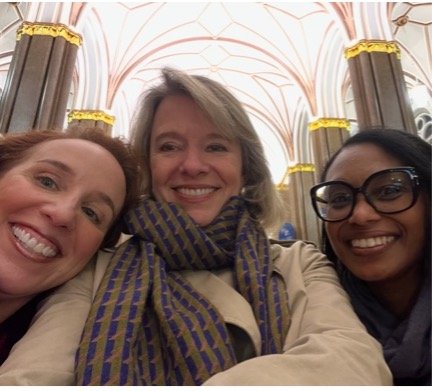
Amy Kellogg, Freelance Journalist, Milan, Italy
I did the RIAS program in 1998 when I was a local news anchor in Syracuse, New York. The experience shaped much of what I subsequently became, a foreign correspondent with a profound love of Berlin! When the opportunity to join the reunion group this spring presented itself, I jumped at it and could not be happier that I did.
I would like to start with a huge shout out to Christoph Jumpelt, Christina Reif and Pam Ortega whose organization, knowledge, kindness, generosity and patience are unmatched. We had plenty of laughs too. Always good for the soul.
As someone who has traveled the world in some of the darkest of times for some of the most tragic stories, I was reminded on this trip of horrors that came before my time and of the resilience of humans to survive and reinvent themselves. The visit to the villa of the Wannsee Conference where the “final solution” was hastily devised and a re-visit to the Stasi Museum to hear Peter Keup’s heartrending story of betrayal in the film “The Spies Among Us” were shocking, sobering and so important to learn about and never forget.
I was touched by the warm welcome the Germans extended to us. From Roderich Kiesewetter and Christoph Schmid at the Bundestag to Marina Charnis at the Brodyer synagogue in Leipzig, the knowledge and insight shared was invaluable in helping us better understand many issues in the world right now and how Germany sees the United States at present.
I was thrilled to get to know my fellow reunioners and hope we stay in touch. In this picture I am flanked by Laura Evans and Perita Carpenter at the RIAS Media Awards night in that incredible City Hall building. And I can’t forget to mention one highlight of this trip (and this speaks volumes about the program’s ability to facilitate the forging of lasting bonds) was dinner with a woman I met on my original RIAS program during an evening with the German-Turkish community. I am so pleased that we have stayed in touch.
Danke to all who made this amazing program happen.
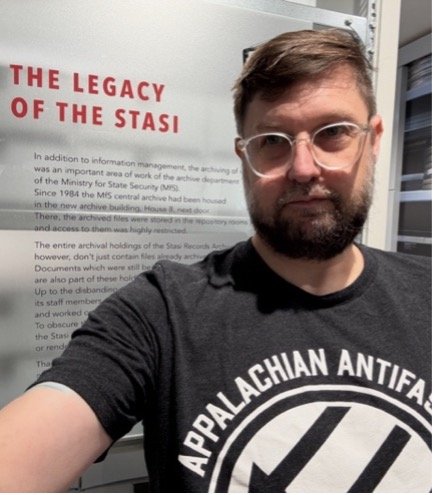
Dave Mistich, NPR, Washington, D.C.
Having first been on the RIAS Berlin fellowship in 2023, I jumped at the opportunity to take part in the alumni program this year. While only three years had passed, there have been huge shifts in U.S. and European politics which have had a tremendous impact on the Transatlantic relationship. Having the opportunity to meet with members of the Bundestag, defense and security experts, as well as those involved in commerce helped provide a deeper understanding about the current relationship between the U.S. and Germany. And while understanding the current state of affairs is important, the true strength of RIAS lies in providing historical context that’s impossible to overlook in today’s world – whether that’s helping U.S. journalists be better educated on the history of World War II or various aspects of the Cold War-era. As a bonus, getting to meet other experienced U.S. journalists and cross paths with our German counterparts spurs conversation that challenges and inspires one’s thinking. All and all, it’s truly transformative to take part in a program that immerses oneself in a different culture and offers so much for those of us dedicated to better understanding the world and distilling it for the public.
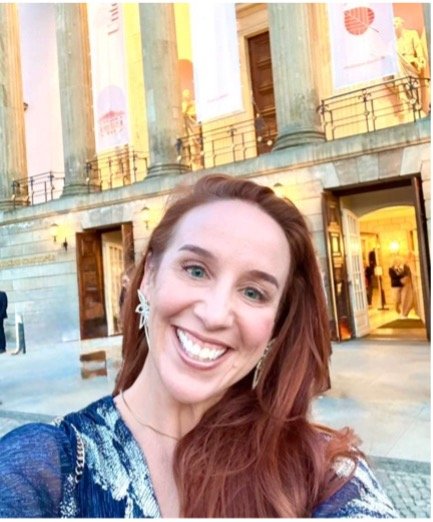
Laura Evans, Freelance Journalist, Seattle, Washington
Journalism needs this program. At a moment when trust is collapsing, audiences are shrinking, business models are breaking, and journalists everywhere are questioning what comes next, the RIAS Berlin Commission program, an exchange program that brings American and German journalists together to examine media, democracy, and society, reminds you why this work matters in the first place.
I have participated twice, and both times I left changed. Not because it was a nice trip to Germany. Because it was a powerful reminder that journalism is not just content, ratings, clicks, or newsroom drama. It is one of the foundations of democracy. And if we forget that, we are in real trouble.
The program provides access that would be nearly impossible to arrange on your own. We visited television stations, radio stations, political leaders, business leaders, economic specialists, Holocaust memorials, the U.S. Embassy, and institutions that shape German society and democracy. One of the most unforgettable experiences was visiting the former Stasi headquarters, where we spoke with a former prisoner, Peter Keup, who had been turned in by his own brother. Today, he works there teaching others what happens when governments control information and citizens lose freedom. Sitting there listening to him, you realize very quickly this is not abstract history. It is a warning.
The program brings together American and German journalists to learn from one another, challenge one another, and remind one another why journalism matters. The conversations are honest, deep, and often emotional. We talked about artificial intelligence, declining trust in media, shrinking audiences, financial pressures, political polarization, and what happens when people stop believing facts altogether. What struck me most is that these fears are global.
American journalists sometimes think we are alone in this crisis. We are not. Journalists everywhere are fighting to maintain public trust, protect independent reporting, and survive enormous economic and political pressure.
Following World War II, Germany intentionally built a decentralized public broadcasting system designed to prevent government propaganda and protect independent journalism after the experience of Nazi controlled media. That commitment still shapes German democracy today. The rise of the far right AfD party and its attacks on public broadcasting are reminders that the fight over journalism and information never really ends. Information is power. Democracies know that. Extremists know that too.
One of the most important parts of the experience was the perspective it gave me.
In newsrooms, we can get trapped in our own small dramas. Why did I get asked to stay late? Why does someone else get the anchor chair? Why did he get to do that story? Why didn’t I get the story I pitched? And then you spend time with journalists from around the world who are fighting for public trust, accountability, and independent journalism, and you remember this work is so much bigger than us. The RIAS program reconnects you with purpose. I wish more American journalists would do this program. It is professionally enriching, emotionally moving, and a reminder not to become cynical about the work we do. Journalism is still worth fighting for.
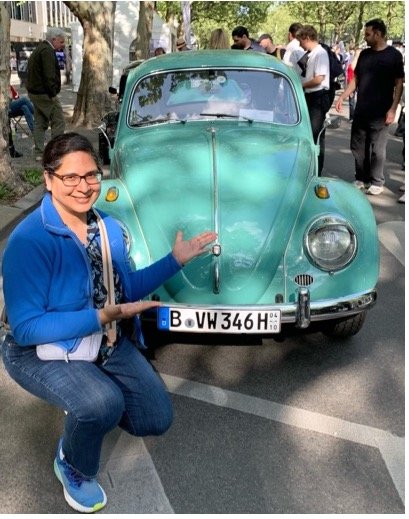
Sonia Narang, Freelance Journalist, Los Angeles, California
Fourteen years after my original RIAS trip, I returned to experience Berlin in 2026 as an alum. What an eye-opening week on the alumni program, which rivaled my first trip all those years ago!
A major highlight was the first-hand look into German newsrooms, including ZDF and WELT in Berlin, and MDR in Leipzig. It was fascinating to hear from German journalists about how they cover the news, and the ways in which potential funding cuts could affect their newsrooms’ coverage. I believe it’s very important to create strong connections between American and German journalists, so I was happy to exchange info with them about covering stories in the US. For example, it was an honor to meet and share my insights with WELT’s foreign correspondent who will be traveling soon to my hometown of LA to cover the World Cup. It was also a wonderful experience to be in the live TV studio audience of the Mo:Ma Café morning show at ZDF and meet the presenters. Perhaps the most personal, fun experience was getting to spend quality time in conversation with my 2012 RIAS German journalist friend Hanna Ender, aka “Hanna From Hollywood” after all these years! We’ve fostered a great Berlin-LA connection through our years-long friendship!
The visit to the Stasi headquarters to watch “The Spies Among Us” documentary was also a powerful experience. I was in awe of the deep research that historian/former prisoner Peter Keup has done to create a multi-layered portrayal of the victims of the East German secret police and their system of informants. I rode the train back to central Berlin with Peter, and got to have a one-on-one chat with him about his current work educating students worldwide.
It was also insightful for us to have the rare opportunity to interview Members of Parliament and Defense Ministry officials about controversial military issues. I am grateful to RIAS for getting our group special access to high-level policymakers at the Bundestag and Navy officers to get their stance on topics I’ve been covering for several years. This time around, I was successfully able to engage in-depth with our interview subjects, since I’ve gained more experience as a journalist since my first trip.
Thank you to the Dream Team of Christina, Pam, and Christoph for arranging such a fantastic week for us, and making sure we were able to fully immerse ourselves in German politics, history, culture, and more!
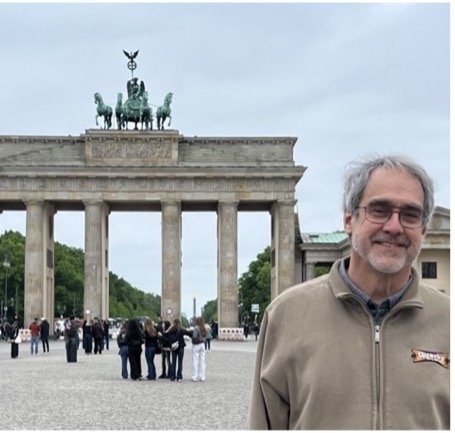
Dan Tritle WCAI-WGBH, Cape Cod, Massachusetts
My experiences with the RIAS fellowship have been personally enriching and professionally enlightening. Our group’s interactions with German officials and citizens not only prove how much in common the U-S has with European culture and history but how important it is to make those ties even stronger. I’ve made lasting relationships, personally and professionally, through my RIAS fellowships. And the insights and perspectives from RIAS staff and others have made a tremendous impact on my reporting. It’s a terrific program, and I’m honored to have been a part of it.
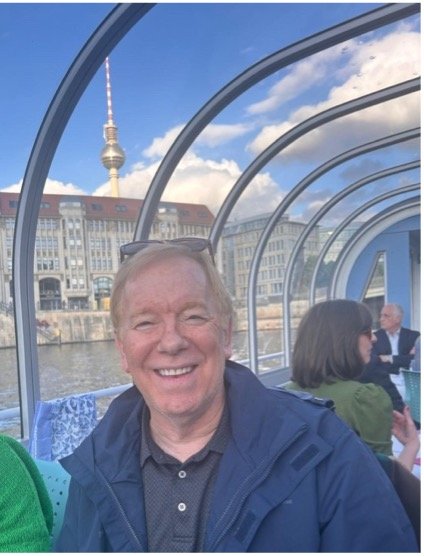
Dan Godwin, KFDW, Dallas, Texas
Getting a chance to explore Germany again as a RIAS alum was a rare pleasure, and a privilege. You come away with a deeper understanding of the forces shaping the country right now, and a view of history that’s hard to duplicate anywhere else. It was just remarkable to spend an evening at an Italian restaurant, chatting with a former East German, who spent close to a year in a Stasi prison. And to have seen the excellent documentary that tells his story, made for an unforgettable day. We got a chance to sit down with political leaders from a few different parties and ask all the questions we could think of. I was always impressed with the care and thought that went into the answers. We spent one morning with two leaders of the German military. What made that encounter special was the candor and directness they brought to the session. We got to hear about German efforts to assist Ukraine in the ongoing war with Russia, and what could likely be the return of conscription for all of Germany’s young men. On a historical note, our visit to the Soviet War Memorial was a fascinating glimpse into Berlin’s painful past. It’s a true wonder of art and architecture, on a scale that leaves visitors with much to ponder. But aside from all the official activities, what I’ll equally treasure is the countless number of personal interactions. I felt very fortunate to spend so many hours with a fantastic group of American journalists. They made me laugh, and think, and broadened my view of the world. Just an amazing RIAS experience.
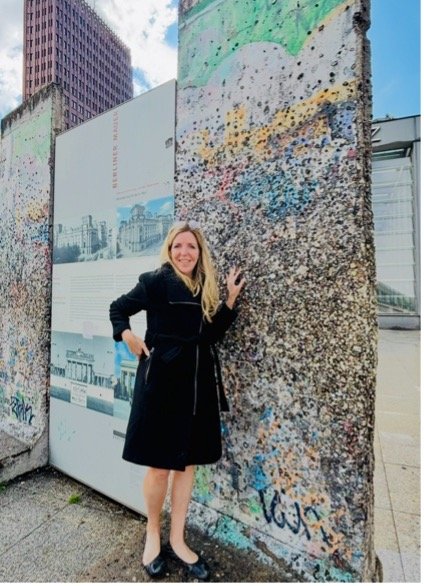
Mary Pflum, CBS, New York, New York
I went on my first RIAS trip in 1996, as a young CNN journalist, fresh out of college. We traveled to Berlin, Brussels and Leipzig. It was a wonderful experience to explore Germany and western Europe when the world was so full of hope, just a few years after the Berlin Wall fell and Germany reunited. The opportunity to return to Berlin at the kind invitation of RIAS in 2026, thirty years into my career as a journalist, at a time in which so much in the world has changed, was a true gift. What a wonderful trip! It was exceptionally well planned. I was blown away by the meetings and tours the RIAS team arranged, which included discussions with security analysts and think tanks and embassy officials and synagogue leaders and news directors about the state of the transatlantic relationship and about the state of media in Germany. The talks were nuanced and, best of all, they were candid. We were able to hear from government officials and veteran journalists and to see and hear firsthand that the concern for the present state of the transatlantic relationship is palpable on “both sides of the pond.” And while the talks were sobering (it was hard to hear at times just how strained the U.S.-European relationship has become in certain sectors), they were also decidedly helpful in that many of those we spoke with offered words of encouragement about the stories we can tell, the questions we can raise, the tangible things we can do as both journalists and concerned citizens of the world to shine a light on concerning matters, and to hopefully move the needle in a positive direction. I came away from the trip armed with new insights and with a rolodex of new potential sources for stories. I came away, too, with new friends — RIAS alumni from all over the world (It was so great to meet so many fellow journalists and to talk, and laugh, late into the night). And I came away from the trip filled with gratitude to RIAS. At a time in which so many transatlantic-themed exchange programs have been shuttered, (the Bosch program – which I also took part in – is one of them), it is remarkable that the RIAS program carries on. The work that RIAS does through its exchange trips is arguably more important now than ever, at this complicated time in the world. I am so thankful to RIAS for a wonderful, and rewarding, week. Vielen Dank!
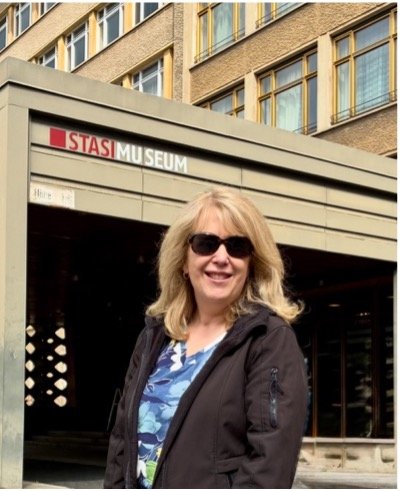
Deborah Shaar, KGOU, Norman, Oklahoma
The 2026 RIAS Berlin Commission Alumni trip could not have come a better time. Current U.S. policies directly impact Germany’s economy and political relations.
Our meetings in Berlin provided context and updates. We had the opportunity to ask questions of government, political and economic leaders, and get new information. The discussions were relevant and interesting. We learned about proposed changes to immigration policies, Germany’s efforts to bolster its military forces, the impact of U.S. tariffs on Germany’s automotive industry and updates from the U.S. Embassy. Now we are able to easily follow developments and upcoming elections in Germany with this new understanding and information.
One of the many highlights of the trip for me was visiting the Stasi Museum to see the documentary, “The Spies Among Us.” It was a fascinating story about what life was like under the Stasi secret police. Hearing from the man at the center of the documentary, Peter Keup, was riveting. He was generous with his time and personal history. This event renewed my interest in learning more about the Stasi. I plan to return to the museum on a future trip and spend time reading, exploring and researching preserved information and documents.
I also enjoyed touring three TV/radio stations and meeting with German journalists. It is always a pleasure to hear from fellow journalists and see their equipment and studios. The stations are very impressive!
One of the best features of RIAS trips is getting to know the other participants – U.S. radio and TV journalists and the RIAS staff. The time spent together between meetings, at dinners, on public transportation and during free time is priceless. We all enjoyed “talking shop,” trading stories and sharing details of personal lives. I know I will keep in touch with these new friends.
My first RIAS journalist exchange trip was in June 1995. Participating again this year—30+ years later—was just as fascinating and informative as the first time I visited Germany. I noticed the changes in Berlin, and it was a fabulous experience. I’m thankful for this life defining opportunity.
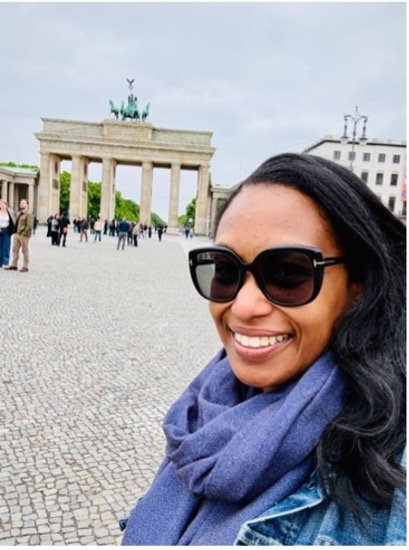
Perita Carpenter, ABC, Washington, D.C.
The RIAS Berlin reunion was a deeply meaningful experience both professionally and personally. Returning to Germany alongside fellow journalists reminded me of the power of international exchange, thoughtful storytelling, and the importance of preserving historical memory in today’s rapidly changing media landscape.
From conversations about journalism, democracy, and global perspectives to simply reconnecting over shared experiences, every moment reinforced why the RIAS fellowship remains so impactful long after the program itself ends. Visiting Berlin again carried a profound sense of reflection, particularly as the city continues to stand as a reminder of resilience, transformation, and the importance of dialogue across cultures.
I left the reunion feeling incredibly grateful for the friendships formed, the lessons learned, and the opportunity to be part of such an inspiring network of journalists and media professionals. Thank you to the RIAS team for your generosity, hospitality, and commitment to fostering meaningful connections that continue to shape our work and perspectives years later.
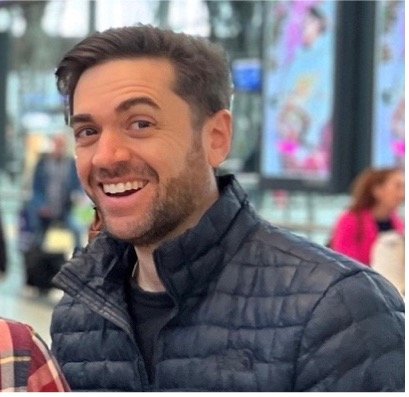
Matt Gregory, WUSA, Washington, D.C.
This year’s RIAS alumni fellowship could not have come at a more pivotal time. As President Trump’s administration moves away from a Europe-leaning posture, the mission of the transatlantic exchange becomes more important. The RIAS fellowship met the moment. As Germany ramps up its military defense, we spoke with the leaders behind it. Members of the Bundestag gave us sober, yet realistic assessments on how to rebuild Germany’s military. We spoke firsthand with the people responsible for recruiting. The fellowship also explored the changes in the US-Germany relationship and where it looks to be headed. At the Atlantik-Brücke, we heard about the different strategies to improve the relationship and the economic outcomes of the current path. As always, seeing how our German counterparts navigate these stories and new budget eras was incredibly insightful. I cannot stress enough how fulfilling it was to take on the issues with my fellow journalists. I can honestly say I walked away with new ideas and new approaches to my work. I also walked away with a new group of colleagues I think of as friends on this journey of journalism.
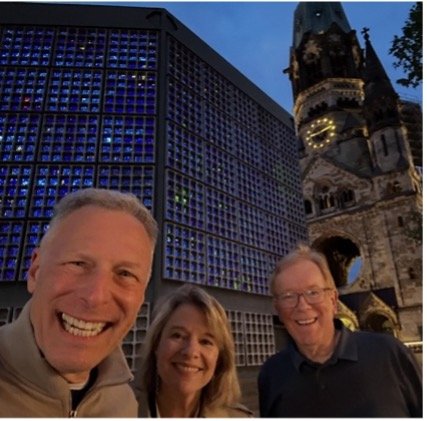
Michael Gargiulo, WNBC, New York, New York
Our alumni trip was more than a reunion… it was a week of new discoveries, new friends, and a new appreciation for RIAS, 24 years after I landed at Tegel Airport to being my two week program back in 2002.
Our very first evening set the tone. At dinner, I met alumni who had been Fellows in the 1990’s, 2000’s, the 2010’s and right into the current day. We compared notes on what the program had been like, when we were given prepaid calling cards for phone calls home, and how we navigated the Berlin U-Bahn before GOOGLE maps. We also shared how RIAS changed our lives. Many of us were local news reporters who suddenly gained international experience thanks to RIAS, and also had relationships with German colleagues, that for some of us, have lasted decades.
The Media Awards Ceremony and the celebration of RIAS’s 80th anniversary , were for me , as an American alumnus, especially emotional. I saw what it meant to the German people, that their former opponent established RIAS to bring them news that they could depend on, and how they listened in from the East, even at peril to themselves. The discussion with Claus Kleber, David Ensor, Ines Pohl, and David Folkenflik reminded me of how fragile Press Freedom still can be, decades after the fall of the Berlin Wall.
Our meetings and events in Berlin were fascinating, especially our visit to the former Stasi complex. We met Peter Keup, and watched the documentary produced by two RIAS alumni, “The Spies Among Us”. It is the true story of how Peter confronted the Stasi officers who arrested and imprisoned him and the vast system of informants developed to inform on East Germans, often, and as Peter’s case, by their own family members.
Our RIAS alumni group also had deep discussions of how the media world has changed for us back at home , with consolidation, automation, and financial pressure on media companies. The week passed all too quickly, but it was a time I will not forget, so I close this with thanks to RIAS for letting me become part of this special family.
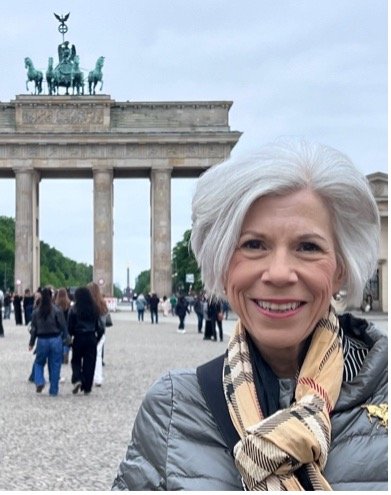
Laura Cordell, ABC 7, Chicago, Illinois
“Wo wohnst du?” The basic German phrase translates to “Where do you live?” It’s a phrase that was drilled into my head as a high school student learning German. From May 6 through May 14, 2026, I found myself living out an amazing experience defined by exploring and learning with fellow RIAS alums.
The RIAS Alumni program got off to an inspirational start with the RIAS Media Awards ceremony and panel discussion at the Rotes Rathaus. It was an honor to be present as journalists were recognized for outstanding reporting on the rise of Germany’s far-right in recent years, the debate over whether to ban the far-right party, Germans in Texas and other compelling stories. The setting was historic and beautiful in the Rotes Rathaus. I’m also a fan of the new blue bear statue that was presented to award winners!
I appreciated the exposure to the wide variety of political, military, economic and industry leaders during our various meetings. It was fascinating to learn about challenges unique to the German auto industry because of the European Union during a meeting with the VDA, the German Association of the Automotive Industry. In this day of enhanced security measures and intense workdays, I especially appreciated the efforts to arrange tours and meetings with journalists at MDR and ZDF studios. Another highlight for me was our visit to the Brodyer synagogue in Leipzig where Marina Charnis spoke with knowledge and love about the evolution of the Jewish community in Leipzig.
My RIAS fellowship in 1997 came at a time early in my career and it gave me so much insight into journalism, democracy and the importance of transatlantic relations. I appreciated RIAS’ investment in me at that time, and it was an exceptional experience to return as part of the alumni program.
Monica Miller, Freelance Journalist, New York, New York
My first RIAS fellowship was the opportunity of a lifetime. To return more than 20 years later was a rare privilege and felt even more meaningful with the perspective of time.
It is an understatement to say both journalism and the world have changed since I first visited Berlin in 2003. The pace of political, economic, and technological disruption has transformed not only our industry, but also the way countries relate to one another and how citizens understand the world around them. Questions about the future of journalism, democracy, and transatlantic relations feel far less theoretical today than they once did.
The speakers we heard throughout the fellowship were a reminder that, despite political differences and geographic distance, we share a common human experience. Michael Hüther of Atlantik-Brücke spoke about the strain rising energy prices have placed on German households and businesses. Leaders from Germany’s automotive industry described the difficult balancing act between electric vehicle innovation, clean energy goals, labor unions, U.S. tariffs, job creation, and heavy regulation.
Other conversations carried a deeper sense of urgency. Discussions about the growing popularity of the AfD reflected Germany’s struggle to confront extremism. Military leaders spoke candidly about conscription, threats from Russia, and fears that the war in Ukraine could spread beyond its borders and further destabilize Europe.
Uncertainty was a common theme throughout our discussions. In Germany, President Trump’s unpredictability was often described as both a political challenge and a source of anxiety for allies trying to understand America’s long-term role on the world stage. At the same time, many speakers emphasized the importance of our “common heritage” and the enduring ties between the United States and Germany, even as those relationships are tested in new ways. There was also a growing recognition that, while the United States is increasingly viewed as an unstable partner, Germany and its European allies are continuing to move forward in shaping their own economic, political, and security priorities. What that ultimately means for America’s influence and leadership in the years ahead remains an open question.
Just as powerful were the reminders of how fragile freedom can be, and how essential it is to preserve historical memory. Our visit to the Leipzig synagogue, the Soviet memorial in Berlin, the former Stasi headquarters, and the screening of the documentary “Spies Among Us”, alongside conversations with Peter Keup and Dagmar Hovestädt, underscored the lasting consequences of authoritarianism, division, and fear.
The RIAS fellowship gave me far more than a better understanding of transatlantic affairs. It gave me the confidence, perspective, and professional relationships that helped shape my path as an international journalist. Returning to Germany after two decades reminded me how lasting those experiences can be, and how important international exchange programs remain at a time when understanding one another has become both more difficult and more necessary.
Most of our group started the fellowship as strangers. By the end of the trip, I left with new friends and colleagues brought together by thoughtful conversations, long days of reflection, and the experience of trying to make sense of a rapidly changing world and profession. In a time that often feels fragmented and uncertain, the fellowship served as a powerful testament that education, communication, and genuine human connection still matter.
I am deeply grateful to RIAS for its continued commitment to strengthening transatlantic relations and supporting the professional growth of journalists. Programs like this remain vital not only for our profession, but for fostering the understanding and dialogue that democracies depend on.
 English
  German