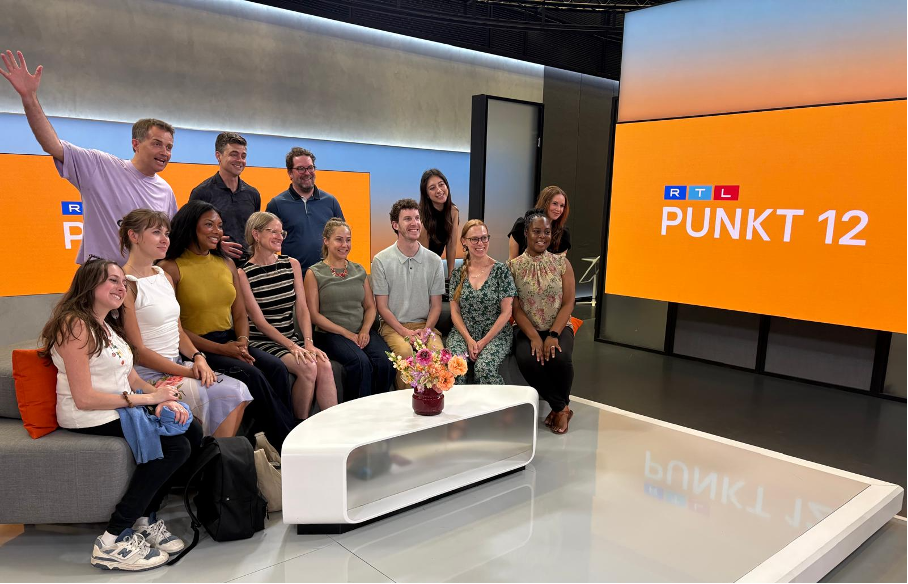
What 12 American Journalists took away from their RIAS Fellowship in Germany
Danae Bucci
WCVB, Boston, Massachusetts
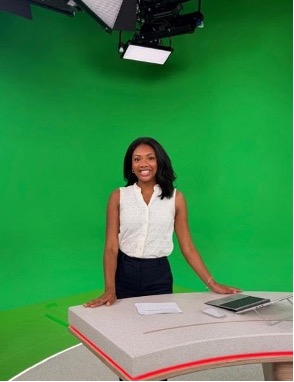
I can say without a doubt that participating in the RIAS Berlin Commission summer fellowship has changed my life and my outlook on my career. There is very little time to sit back and reflect as a journalist; this program allowed me to not only do that, but to learn more about Germany and Belgium and the vital importance of healthy transatlantic ties.
Getting to meet and learn from global industry leaders gave us real insight into how history has shaped current geopolitics. We also saw how German news organizations are navigating the evolving media landscape through social media and other innovative techniques. On top of that, we heard several firsthand accounts of historic events, including that of Peter Keup, a Stasi political prisoner during the Cold War. His transparency and openness in sharing his story is something that will stick with me for the rest of my life. This is a truly unique program that has changed my perspective on the intersection of news, history, and culture. I am leaving with a renewed passion for the job, and I am certain my reporting going forward will be deeply enriched by this fellowship.
What has surprised me most through this fellowship are the amazing connections I have been able to make. The impact of this program is obvious by the number of alumni and partners who were willing to take time out of their busy schedules to meet with our cohort—German news icon Claus Kleber even joined us for dinner! On top of that, I am certain my cohort is full of lifelong friends. I cannot thank Christoph, Christina, and Pam enough for leading this incredible organization, creating an inspiring fellowship, and carrying on RIAS' legacy!
Alina Selyukh
NPR, Washington, D.C.
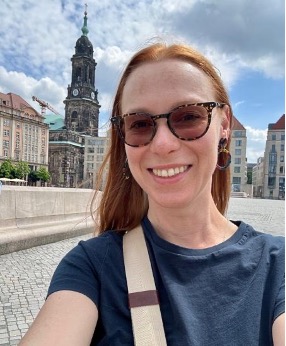
Since our return from the RIAS fellowship in Germany and Brussels, I feel like I've talked the ears off my friends and colleagues about the things we learned on the trip. I've told them about the similarities and differences between public media in Germany and the U.S.: the funding, the audience loyalty, the coverage structure, the efforts to reach younger people. I've shared my takeaways from my station days at Hessischer Rundfunk in Frankfurt, where we spent hours discussing business news podcasting, in audio and video -- topics very relevant to my day-to-day job. I've described visits to think tanks, NATO and the U.S. Embassy; the Berlin Wall, Holocaust memorials, museums and parks. And I've recapped, with a hefty weight in my heart, the experience of touring a Stasi prison in Dresden with its former prisoner Peter Keup, whose story -- gleaned over that visit and the memorable dinner that followed -- will stay with me forever. Along the way, I made new friends among the alumni, my station-days hosts and of course my fantastic traveling crew. I miss our cohort already! Thank you to Christoph, Christina, Pam and the RIAS Berlin Commission for organizing this unforgettable experience.
Taylor Galgano
CNN, New York, New York
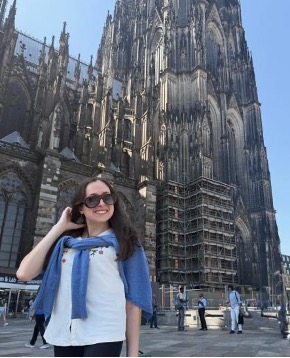
The opportunity to participate in the RIAS fellowship was a once-in-a-lifetime experience that I will remember forever. First and foremost, the program pushed me out of my comfort zone. I met new people every single day and was struck by how quickly I found myself in thoughtful, candid conversations with the other journalists across Germany and Belgium. I also gained incredible insight from the other U.S. journalists in my cohort, who came prepared with smart and researched questions everywhere we went. I’m very excited to have this new community of smart and accomplished journalism friends back in the U.S. After visiting six different cities, I also deeply expanded my knowledge of Germany’s dark history and understand much more clearly how the country grapples with its past, particularly with our visit to the Stasi prison in Dresden where Peter Keup was detained for trying to escape East Germany. I will remember his haunting story for the rest of my life. We also saw the Topf & Sons memorial in Erfurt, which I found disturbing and horrific – and it’s something I’m still thinking about days later. I had the opportunity to visit NDR in Hamburg for my station days, where I sat in on editorial discussions about the Tagesschau programming and asked questions about their workflows – conversations I will take back with me to my own work. My experience at the Tagesschau and at several other newsrooms across Germany was fascinating, as it offered a rare look into how other news organizations break stories and fact-check their reporting. It was a valuable reminder to me that there are no shortcuts to good journalism, no matter where you go. We are all having tough editorial conversations every day to ensure we are delivering the most contextualized, accurate and truthful reporting to our audiences.
Harri Leigh
Spectrum News, Washington, D.C.
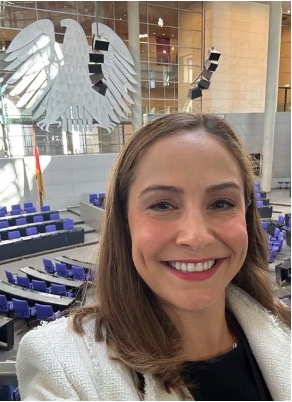
Participating in the RIAS program has benefited both my professional and personal relationships with journalists, community leaders and officials in German and European institutions. The incredible access we were given to local stations, the Bundestag, NATO and the European Commission helped us form a more complete understanding of the transatlantic relationship, which will have a direct impact on my reporting in a world of changing geopolitics. My station days with Deutschlandfunk-Hauptstadtstudio in Berlin were particularly insightful, as I was able to attend a press briefing at the Bundespressekonferenz with government officials, as well as interview lawmakers in the Bundestag. I also learned a lot about the country’s complicated history from our visit to Topf & Sons, the company that built ovens for Nazi extermination camps, and a guided tour of a Stasi prison by a former political prisoner. That history helped color my understanding of Germany’s political environment, which has similarities to that of the U.S. in many respects, including an insurgent right-wing populist movement. I will always cherish the memories we made and the relationships we built with both German and U.S.-based journalists. This program is a true asset to the field of journalism, benefitting professionals on both sides of the Atlantic, and attending should be a top priority for any journalist serious about deepening their international and transatlantic knowledge.
J.D. Capelouto
Semafor, New York, New York
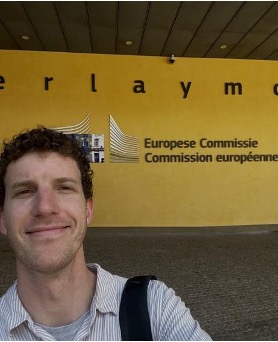
The RIAS Berlin Commission fellowship was an incredibly productive, informative, and inspiring experience. Across the two weeks in Germany and Brussels, I received an invaluable ground-level view of how German media and politics operate.
As I work on internal artificial intelligence tool development in my newsroom, it was also fascinating to hear from German journalists about how they are thinking about and deploying AI. I got the sense that German newsrooms are similarly in an experimentation phase, but the tools that are already rolled out — including for translation and transcription — get genuine use from reporters and editors.
Just as enlightening as the newsroom visits was the opportunity to have extended time with other journalists and talk shop for two weeks, including how we are approaching our work and the issues facing our industry. It was inspiring to hear stories from other fellows’ careers and exchange thoughts about social media, AI, and audience fragmentation, and I’m greatly looking forward to staying in touch with my cohort and meeting other RIAS alumni in the U.S. The cultural portions of the trip, including visits to museums and historical sites, were also particularly eye-opening. As someone with dual U.S.-German citizenship, I have always thought I was relatively well-versed in German history, but these visits repeatedly surprised me and provided perspectives I'd never encountered. From the former Stasi prison in Dresden to the underground bomb shelters in Berlin (which I visited with my newsroom host from RTL), I came away with a well-rounded understanding of the last 100 years of the country’s history.
Na’Keevia Brown-Poole
CNN, Atlanta, Georgia
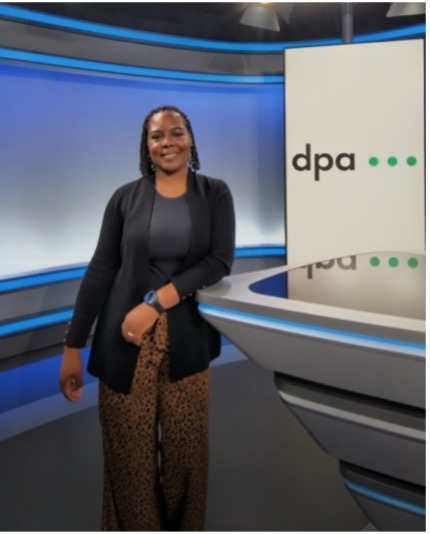
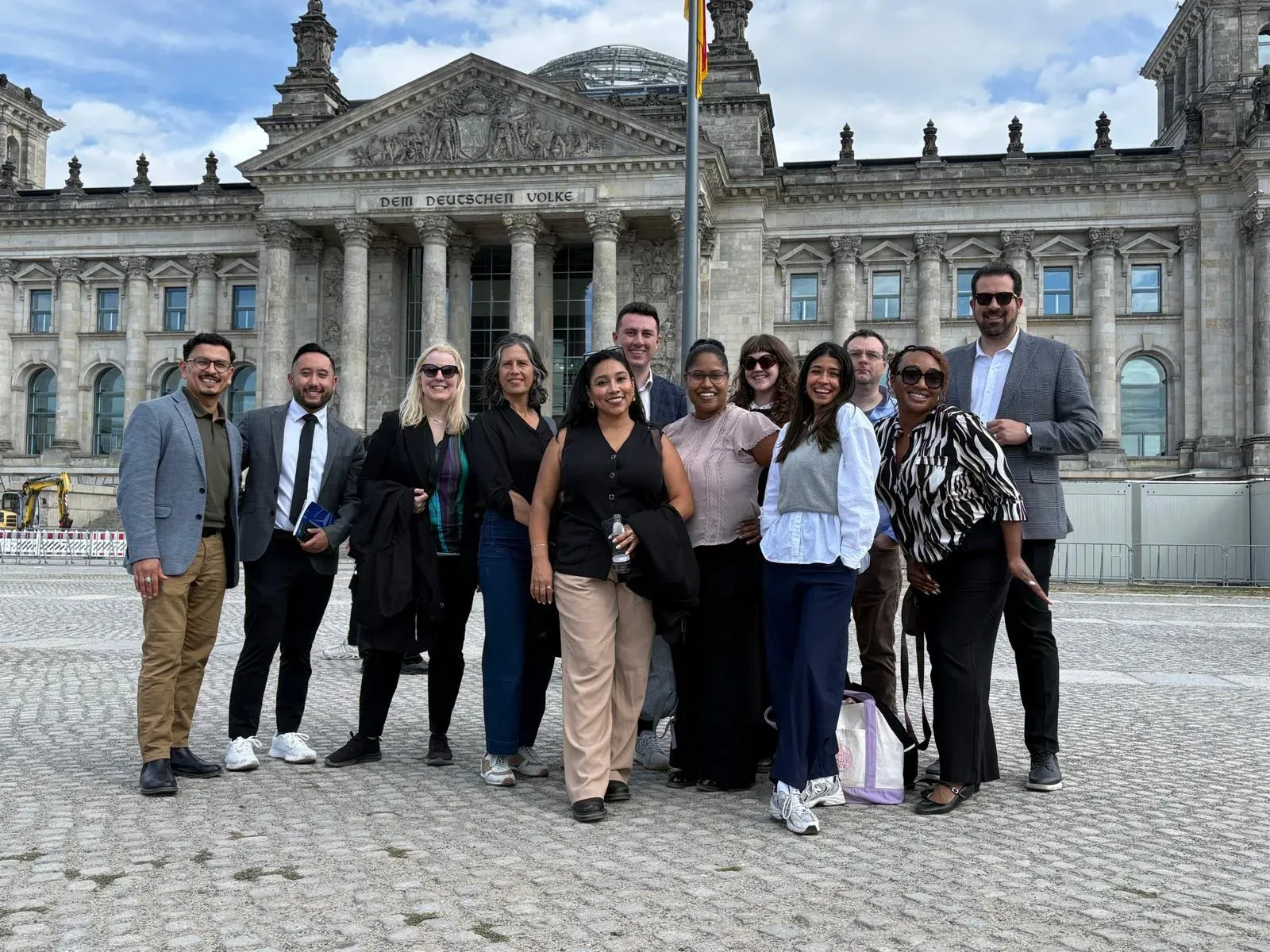
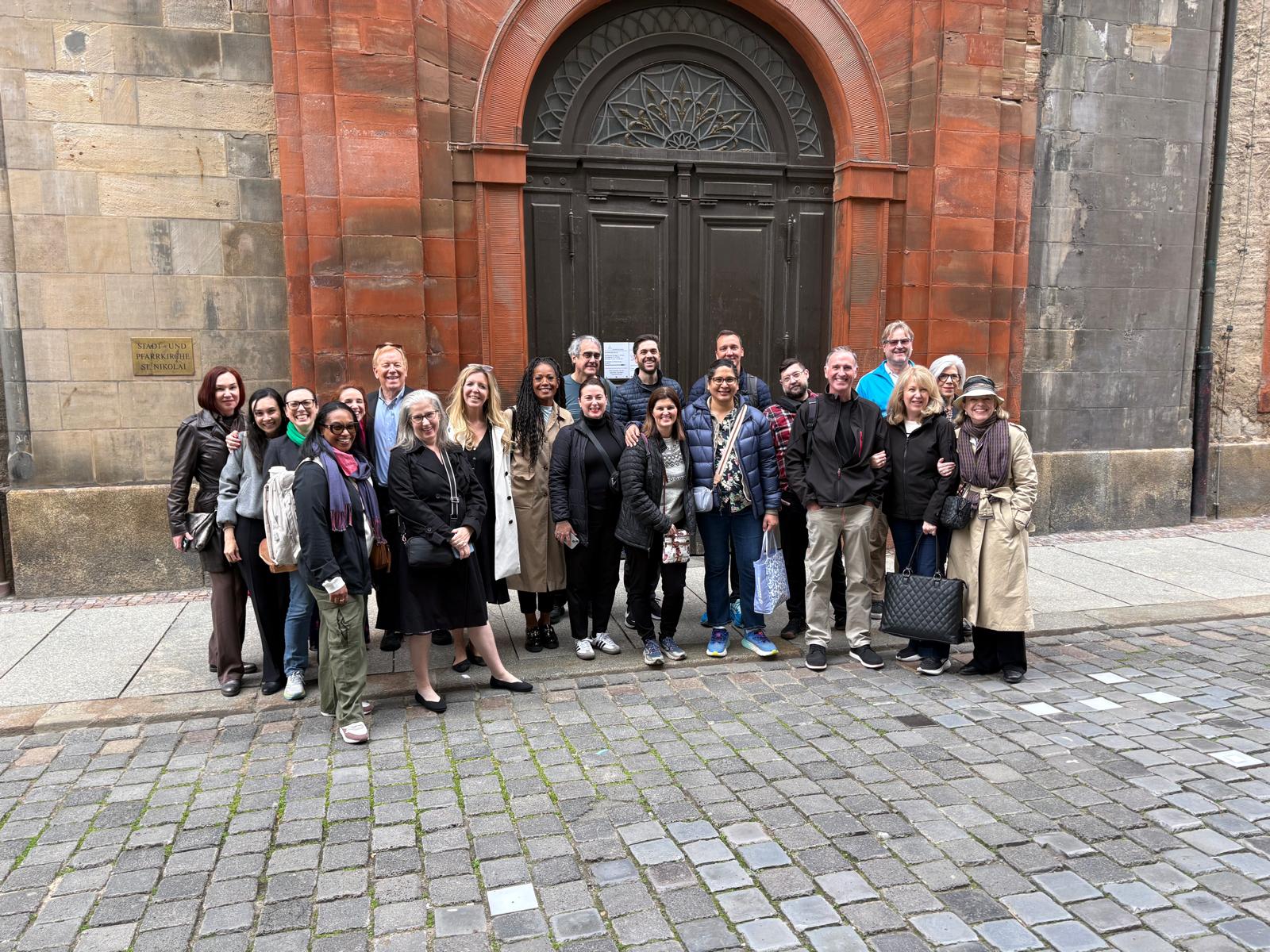
For two weeks, I had the incredible opportunity to step away from the newsroom and experience journalism through a completely different lens. As one of 12 American journalists selected for the RIAS Berlin fellowship this summer, I traveled through six cities across Germany and Belgium -beginning in Munich and ending in Brussels. Throughout the fellowship, we visited a wide range of German news organizations, think tanks and foundations—from public broadcasters to private and commercial media—exploring both the similarities and differences between their newsroom and ours. We sat in editorial meetings, toured studios, and spoke with German journalists about editorial independence, public trust, and the challenges of reporting in an increasingly digital world. The experience offered a firsthand look at how journalism and democracy intersect far beyond the headlines. Some of the most powerful moments, however, happened outside of the newsroom. In Dresden, we met Peter, a former political prisoner of East Germany's Stasi prison. Peter did not just tell us his story—he invited us into it. Cologne was especially memorable, as my host welcomed me with kindness, introducing me to the city not as a tourist, but as a local. We explored Cologne on two wheels (by bicycle), weaving through the streets before stopping at a neighborhood farmers market, where I experienced a side of Germany few visitors ever see. The fellowship concluded in Brussels with a visit to the NATO Headquarters and the European Commission. There we gained a deeper understanding of how international alliances and policymaking shape global security and cooperation. While the places we visited were remarkable, it was the people who made this experience truly unforgettable. I had the privilege of sharing this two-week journey with 11 exceptionally talented journalists from across the United States. Somewhere between newsroom visits, multiple train rides, and late-night conversations at beer gardens, we strangers became friends. A huge thanks to Christoph, Pam, and Christina! This fellowship reinforced that while journalism may look different around the world, its mission remains universal- to inform, to seek the truth, and to help people better understand one another. The experience has made me a better journalist, a more thoughtful storyteller, and an even more curious citizen of the world.
Erika Jackson
WSOC Charlotte, North Carolina
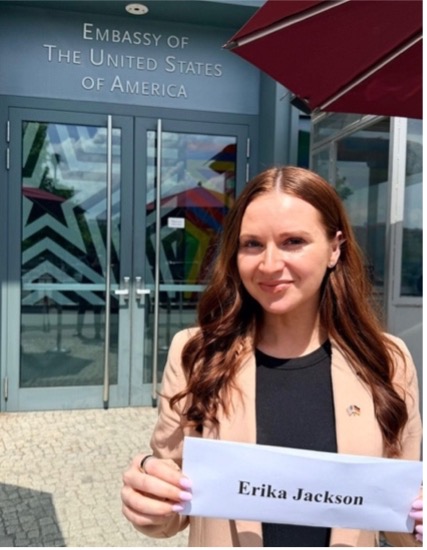
Americans spend their school years learning about history, but what about the history being made today? Being a RIAS Berlin Journalism Fellow showed me how German media reports on major events that will one day be in the history books, documenting everything from the challenges facing the Deutsche Bahn rail system to the story of a controversial beached whale.
I will return to North Carolina with a list of differences between German and American media, along with several ideas I'd love to integrate. At a time when public media in the United States
faces the possibility of additional funding cuts, it was encouraging to see public media thriving in Germany. Many of the German stations we visited embrace social media and work to stay
ahead of changing consumer trends. I would love to incorporate the social media storytelling used by News-WG at Bayerischer Rundfunk to share stories with audiences in the Charlotte, North Carolina, market.
I entered the program expecting to see European newsrooms struggling to keep up with new
technology and declining viewership. I'm happy to say I was proven wrong. German media
organizations have been successful at meeting audiences wherever they consume news, and
they collaborate to report Europe's biggest stories quickly and accurately.
The RIAS Berlin fellowship gave me a deeper understanding of European politics and Germany's news industry beyond what most Americans can learn from textbooks. I am eager to apply what I learned to my reporting in Charlotte. I hope to return to Europe one day with an even greater appreciation for Germany's thriving news industry.
Victoria Holmes
The Dispatch, Washington, D.C.
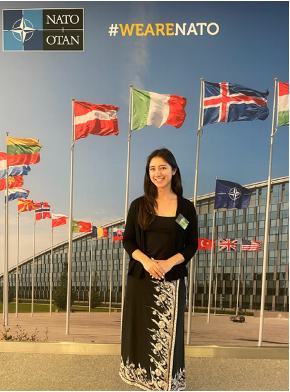
I arrived in Munich at the start of the program not really knowing what to expect beyond hearing a few people say, "Be prepared to walk a lot." Now, after completing the two-week program, I understand why words fail to fully capture everything we experienced.
While we had the opportunity to speak with numerous journalists about the state of television journalism, the ways social media is reshaping the industry, and growing threats to a free press, I was unprepared for the depth of historical perspective in the program.
One experience that especially stood out was meeting Peter Keup, a former Stasi prisoner, who gave us a tour of the prison in Dresden where he had been held. Hearing his firsthand account brought history to life and underscored the importance of protecting democratic institutions. It also reinforced the vital role journalists play, either by becoming complacent or by helping alert the world to abuses of power.
From a media perspective, I especially enjoyed our station days, during which I shadowed a journalist at RTL. I learned how his team identified AI-generated and manipulated images and received hands-on training with tools designed to detect them.
Overall, I am still processing everything I learned during the trip, but it was an incredibly enriching experience. I have no doubt that the lessons, conversations, and relationships from these two weeks will continue to shape my work as a journalist for years to come.
Joe Millitzer
KTVI/KPLR, St. Louis, Missouri
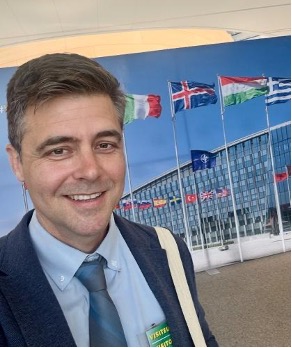
Standing inside a former Stasi prison, journalism stopped feeling like a career and started feeling like a responsibility.
For two weeks, I visited newsrooms across Germany and Belgium as part of the RIAS Fellowship. I expected to learn about AI, digital strategy and new ways to reach audiences. I did. But the biggest lesson came from Germany’s history. You don’t have to spend long there to understand what happens when one voice controls the story. That memory still shapes the country’s journalism today.
The conversations sounded a lot like the ones we have in St. Louis. Newsrooms everywhere are adapting to new technology, reaching younger audiences and pushing back against misinformation. The challenges are shared. So is the mission: verify the facts, earn trust and serve the community.
I came home with new ideas and new friendships. More importantly, I came home reminded that local journalism isn’t just about covering a community. It’s about giving people information they can trust.
Paulina Smolinski
CBS, New York, New York
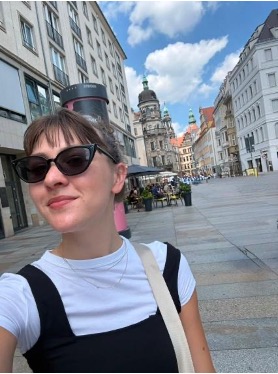
The RIAS Berlin Commission deepened my understanding of the German American transatlantic partnership through a program filled with conversations with key policymakers and journalists. Across Brussels and Germany, we discussed the challenges facing the NATO alliance, the European Union, and the future of journalism. Beyond the cultural exchange, the fellowship offers a moment of reflection on what brought us to this career in the first place. It allows us to look beyond the details of our daily routine and see a broader view of the state of the industry, our place in it, and how we move forward. The challenges and concerns of the future of journalism are well documented. But the belief that it’s worthwhile, that while the form may change the content stays the same, that hope remains on both sides of the Atlantic.
Pete Madden
ABC, New York, New York
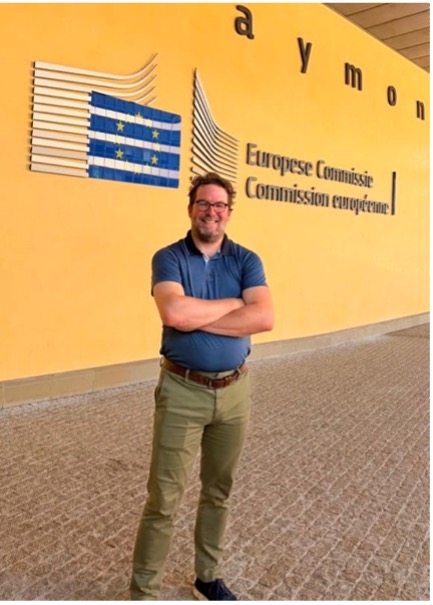
There is so much that I'll remember about traveling with the RIAS Berlin Commission. I'll remember touring the seats of power in Europe, from the Bundespressekonferenz to NATO Headquarters to the European Commission. I'll remember the feeling of walking through history, as if static figures from high school textbooks had stepped off their pages. And I'll remember that German newsrooms are much quieter spaces than their American counterparts. Embedded for a day, I was told (politely) to dial it down more than once.
But mostly I'll remember my conversations with my fellow journalists. My American colleagues spoke of navigating a fraught moment -- both for the industry and for the country. Our German hosts shared stories of resilience in the face of the all-too-familiar challenge of reporting on movements that question the very notion of a free press. And our guide Christoph told us about risking his life to cross the Berlin Wall, his experience both a testament to the craft and a reminder of what's at stake.
Danyelle Khmara
Freelance Journalist, Tucson, Arizona
On the bus after visiting the European Commission, we were all saying the same thing - the officials at the daily press briefing didn’t answer any of the reporters’ questions. The experience felt familiar to our group of 12 RIAS journalists. All of us, seasoned reporters who had covered everything from politics, poverty, and war to technology and economics, were reminded in that moment of the importance of our work — to seek the truth, hold those in power accountable, and provide the public with accurate information.
I always say no one gets me like a room full of journalists, and that was never more true than during my summer 2026 trip with RIAS. Getting to know the reporters in Germany, including those from all over the world at the international DW station in Bonn, reinforced why we do this work. Learning about the creation of Germany's public broadcasting system after World War II and its mission to provide independent, accurate and unbiased information as well as the challenges it now faces amid the rise of a far-right political party that has called for defunding it resonated deeply with us as journalists working in the United States.
Talking to the journalists at stations like DW in Bonn, BR in Munich, and RTL in Cologne about what they are able to accomplish with either public funding or creative funding strategies was inspiring and hopeful. The DW Africa Department's robust social media strategy for reaching young audiences in countries affected by conflict and authoritarianism, RTL’s verification team verifying photos and videos before they reach the public, and ARD’s 10 million nightly viewers are just a few of the dozens of examples I was able to see in action during the RIAS trip.
While conversations with reporters and editors were invaluable, seeing firsthand the lasting consequences of authoritarianism and war drove home the importance of this work and of the RIAS Berlin Commission's international journalism programs. Seeing the inside of the Stasi prison in Dresden and hearing from former inmate Peter Keup what it was like to be imprisoned there during the East German communist regime was a truly life-changing experience. Seeing the peaceful grounds of the villa in Berlin where the Wannsee Conference took place before learning how senior Nazi officials planned the murder of 11 million people made the history feel real in a way no book or screen ever could. And speaking with government officials and encountering the familiar challenges reporters face in holding public officials accountable renewed both my love for journalism and my belief that a global community of reporters can help protect a free press — one bold question at a time.
My time at RIAS both strengthened my understanding of the press in Germany and Europe and also gave me new ideas for strengthening local journalism back home and introduced me to friends and colleagues I hope will remain lifelong partners in defending a free press.