
Senior Editors spend week in Texas studying immigration, border security
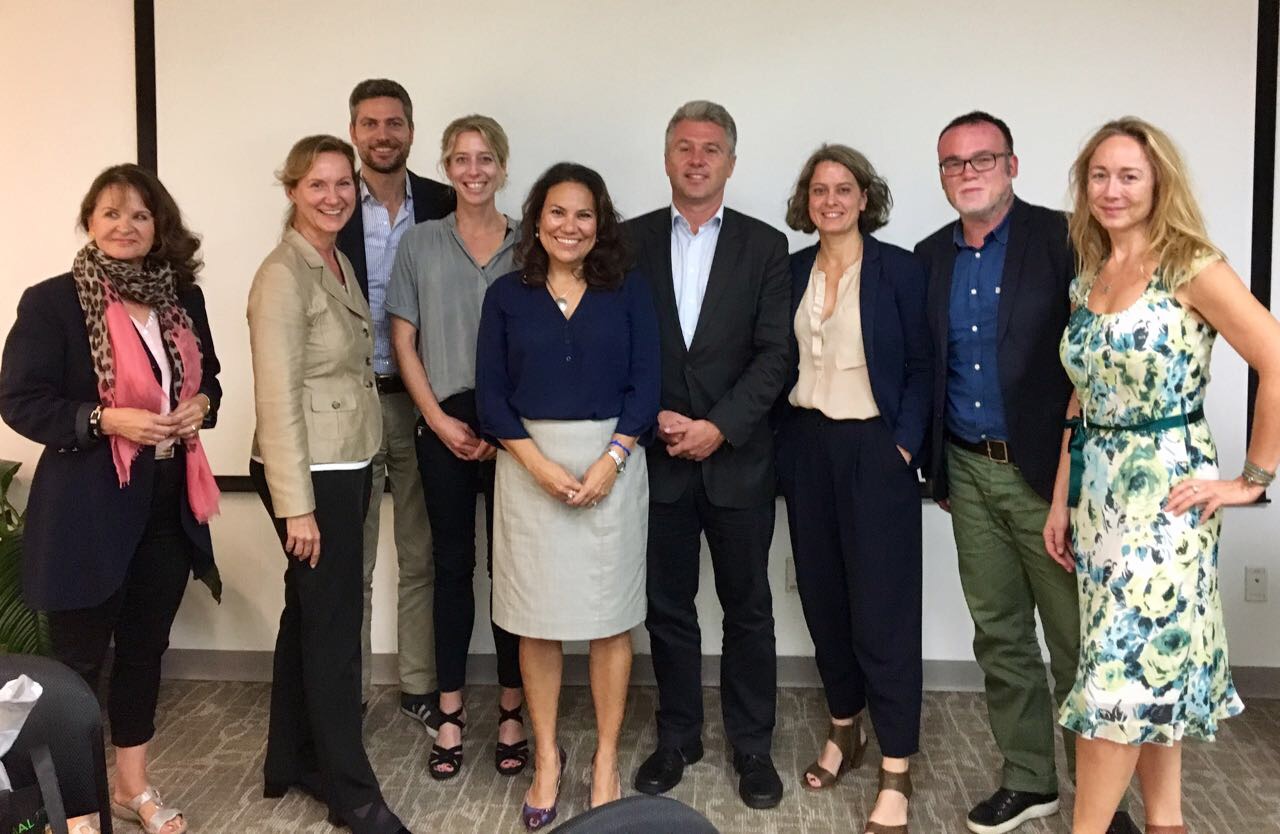
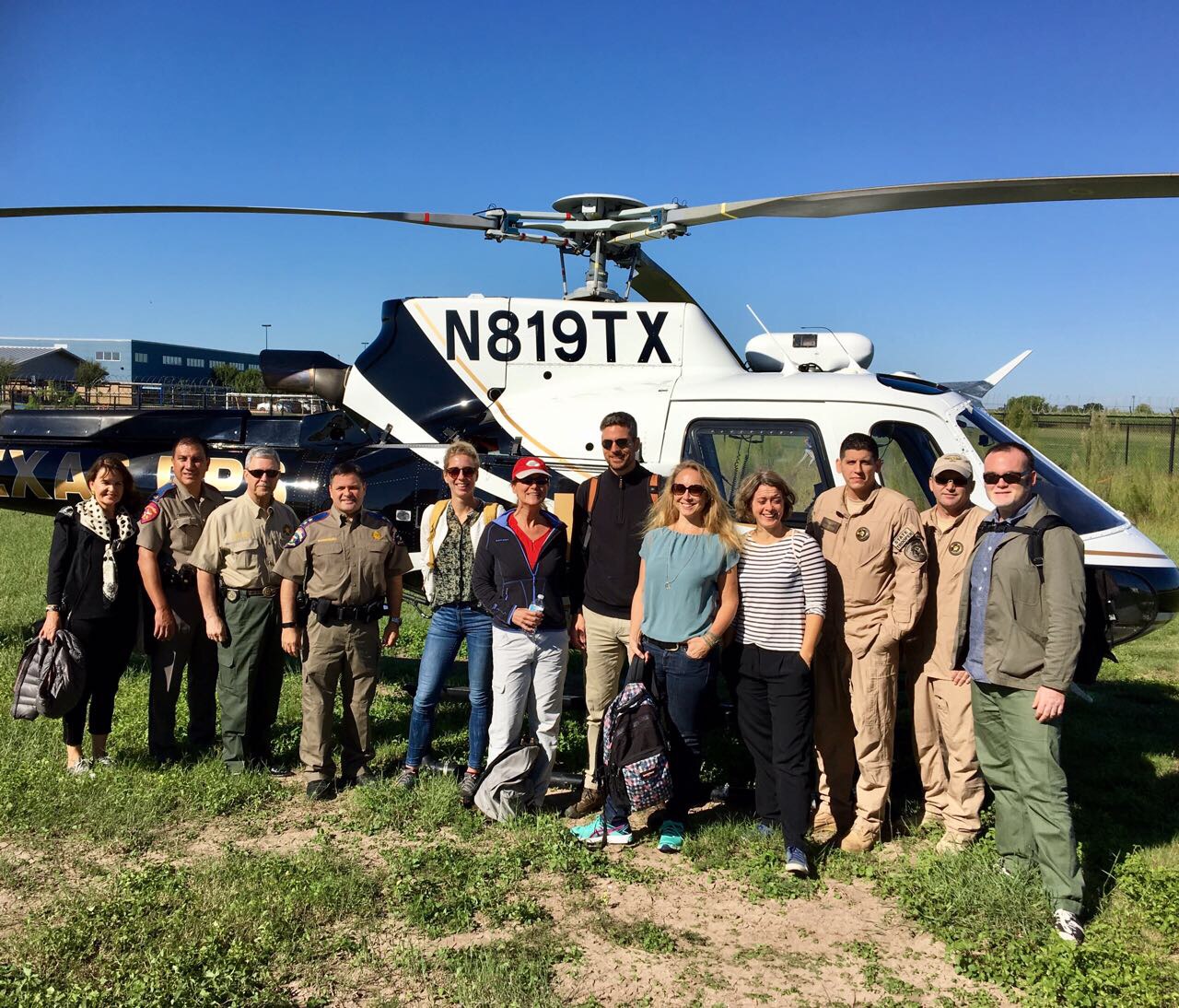
Six German journalists got a chance to take a closer look at US-Mexico border and all the ramifications of border security on a RIAS Berlin Commission week-long program in the Southwestern United States.After enlightening talks at the start of the week with academic experts addressing all aspects of immigration and border security at Texas A&M university, the six German anchors and reporters from leading broadcasters across the country took helicopter and high-speed patrol rides with Texas state police along the Rio Grande Valley area to learn first hand about the remarkably porous frontier and the drug-related violence that causes death and disruption on both sides.
The up-close-and-personal tour also included a grueling mile-long hike through thick jungle-like underbrush on trails leading from the river inland into Texas that are used by drug runners and migrants alike trying to evade border controls. Danger seemed to lurk around every corner with alligators in the river, snakes in the brush, and heavily armed Texas Rangers popping up out of the weeds along the trail to guard and escort the group through the wilds.
“It felt a bit like in a scene from the film ‘Apocalypse Now’. Only that this is a real life scenario,” said ARD Tagesthemen anchorman Ingo Zamperoni, who is on his second RIAS fellowship in the last 13 years. “Seeing this rugged border along this insanely windy Rio Grande river up front gives
you an idea of how impossible President Trump’s request for a impenetrable wall actually is. It’s just too vast even though you can understand the need for a more secure and better protected border.”
Also on the research-study trip are Anja Heyde from ZDF and MDR TV networks, Annette Betz from Bayerische Rundfunk (BR) TV, Petra Gute from RBB TV, Vladimir Balzer from Deutschlandradio and Alies Lindenboom from ARD TV.
“If you’re standing there at the Mexican border, you suddenly realize that America and Europe have lots in common these days,” said Betz, an anchor for Bavarian TV. “We’re searching for answers ourselves how to strike the right balance between humanity and security with border protection. It’s all about people and how we want to live.”
The German journalists also visited the border and senior U.S. Federal Reserve officials in El Paso, New Mexico’s Santa Teresa Port of Entry, and Veronica Escobar, a top candidate for Congress, for
an riveting talk as well academic experts to learn more about the issues that have become such political hot button issues in the United States and Latin America. The RIAS journalists also meet with former RIAS fellows in Las Cruces, New Mexico and in Houston.
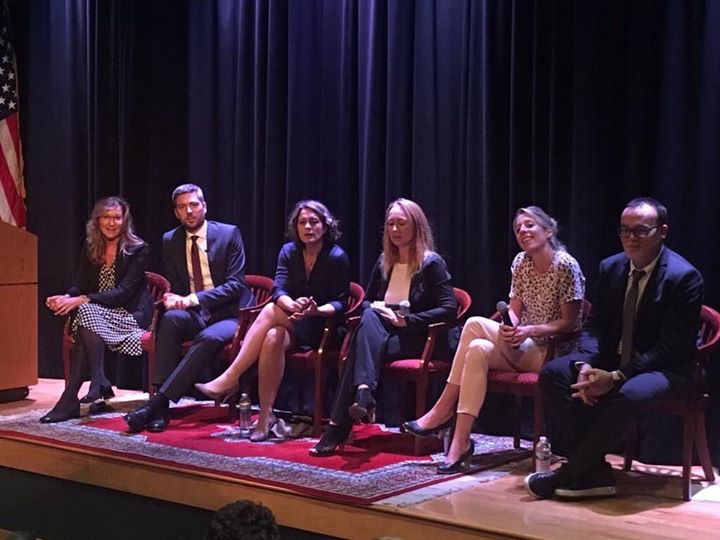
“If you’re standing there in McAllen at the Mexican border, then you suddenly realize that the United States and Europe have lots in common right now,” said Heyde. “We’ve also been searching for answers about how to the right balance between humanity and security.”
The program was organised with the help of RIAS Berlin Commissions board member Hildegard Boucsion and the organization’s long-time cooperation partner, the European Union Center at Texas A&M University, and associate director of the EUC at Texas A&M, Ann Klaus


