
The RIAS BERLIN COMMISSION is proud to announce the winners of this year’s RIAS Media Awards. The annual awards ceremony celebrating 26 years of the German-American exchange progra
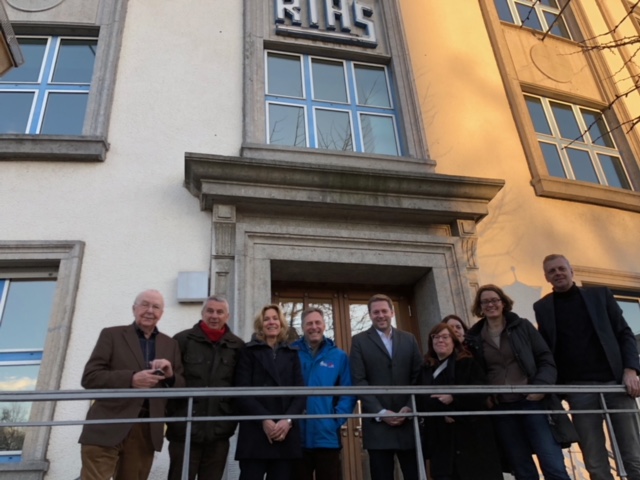
The RIAS BERLIN COMMISSION is proud to announce the winners of this year’s RIAS Media Awards. The annual awards ceremony celebrating 26 years of the German-American exchange program and the best in transatlantic broadcast journalism will take place on Thursday, May 17, 2018 at 7 p.m. at the RIAS Funkhaus am Hans-Rosenthal-Platz in Berlin, and all RIAS fellows and past winners are cordially invited to attend the ceremony in the historic building.
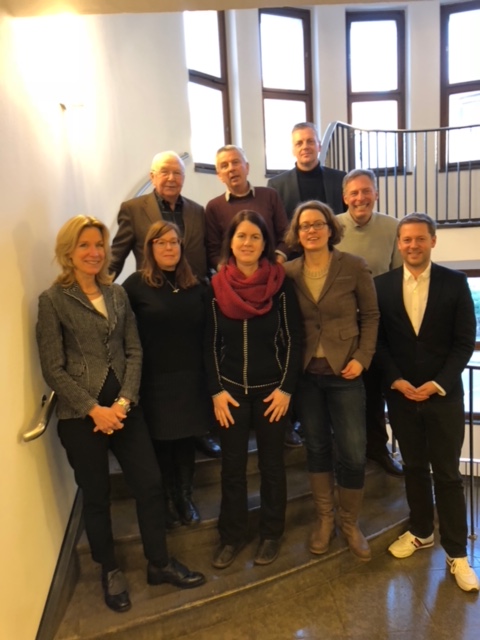
The jury made up of nine distinguished journalists from the United States and Germany met in Berlin to pick the winners in TV, Radio and Digital Media categories. The jury members engaged in lively discussions and were duly impressed with the high quality of entries in this year’s competition. It was an interesting year for journalism in both the United States and Germany with the first year of a new U.S. administration and the German federal elections.
The jury was made up of: Melissa Eddy (The New York Times), Anja Heyde (ZDF), Helge Fuhst (Phoenix), Michael Gargiulo (WNBC in New York), Susan Stone (NPR), Melinda Crane (Deutsche Welle), Claus Detjen (German newspaper publisher), Richard Meng (ZDF TV Council), and Christian Wilp (NTV, RTL).
There will also be a panel discussion examining the changing position and role of foreign correspondents in the United States in the lasgt year, and a RIAS fellows alumni meeting in Berlin on May 18.
This year’s prize winners are:
- Best TV film (long)
https://www.youtube.com/watch?v=lxGT9-dECNk&app=desktop
Jan Philipp Burgard: Alaska im Klimawandel. Wo Eis und Hoffnung schmelzen, 5.11.2017, PHOENIX, 43 Minuten
In his documentary “Alaska and Climate Change”, Jan Philipp Burgard uses awe-powerful images in Alaska of both vast glaciers that are melting away and the slowing disappearing island of Shishmaref to illustrate his gripping story. The film examines the impact of the new environmental policies in the United States resulting from the shift from the Obama to Trump administrations. Burgard takes viewers on a journey visit indigenous Alaskans who are fighting for their homes and includes protagonists on sides of the issue – the environmental activists as well as the business interests and Republicans who support the deregulation policies of the Trump administration. But he also takes a clear position in support of the enironment and the fascinating habitat that is Alaska.
Best TV (short)
- 2 films from Lara Wiedeking
Lara Wiedeking:
1) Letzte Hoffnung Crowdfundung
11. Dez., 3Sat
https://www.3sat.de/page/?source=/nano/gesellschaft/195859/index.html
2) Public Shaming
24. Aug., ZDF (heute+)
https://www.zdf.de/nachrichten/heute-plus/videos/public-shaming-hep-100.html
Using an innovative approach, Lara Wiedeking’s two entries cover complex aspects of life in the Internet Age, while at the same time shedding light on major societal and policy differences between Germany and the USA. Letzte Hoffnung Crowdfundung explores the growing use of crowdfunding to help address shortfalls of the American medical safety net. Public Shaming examines the online ‘outing’ of right-wing supporters following the violent white nationalist gathering in Charlottesville, Virginia. Wiedeking’s fresh voice and energetic style contribute to the strong journalism delivered in two relatively short television features.
Radio winners
- Best radio story
Arndt Peltner „Barbed wire and gated communities.“ Radio-Feature, 28 min.
Arndt Peltner’s “Barbed Wire and Gated Communities” was picked by the RIAS Media Prize jury as the outstanding radio feature of the year. It explains how freedom is gradually disappearing, piece by piece, because of barbed wire – at least for some. Ultimately, barbed wire is not only dividing the country but also society. It divides people from one another. The effects of the imaginary border drawing influence both the country and people’s consciousness. Arndt Peltner has put a bright spotlight on an important piece of cultural history.
Kerstin Zilm
„Vanlife – Hinter dem Hashtag“; „Kalifornien Speerspitze des Widerstands gegen Trump/Climate Policy: California Leads the Resistance against Trump”;“Red, White and Blue am Spielfeldrand – Sport und Patriotismus in den USA“ ; “Donald Trump und die Sioux – Proteste gegen Öl-Pipeline/Donald Trump and the Sioux – Protests against Oil Pipeline”
“Van Life – Behind the hastag,“ “California leads the resistance against trump”, “Red, White and Blue on the Sidelines, Sports and Patriotism in the United States,” “Donald Trump and the Sioux – Protests against Oil Pipeline”
The jury cited Kerstin Zilm for a series of outstanding radio features. She explains how camping vans have become a way of life for some yet a dream for others. She gives a voice to the resistance movement in California against Trump’s climate policies. She reports on athletes who opt not to stand any longer for the playing of the national anthem but are still patriotic Americans. And she follows Sioux who are demonstrating against a new oil pipeline. All four features masterfully depict how the policies of the U.S. president are changing American society. Kerstin Zilm gets close to her protagonists and gives listeners a chance to learn more about the divisions in the United States.
- Digital winner
https://www.nytimes.com/video/world/europe/100000005090433/libyan-migrant- bautzengermany.html
Ainara Tiefenthäler & Shane O’Neill: “Land of Good | Seeking Asylum in Germany, and Finding Hatred” 21. Sept., 14:09 min.
This year’s digital media prize goes to Ainara Tiefenthäler & Shane O’Neill for their film “Land of Good | Seeking Asylum in Germany, and Finding Hatred”, aired on the New York Times website as part of the series “Times Documentaries.” The film follows a young man who fled violence in Libya only to become the flashpoint of conflict in the eastern German town of Bautzen. The authors tell a compelling story that explores with subtlety and humanity the complex challenges surrounding immigration, extremism, and social polarization.


