
RIAS Berlin in-person programs cancelled to mid-2021, more online programs planned
RIAS Berlin in-person programs cancelled to mid-2021, more online programs planned
All in-person RIAS Berlin Commission exchange programs between Germany and the United States will be suspended through the first half of 2021 due to the Covid-19 pandemic but will hopefully resume in the second half of the year if conditions for travel and face-to-face meetings improve. That was the decision of the RIAS Berlin Commission taken at a recent (virtual) meeting of its board of directors.
The 10 Commissioners from the United States and Germany also decided to extend the weekly offering of virtual meetings on Zoom with featured guest speakers – many of whom are guest speakers on in-person RIAS exchange programs. There have been 37 such Zoom talks with 41 guest speakers over the last six months and the Commissioners consider the talks to be a valuable addition to the German-American exchange program offerings.
The Commissioners – five from the United States and five from Germany – said they especially hoped that more candidates for future RIAS in-person programs would take advantage of the on-line offerings and take part in the RIAS Zoom talks as they were described an excellent opportunity to get a sense of what the in-person programs are all about. The RIAS Berlin Commission staff will explore ways to make the RIAS Zoom talks even more attractive and useful for candidates for programs as well as for about 100 broadcast journalists in the United States and Germany who have already been selected for programs in 2020.
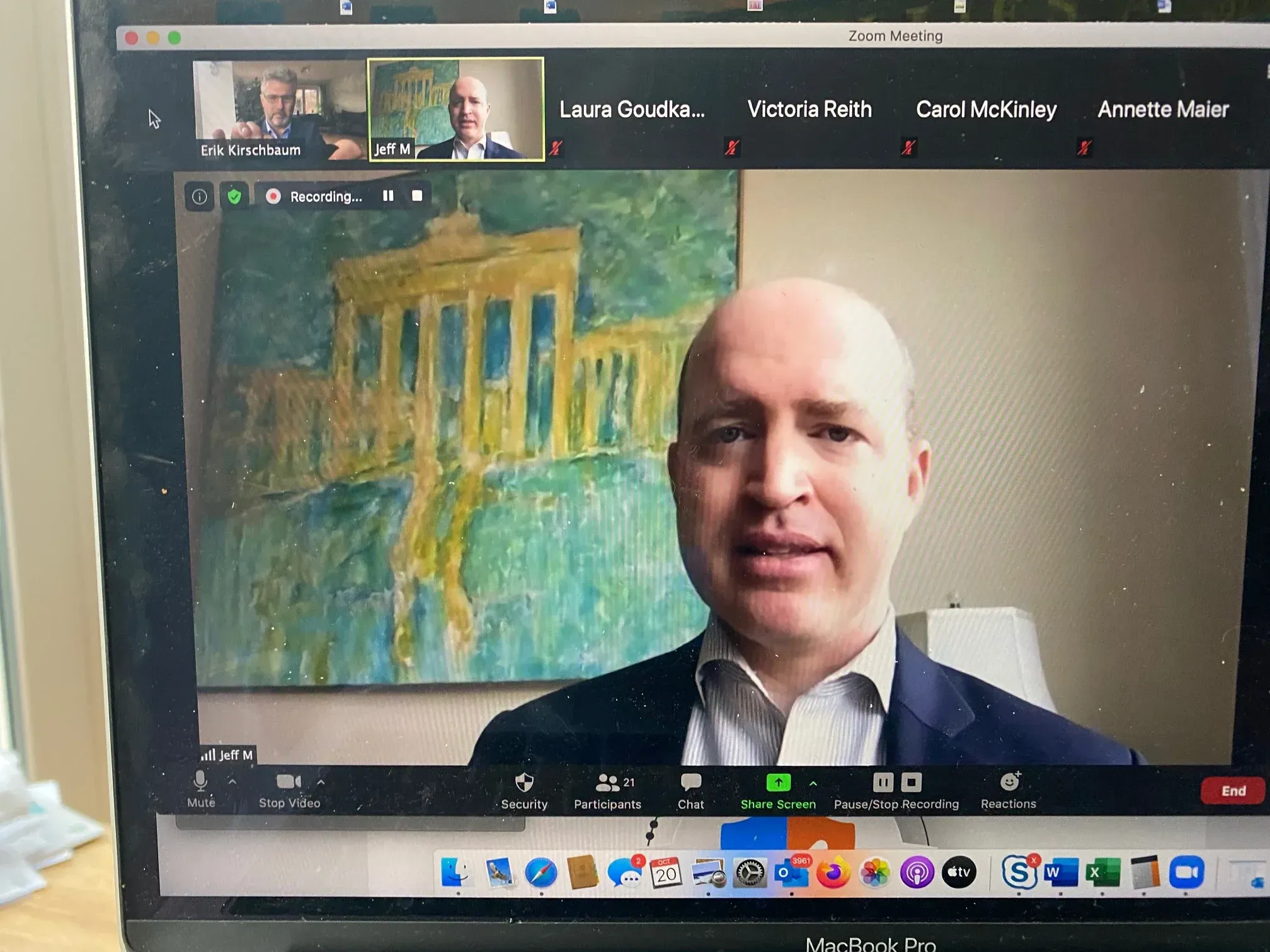
RIAS Berlin Commission Executive Director Erik Kirschbaum told the board members that candidates who regularly attend the Zoom talks are not only gaining valuable insights into some of the key issues in Germany and the United States but are also greatly raising their chances of taking part in a RIAS in-person exchange program in the near future. Participating in the Zoom talks is a tangible way to demonstrate their interest in the program and being part of the large RIAS alumni network. Several candidates in both Germany and the United States have taken part in almost all of the Zoom talks.
“It’s a great learning opportunity and there’s hardly a better way to prepare for the RIAS program than by taking part in the virtual talks on Zoom”, Kirschbaum said. “I’ve learned all kinds of interesting new things about the USA and Germany myself — like some fascinating details about opinion polls in Wisconsin and how nervous they were from a leading pollster Charlie Franklin at Marquette University. Or some really interesting insights on the mood in the White House from Reuters correspondent Jeff Mason or about the pre-election buzz in Michigan and the reassuring fact that the armed militia in Michigan was probably just a very small number of individuals rather than a large-scale movement from Michigan Radio’s Vincent Duffy about what’s on the minds of voters in Florida from LaCrai Mitchell of CBS News.”
Many of the 1,800 RIAS alumni in the United States and Germany have long been taking advantage of the eclectic group of guest speakers. The list of speakers ranged from former Republican Congressman Charlie Dent (R-Pennsylvania), who accurately predicted the state would probably first vote to re-elect President Donald Trump in the in-person voting conducted on election day on November 3 but that the counting of more than 2 million absentee ballots on and after election day would lead ultimately to a victory for Joe Biden to former U.S. national team soccer coach Jürgen Klinsmann.
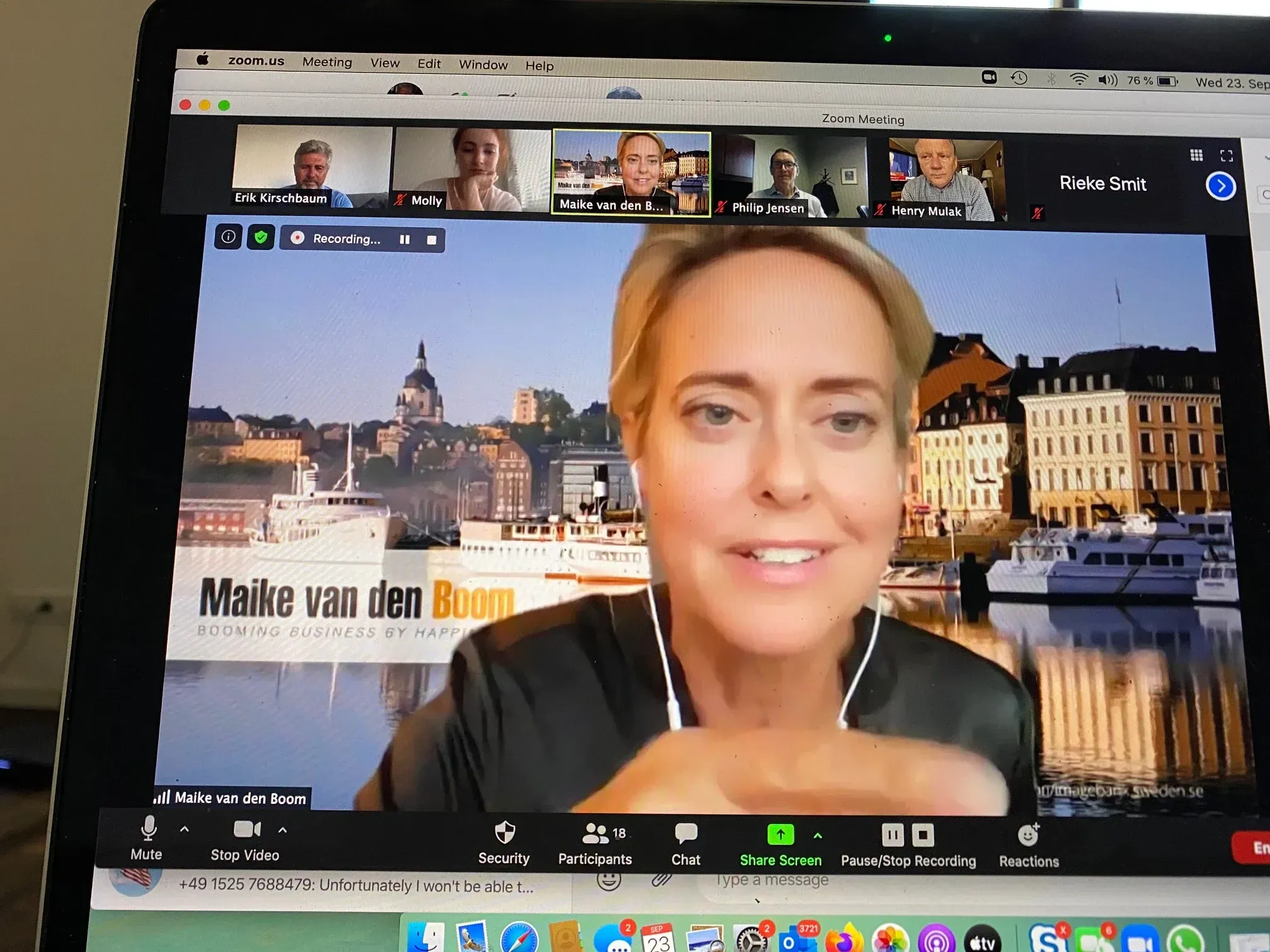
In an attempt to make the RIAS zoom talks more attractive and hopefully more accessible to even more alumni and candidates, the length was shortened to 30 to 40 minutes in November from 60 to 70 minutes. Most of the talks are recorded and later posted on the RIAS Berlin Kommission and the RTDNA RIAS Facebook pages as well as on a new RIAS YouTube page that we have created.
Here is a list of all the RIAS zoom talk speakers since April: Peter Beyer (CDU), Michael Gargiulo (WNBC, New York), Dr. Christoph Specht (RTL), Larry Miller (WUSA9, Washington), Nick Scheffler (University Minnesota), Matt Karnitschnig, Scott Libin (RTDNA chair, University of Minnesota), Stacey Samuel (Al Jazeera, Washington), Yami Virgin (Fox, San Antonio), Ainara Thiefenthaeler, Oezcan Mutlu (Greens), Mario Voigt (CDU), David Wagner (KLST, San Angelo, TX), Kenya Woodward (Tampa Bay, FL), Buzz Conover (Tucson, AZ), Ret. Lt General Ben Hodges, RIAS DJ Rik de Lisle, Peter Mücke (ARD Radio, New York), Peter Rough (Hudson Institute, Washington DC), Isabelle Koerner (NTV), Richard Roth (CNN), Andrew Ullmann (FDP), Juergen Klinsmann, Helge Fuhst (ARD), Andrej Hermlin, Basil Smilke (Democratic strategist, NY), Mark Murray (NBC political editor), Maike van den Boom (German author in Sweden), LaCrai Mitchell (CBS News, Florida), Anja Heyde (ZDF), Vladimir Balzer (DLRADIO), Tom Hawley (KSNV TV, Nevada), Charles Franklin (pollster Wisconsin), Jeff Mason (White House correspondent, Reuters), Gesa Eberl (RTL/NTV), Charlie Dent (former Republican congressman, Penn), Vince Duffy (Michigan public radio), Ryan Delaney (St Louis public radio), Oliver Sallet (Deutsche Welle, Washington DC).
The question of when in-person programs resume depends a lot on the conditions. As long as there are restrictions and limits on transatlantic travel still in place and as long as newsrooms in Germany and the United States do not allow external visitors or guests, it would be extremely difficult if not impossible to operate the RIAS exchange programs. So a lot will depend on when travel restrictions are ended and newsrooms open back up to external visitors.


