
RIAS talks with U.S. general, German politician and alumni from Texas, Arizona, Florida
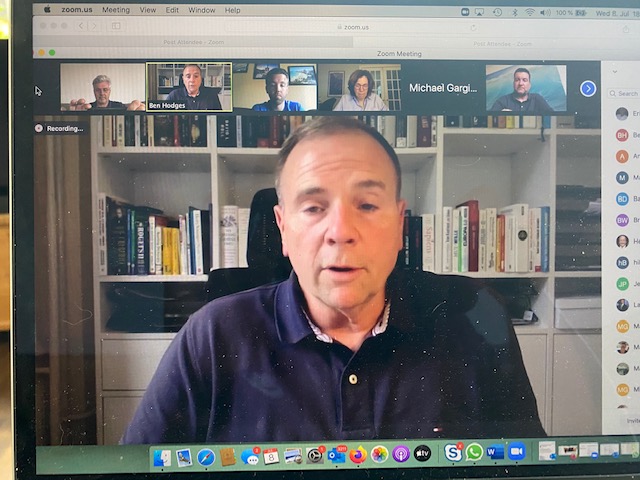
The weekly RIAS Zoom talks continued into July with three riveting conversations connecting RIAS alumni and friends of RIAS with virtual transatlantic meetings. Retired U.S. Army Lt. General Ben Hodges talked about the state of German-American relations in the wake of the U.S. decision to take about 9,500 of the 34,000 U.S. soldiers stationed in Germany out of the country. Hodges now works as an analyst in Frankfurt for the Center for European Policy Analysis (CEPA).
“I think it’s a colossal mistake,” Hodges said of the withdrawal plans. “Absolutely a gift to the Kremlin. They did nothing and yet they get a one-third reduction in U.S. capability in Germany, which is essential for rapid reinforcement and is important for deterrence.” He added that he believes the relationship between the United States and Germany is the most important the United States has.
“Germany is the one country that can probably influence Kremlin behavior and influence behavior of the Chinese Communist Party because of its economic power and it can bring along the EU. And also Germany has earned a sort of moral authority over the last seven decades that if it learns how to use this power, if you will, it doesn’t have to mean military, that’s why the United States should be pursuing Germany as our most important ally and be a lot smarter instead of honestly kicking them all the time in the public.” He added that there seems to be more criticism of Germany from the United States at the moment than of North Korea or Russia.
Hodges added, however, that Germany should do more to bolster its own defense, which has been a point of contention between the United States and Germany for decades. “There’s no excuse for Germany not doing more,” he said. “I’m not ever going to defend them for doing so poorly in terms of the level of readiness of the Bundeswehr, their willingness to spend more.” He said that because Germany has coalition governments it was unlikely that Germany would substantially increase its defense spending towards the 2 percent target in the future.
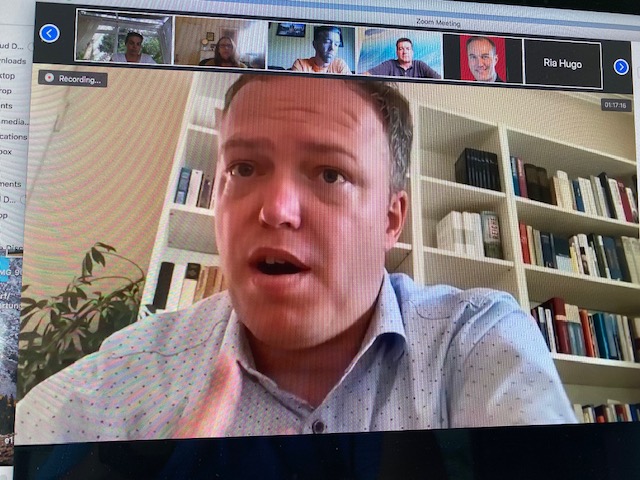
In an earlier Zoom talk on June 25, Mario Voigt, the parliamentary floor leader of the conservative Christian Democrats (CDU) in Thuringia, talked about his state’s astonishing success in combating the coronavirus crisis as well as its recent reopening. He also talked about the political upheaval in his state earlier this year when the CDU in Thuringia become embroiled in a political scandal by supporting a candidate for governor from the Free Democrats Party (FDP) who also was supported by the far-right AfD party. The FDP candidate resigned and the left party governor Bodo Ramelow was later re-elected for a second term, but the CDU suffered during the scandal and Voigt was promoted to parliamentary floor leader.
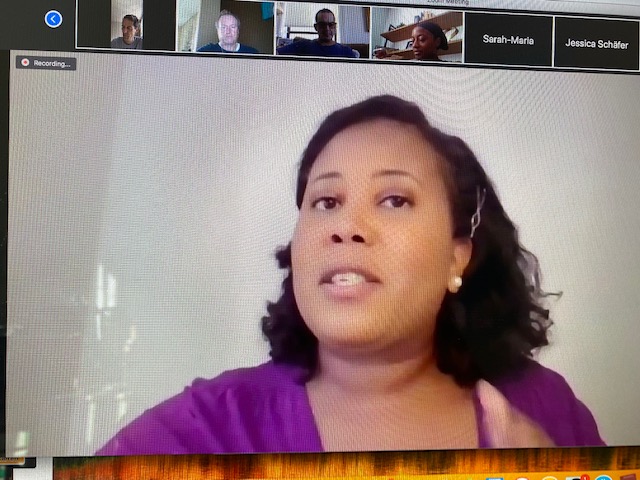
And in a Zoom talk on July 2, three RIAS alumni from Florida, Texas and Arizona talked about the sudden rise in Covid-19 infections in their states and shed light on what had gone wrong in recent weeks. Kenya Woodard from Tampa in Florida, David Wagner from San Angelo, Texas and Buzz Conover in Arizona talked about some of the bleak moments in their states and an ominous death of public confidence in many of the elected leaders in their respective states. They were asked by a RIAS alumni on the Zoom talk from Cologne if there was any leader in their states or in the United States whom the public was trusting and their surprising answer was: nobody. There was not even widespread public faith in the advice from Dr. Anthony Fauci, the director of the National Institute of Allergy and Infectious Diseases, they said.


