
RIAS Media Prize winners talk about their award-winning reports
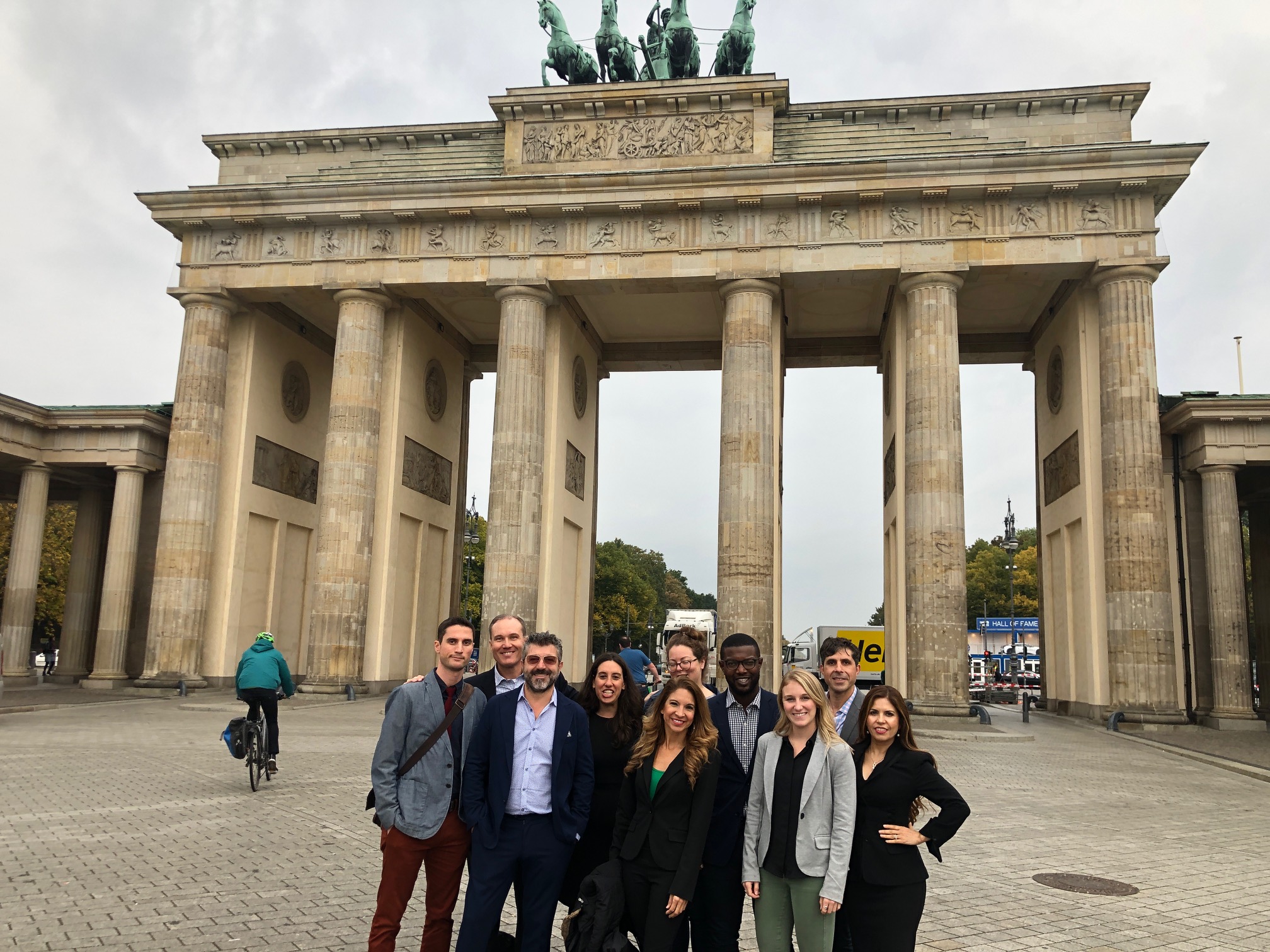
As part of a series looking more closely at the 2020 RIAS Berlin Commission Media Prize winners, here is an interview with Monica Quintero of KPEJ KMID TV in Odessa/Midlands, Texas and David Wagner of KLST/KSAN in San Angelo, Texas who worked on their story “Beyond Borders – A Trip Abroad” during their two-week RIAS Berlin Commission fellowship in September 2019. Their reporting aired on those stations in Texas in November 2019.
Question: Where did you get the idea to do your stories?
Monica Quintero: Before going to Europe, we read many of the books that RIAS
recommended and found out the countries there were dealing with many of the same heated issues that we deal with here in America. So, that’s where we got the idea from for the stories and along the way, they developed into much more than we even anticipated. We were given access to
some top leaders and that helped us give even better insight to many of the issues.
Question: When and exactly where did they air? Were they part of a nightly series at both of your stations? Or even more widely seen?
Monica Quintero: Air Dates: Nov. 24 – KMID, Nov. 26 – KPEJ (Midland/Odessa, Texas market), Dec. 22 & 29 – KLST (San Angelo, Texas market). On those dates, we aired the 30-minute documentary. However, before those Dates, we aired shorter versions of the story to promote the documentary. We also had promos that aired on our stations. In addition, we came up with an in-depth digital plan to allow anyone to have access to the documentary and each of the stories.Question: What’s the bigger story you hoped to tell?Monica Quintero: It was a simple idea. Our hope is to expand the knowledge of our audience and open their minds to what’s going on around the world, bringing them both sides of the story!
Question: How much time did you spend on your story? Talking with the protagonists and others?
Monica Quintero: I wish we could sum this up! We spent countless hours on this project. For weeks, every spare moment was spent working on these stories. We were living and breathing this project for a while. Sometimes we wondered if we were actually going to be able to put it all together. In the end, it was exciting to see.
Question: How did you manage to squeeze all the work into your RIAS fellowship? Did you sleep at all?
Monica Quintero: LOL! Lets just say we didn’t sleep much. A couple of nights, we spent shooting all night along the Berlin wall and other locations there. We both got sick. Poor David was sneezing and coughing our last night of shooting. He was a trooper and kept his composure while we shot. I got very sick as well and wondered if we were going to be able to accomplish our goal. Somehow it all fell into place and looking at the finished product made it all worth it!
Question: Was it difficult to find the protagonists in your story? Or did they fall into your lap?
Monica Quintero: Some fell in our lap, others took work. I felt the key to our success was being ready. We carried two cameras and two tripods everywhere, always being prepared. We’re also both passionate about being journalists and wanted to hear from everyday people as well. It was just about being persistent and asking people their thoughts… no matter where we were.
Question: Do you think things in Germany could serve as a prototype for the United States? Or are the two countries just too different in too many ways?
Monica Quintero: That question is one I wanted to leave up to the viewers.
Question: Do you think Americans are open to learning from the experiences of other countries?
Monica Quintero: I do think Americans are open minded. However, it was important for us to bring them unbiased information. So many times we hear in the media that journalists are incorporating their political views.
Question: Your story on gun control is extraordinarily neutral – anyone watching that story would never know how you personally felt about gun control in Germany or Texas. How difficult was that and do you feel that is what journalism should be?
Monica Quintero: YES, YES, YES! True journalists present both sides of the story and you should never be able to guess their political views or stances on issues. In fact, David and I are very traditional, old-school journalists. While we are friends and colleagues, we’ve never discussed our political views with one another. Surprising… right? It’s easy for us because that’s what we were taught made good journalists.
Question: Anything else you’d like to add?
Monica Quintero: We wanted to present these stories in a dynamic way of storytelling, stories that are important issues in our countries. We felt we accomplished that and are just truly grateful for the experience!


