
RIAS alumni Worsley running for RTNDA Chair-Elect
September 14, 2022
RIAS alumni Worsley running for RTNDA Chair-Elect
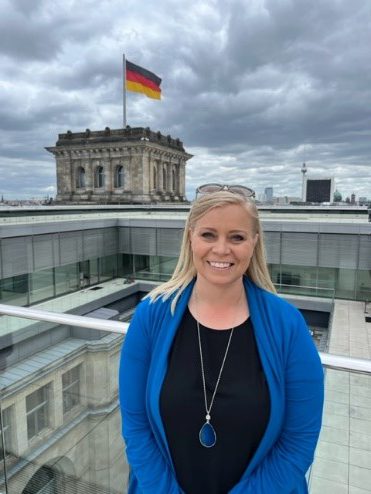
Sheryl Worsley is running for the position of Chair-Elect of the Radio Television Digital News Association (RTDNA board), which calls itself the world’s largest professional organization for broadcast and digital journalism. It is also RIAS’s partner (www.rtdna.org) in the United States and has been an important avenue for American fellows to take part in RIAS programs to Europe over the years.
Worsley, Vice President of Podcasting at KSL in Utah, was the News Director at KSL Newsradio for 15 years before moving to an all digital role as Director of Audience development in 2018. She has been a board member of RTNDA for the last 12 years.
The RTDNA elections run to September 16. Here is more information about the candidates. The RIAS Berlin Commission caught up with Worsley to ask her about her candidacy and the role that RIAS plays in RTNDA:
Why do you want to become the RTDNA chair-elect?
RTDNA does so much for journalists and for the news reporting industry. An opportunity to serve as chair is one I will not pass up. I have served on the RTDNA board for 12 years, and the organization has come to my aid fighting open records battles and attacks on the First Amendment in my state and region many times. This is my opportunity to volunteer and give back.
What does the RTDNA chair do?
The chair works in cooperation with the full board and RTDNA staff to ensure journalism is strong. The three pillars of what we do is to First, provide training- a great opportunity for learning and networking is happening this week at our convention, RTDNA22 in Indianapolis. Secondly, RTDNA recognizes, supports and honors excellence in responsible journalism. The National Edward R. Murrow awards are a meaningful and sought-after honor by journalists and take place next month in New York. Lastly, RTDNA protects against erosion of the First Amendment and fights for open records and government transparency. This is done on the local and national levels.
What are the challenges facing RTDNA?
Reporters and photojournalists face the crucial challenge of broadcasting and publishing truth in a growing sea of misinformation. We’re doing it while politicians and a segment of our viewers, listeners and readers attack our credibility. Many reporters and staffers put their job first, even when the safety risks increase while covering protests, counter-protests or covering the economic ravages and physical devastation of war and a post-COVID reality. Our constitutionally protected duty to inform the public and documenting truth in our communities has never mattered more. I’d like to be a part of keeping journalism strong.
What do you bring to the table? What do you think you could do better or to improve it?
I bring a willingness to innovate and look at challenges with a critical and problem-solving eye. RTDNA is a great organization and we respond quickly, but I think there are ways for the organization to be more nimble and change in ways that help newsrooms which have also changed with the audience and market demands of our time. One of the things I love about RTDNA is the networking and support I get from my association with news leaders and journalists all over the country. I’d like to see more of these opportunities.
You have been the Region 3 director on the RTDNA board for 12 years. Where exactly is Region 3? What have you learned from that experience?
Region 3 encompasses 5 states in the intermountain west in the U.S.- Arizona, Colorado, Wyoming, Utah and New Mexico. In the twelve years of serving this region I have learned that if we want journalism protected, we must we willing to invest personally in the fight. I worked with the Utah courts and the state media coalition to make sure cameras were allowed in courtrooms. I have testified personally multiple times before our state legislature in support of proposed laws friendly to open records and the first amendment and against those which are not. I have asked RTDNA to enter similar battles in other states in our region and RTDNA has answered the call every time.
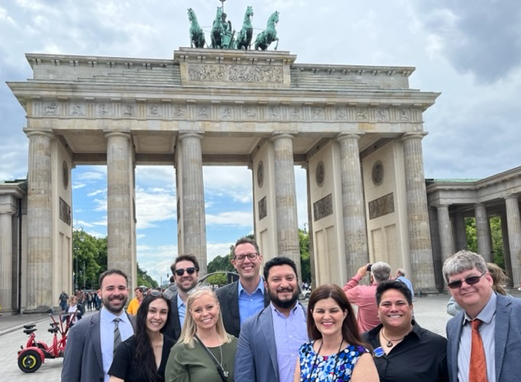
As someone (fourth from left) who has been on the RIAS program, how important is the RIAS fellowship for RTDNA?
The RIAS fellowship is a wonderful opportunity for journalists in both America and Germany to widen their horizons and learn. I personally enjoyed seeing the EU, NATO and learning more about the geo-political forces operating in Europe. These are things that you can learn by scholarship and study, but not in as concrete a way as seeing things first-hand. I am grateful RIAS operated in post WWII, allowing for the free-flow of information to a repressed population. In that spirit, journalists in both the U.S. and Germany are publishing to their audiences with the goal of access to good information for as wide an audience as possible.
I also enjoyed the association with German reporters and the U.S journalists on my trip will carry these wonderful new relationships the rest of my life.
Do you think International exchanges like this are beneficial to US journalists?
Absolutely. Fellowships like RIAS are a way for journalists to not only learn from the ideas of wonderful hosts like the German journalists, but it’s a rare opportunity to self-reflect about their own work. A chance for the journalist to examine what they are doing and what they may be missing or could add. The exchange of ideas and possibilities is invaluable.
You have been working as a journalist for about 20 years. Has that experience helped prepare you for the chair-elect?
I was a news director for 15+ years in a radio newsroom. The leadership opportunities and lessons learned while doing that work I believe have prepared me for this opportunity, should the membership elect me. I’ve also learned some incredible life-lessons and worked with some amazing people. It’s a great thing to watch as people sacrifice their time, skill and talent in the service of informing their community.


