
American journalism students on 3-week fellowship to Germany
July 3, 2022
American journalism students on 3-week fellowship to Germany
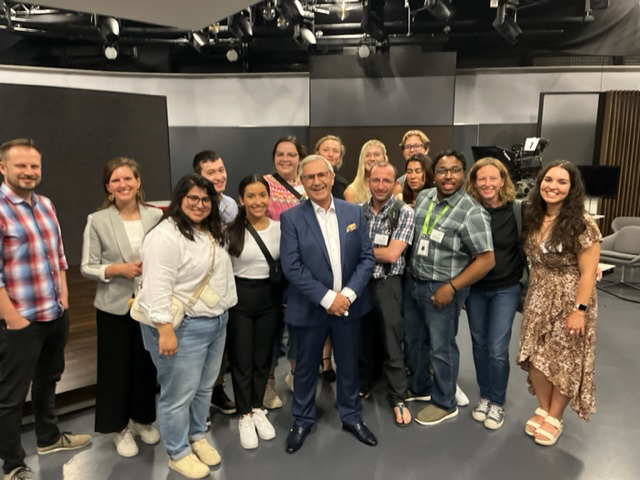
The third annual RIAS Berlin ERP fellowship for American students in Germany got off to a busy start with dozens of meetings with German journalists, editors, directors, politicians, community leaders, experts and political analysts. The Americans will spend a total of three weeks in Germany, learning more about the role that broadcast journalism, including from the legendary Radio in American Sector Radio and TV broadcaster (RIAS), played in the peaceful conclusion to the Cold War.
The students came to Germany on June 19 from universities across the Midwest, South and Southwest — such as Oklahoma, Arizona, New Mexico, Texas, Montana, Florida, Ohio, Wisconsin, Minnesota and Pennsylvania. For many of the American students it was their first trip outside the United States and for some the first journey outside their home region.
German government deputy spokesman Wolfgang Büchner also met the group.
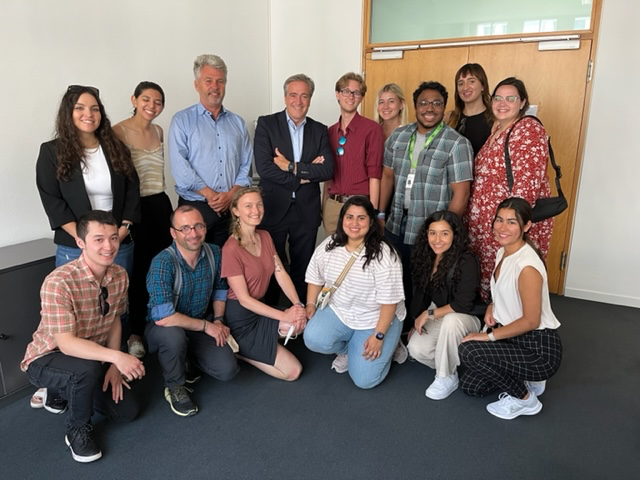
The goal of the ERP program, which was created with support from a grant from the Economy Ministry, is to expand horizons, help connect young American journalism students with their peers in Germany and help aspiring journalists in both countries learn more about journalism training in each others’ countries.
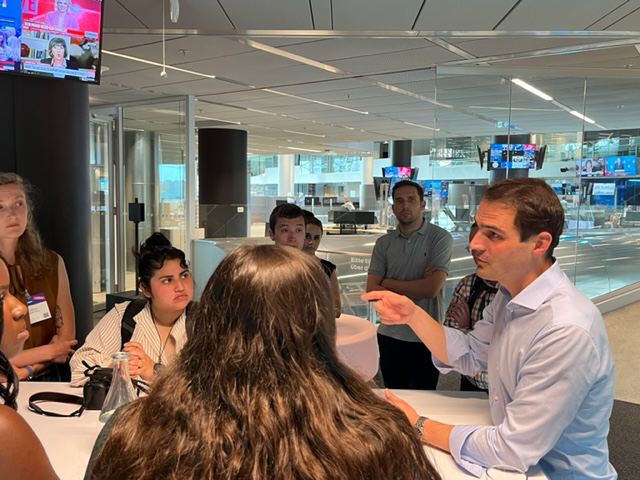
The ERP program is supported by the Transatlantic Program of the Federal Republic of Germany. It is funded by the European Recovery Program (ERP) of the Federal Economy and Energy (BMWi) Ministry.
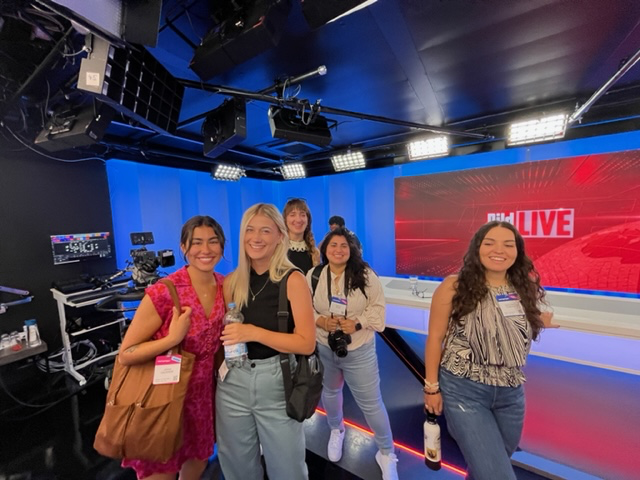
Although most of the three-week program takes place in Berlin, the students have also made excursions to Leipzig and Hamburg. They will also be spending two days in Cologne in their third and final week before flying home to the United States on July 9.
In Berlin, some of the highlights included watching NTV’s early morning “Frühstart” news interview program with SPD party chair Lars Klingbeil being interviewed by RIAS alumni Daniel Heyd. Klingbeil also answered questions from the young Americans and admitted he and his family enjoy taking their vacations in Kentucky. He also explained a big difference between the United States, where the party leaders are not as important or powerful, and Germany or other European countries, where party leaders are often the leader of the government as well.
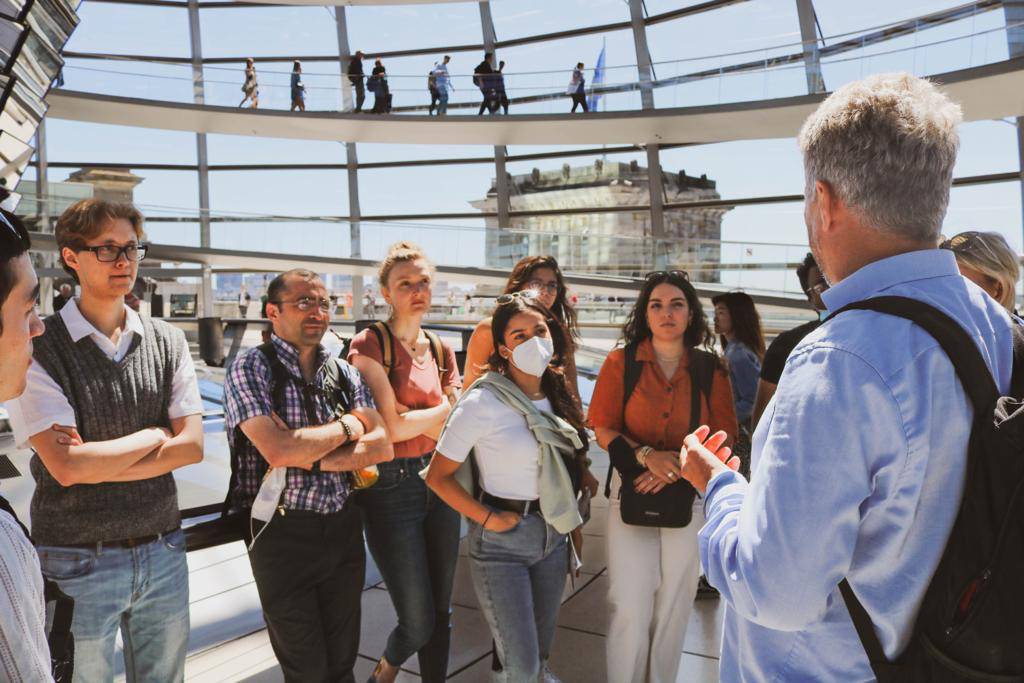
After quickly mastering Berlin’s public transportation network and especially the ubiquitous U-Bahn (subway) network, the Americans had a tour of the Reichstag building, a bike tour along a 25-km segment of the Berlin Wall Bike Path, Tempelhof Airport where the Airlift was centered, met NTV journalists Christian Wilp, Nina Lamers and anchor Jan Hofer. They also learned more about public radio in Germany from Deutschlandfunk correspondents Katharina Hamberger and Marcus Pindur — who was duly impressed that the students knew the history of Sudentendeutschland regions of Czechoslovakia that was annexed by Nazi Germany shorted before World War II started.
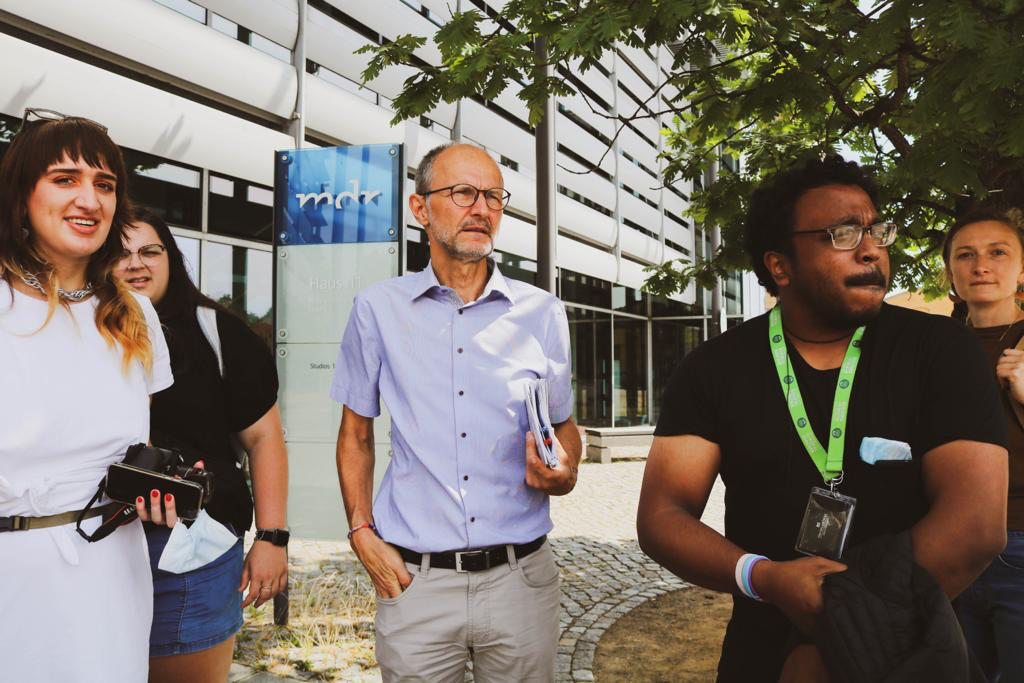
In Leizpig student alumni Sarah-Maria Köpf gave the students a walking tour of the center of the historic city, pointing to the square where the famous Montagsdemos took place, before Andreas Franz of MDR TV gave a detailed tour of the MDR studios in Leipzig and Lars Beger gave a fascinating talk at student radio Radio Mephisto — a student-run station that he explained was created and based on American student-operated radio stations. Bastian Wierzioch, a journalist who covers far-right extremists, warned of the perils expecially in eastern German from the far-right.
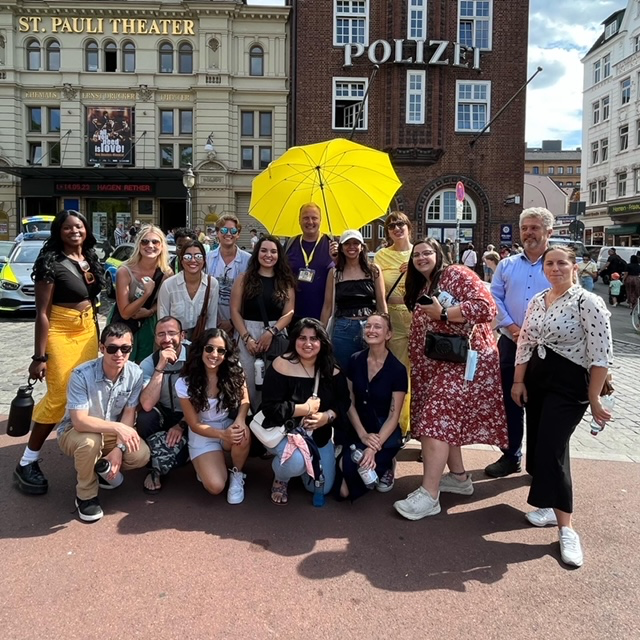
Back in Berlin, the students took a boat cruise of the government quarter together with Reuters White House correspondent Jeff Mason and also visited the Stasi prison in Hohenschönhausen. They also had the chance to spend several hours at the Bernauerstrasse Berlin Wall memorial sight with tour guide Peter Keup. The students spent two days in Hamburg, meeting top journalists at Der Spiegel and at ARD TV such as Helge Fuhst, Damla Hekimoglu and Michail Paweletz as well as US consul general Darion Akins. They also took a walking tour of the famous Reeperbahn red-light district and learned more about the two years that the Beatles spent learning their trade with a punishing performance schedule.
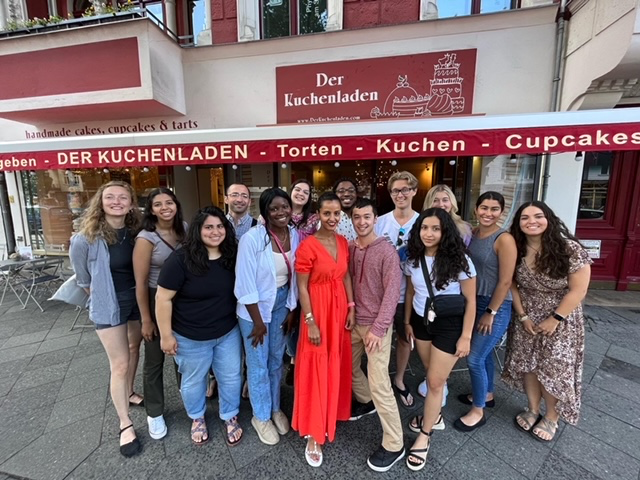
In Berlin the Americans learned more about how young German journalists learn their trade on a visit to the Freetech Academy at the Axel Springer publishing company from Kristin Schulze, head of academic affairs. They also visited WeltTV’s studios and had a talk with editor-in-chief Jan Philipp Burgard as well as fellow alumni Nadine Jantz, Andreas Büttner and Leonie von Randow. The Americans met a group of German alumni for a talk about China from RIAS alumni and RBB radio correspondent in Beijing Benjamin Eyssel.
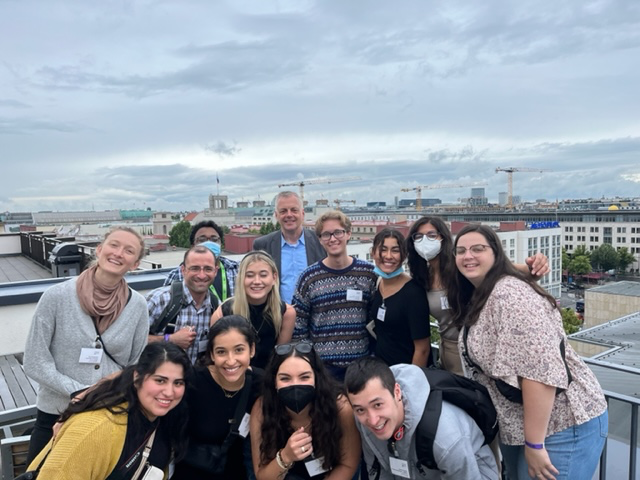
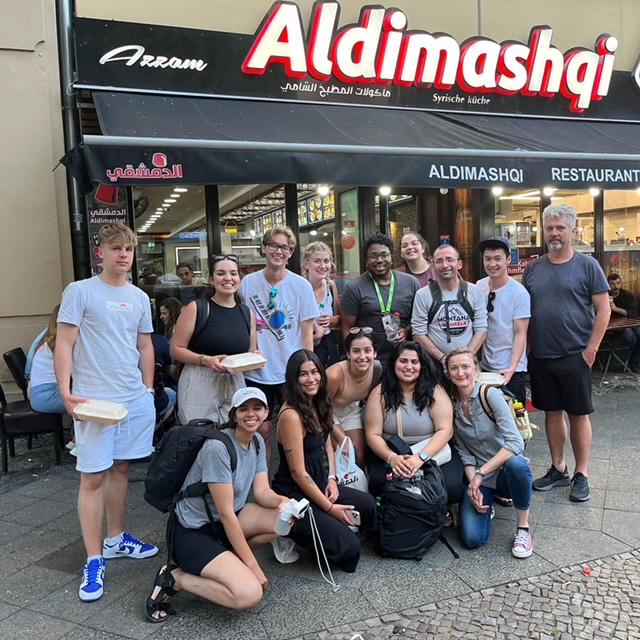
They also visited the Allied museum, had a talk with leading SPD politician Sawsan Cheblin and had walking tours of the Kreuzberg ethnic neighbor with Greens politician Özcan Mutlu and the Neukoelln neighborhood for Arabic-speaking immigrants with a Syrian refugee Firas Zahri — that ended with diner in the famous Aldimashqi restaurant that was created by Syrian refugees in 2015.
During their third and final week, the students will visit Cologne, the Foreign Ministry and the USA embassy.


