
American journalists visit Brussels, Cologne & Berlin on fellowship
June 18, 2022
American journalists visit Brussels, Cologne & Berlin on fellowship
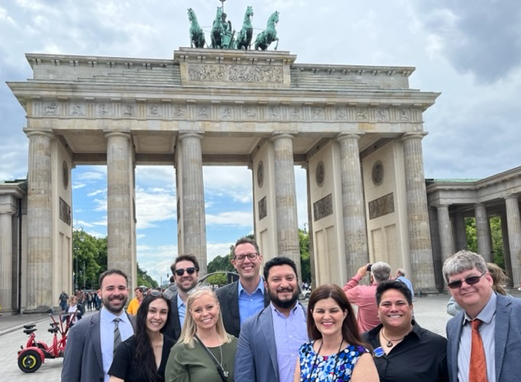
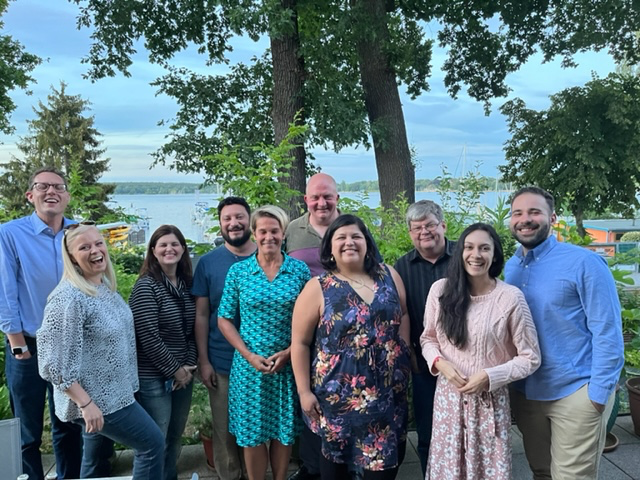
Ten American broadcast journalists from Atlanta to Salt Lake City and from Oklahoma City to New York City spent two weeks on a whirlwind RIAS Berlin Commission fellowship, learning a lot about Germany, NATO and the European Union at a time of crisis over Russia’s invasion of Ukraine. The Americans were able to talk to senior policymakers, leading journalists, activists, refugees, immigrants and political experts in all three cities during the first standard RIAS exchange program to Europe since before the pandemic in 2019.
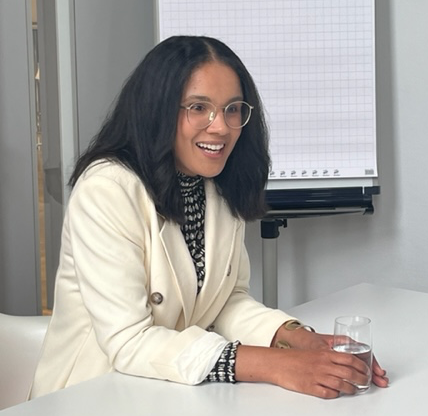
The fast-paced and exhaustive program began in Brussels on June 6 with meetings with such luminaries as journalist Teri Schultz (NPR, Deutsche Welle), senior NATO policymakers from the United States, the UK, Slovakia, and Croatia who talked about the crisis in Ukraine as well as the bids to join NATO from Finland and Sweden. They also met European Commission figures such as Haydn Schofield, Frederic d’Hondt, Stefan de Keersmaecher, and Peter Stango, the foreign affairs policy spokesman on EU support for Ukraine.
In Cologne the Americans were treated to a riveting talk with WDR program director and leading journalist Jörg Schönenborn, RTL anchor Charlotte Maihoff and a Ukranian journalist, Karolina Ashion, who is now doing a daily news broadcast in Ukrainian on the NTV network’s social media channels. The Americans also met about 20 members of the Cologne alumni chapter at the Brauhaus Deutz before taking an early-morning train to Berlin — where they met a leading member of the SPD, Sawsan Chebli, and Politico’s Chief European Correspondent Matt Karnitschnig. They also met with about a dozen members of the Berlin alumni chapter.
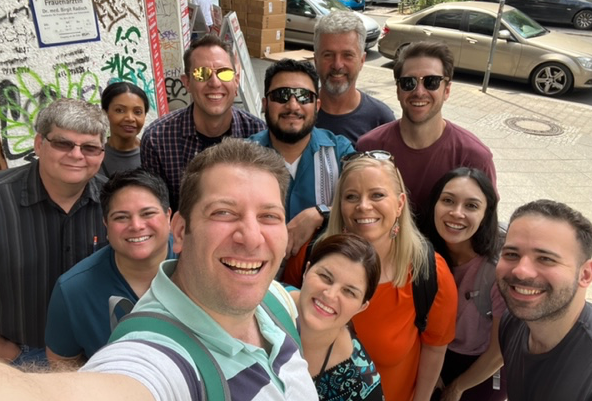
After an illuminating Saturday morning stroll together with Syrian refugee Firas Zahkri of the Neukoelln neighborhoods that are overwhelmingly population by immigrants and the famous Sonnenallee avenue that is better known locally as Arabic Avenue and lunch at a famous Syrian restaurant, Aldimashqi, the Americans had an eye-opening visit to the Stasi prison in Hohenschönhausen where political prisoners were held in Communist East Germany.
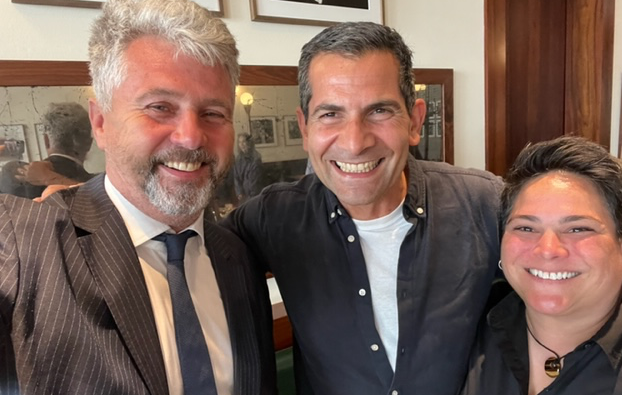
ZDF anchor Mitri Sirin and RBB reporter Petra Gute enlightened the group about the differences between TV and radio journalism in Germany compared to the United States while political consultant Julius van de Laar, Rob Schmitz, the NPR correspondent in Berlin, and musician Andrej Hermlin were able to expand the horizons of the journalists with talks about life in Germany during a series of food-filled meetings at the famous Cafe Einstein. The Americans were able to visit the US Embassy in Berlin in the afternoon along with the Holocaust memorial before listening to a speech from Defense Minister Christina Lambrecht, who tried to defend Germany’s assistance to Ukraine despite criticism from Ukraine and the German media that it should be doing more.
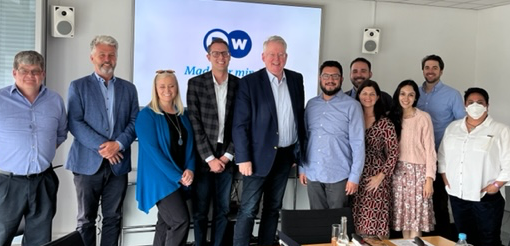
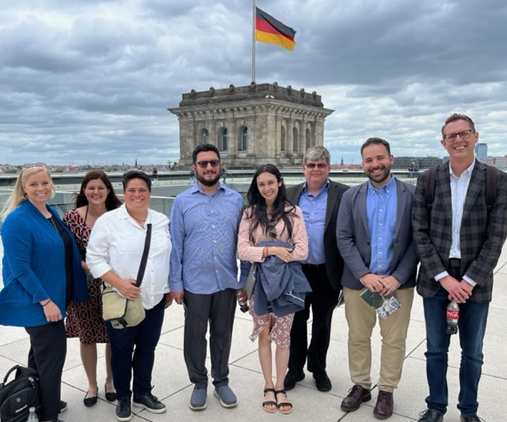
The Americans got a lively tour of the Reichstag parliament building, its spectacular glass rooftop dome and its fascinating history — complete with Russian profanities scribbled on walls inside the parliament building by invading Soviet troops at the end of World War Two. They also had the chance to talk with Deutsche Welle’s director general Peter Limbourg and news director Max Hoffmann at DW headquarters in Wedding.
The Americans also enjoyed a spectacular evening with the famed German radio and TV personality Joerg Thadeusz and Anna Engelke, a journalist who has spent the last several years working as the spokeswoman for President Frank-Walter Steinmeier before returning to journalism this year.
After hearing so much about the opposition Alternative for Germany (AfD), an extreme right-wing party in Germany that all other parties have shunned, the Americans met with a senior member of the AfD in parliament — Beatrix von Storch. That was followed by a meeting with Tagesspiegel newspaper journalist Elisabeth Binder at the famous Berlin newspaper offices and a meeting at the Federal Press Office with deputy government spokesman, Wolfgang Büchner — the former editor of Der Spiegel news magazine.
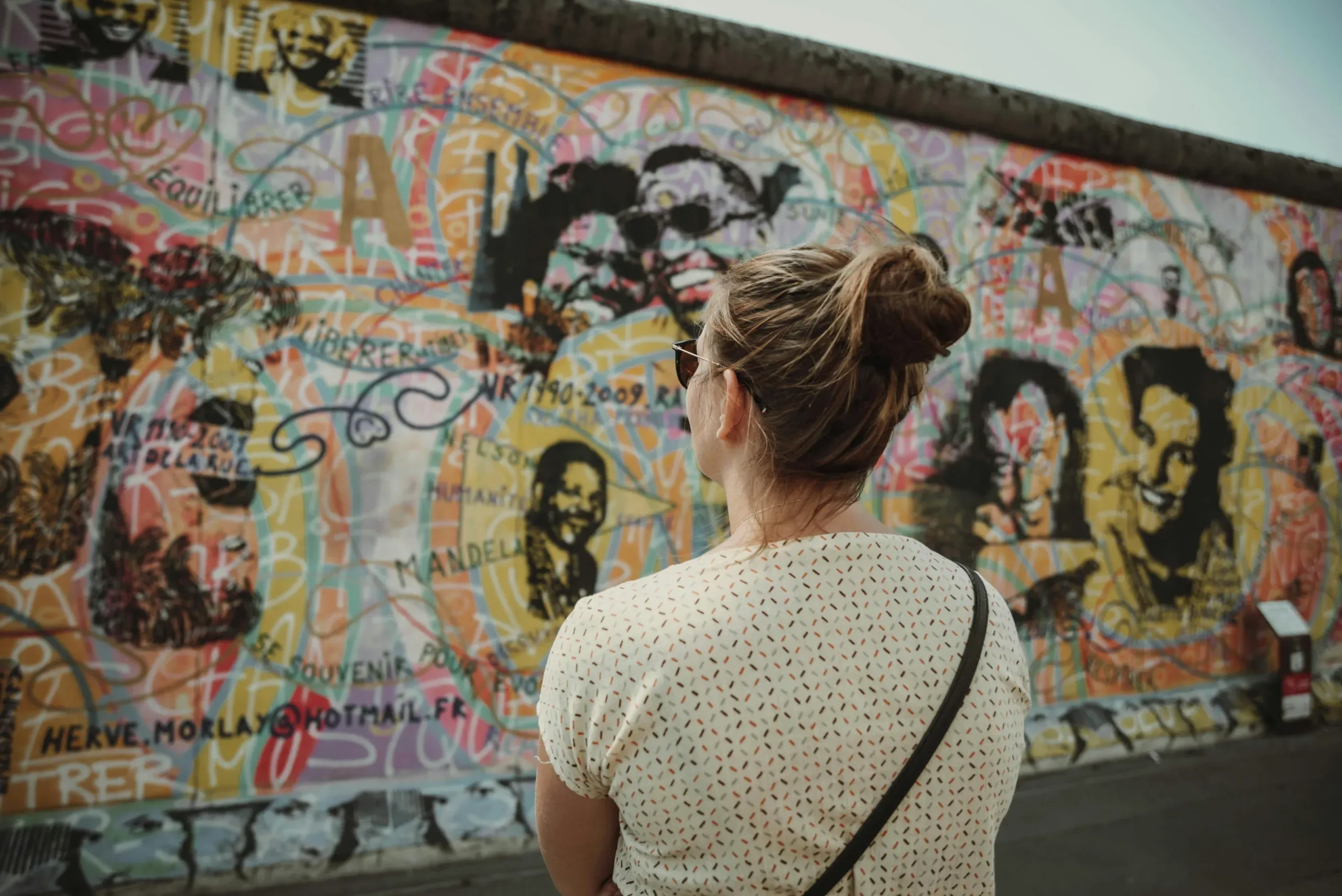
The creator of the famous East Side Gallery open-air art exhibit on the East Side of the Berlin Wall, Kani Alavi, explained how the 1.3-km long project happened in early 1990 and how he has successfully fended off developers who would rather tear down one of the last remnants of the Berlin Wall to build apartments.
Deutschlandfunk correspondents Katharina Hamberger and Markus Pindur were able to shed light on their work at Germany’s most influential news radio station from the offices of the Bundespressekonferenz – a uniquely German room for news conferences where spokesmen and spokeswomen from all the ministries are invited to answer questions from the assembled capital press corps three times each week on Mondays, Wednesdays and Fridays.
The journalists also visited WeltTV, where editor-in-chief Jan Philipp Burgard talked about the all-news station and his time as a correspondent in the USA for the ARD network while joined by RIAS alumni Lena Mosel and Leonie von Randow.
Özcan Mutlu, a leading figure in the Greens party and leading voice in Germany’s increasingly influential Turkish community, gave the Americans a tour of the ethnic neighborhoods in Kreuzberg just south and west of where the Berlin Wall stood during the Cold War that have in the meantime turned in the new and vibrant heart of Berlin.
In Berlin, journalist Anna Noryskiewicz talked about her work as a journalist for CBS News before the Americans had the chance to savor an eye-opening and at-times emotional lunch with a group of 20 Ukrainian women and their children.


