
German students learn more about U.S. journalism in Midwest, Southwest
Eight groups of German journalism students and young journalists are spending two weeks visiting leading American universities and journalism programs in the Midwest and Southwest on a RIAS Berlin Commission program that was launched thanks to a grant from the European Recovery Program (ERP) of the Economy Ministry. In groups ranging from one to three, the German students are visiting the University of Oklahoma, Texas A&M, Southern Illinois University, New Mexico State University, Arizona State University, Indiana University, University of Minnesota and the University of Wisconsin-Oshkosh to learn more about how young Americans learn the tools of their journalism trade.
The Germans — 10 of whom are making their first trip to the United States — have learned that most large American universities have their own campus TV station, radio station and newspaper. The student broadcasting stations are often part of the public broadcasting system in the United States and their work is sometimes fed into the national news broadcasts on PBS TV or National Public Radio (NPR). It has been an eye-opening experience for the German students, who have got to see first-hand how American journalism students get lots of hands-on experience reporting issues on their campuses and in their local communities.
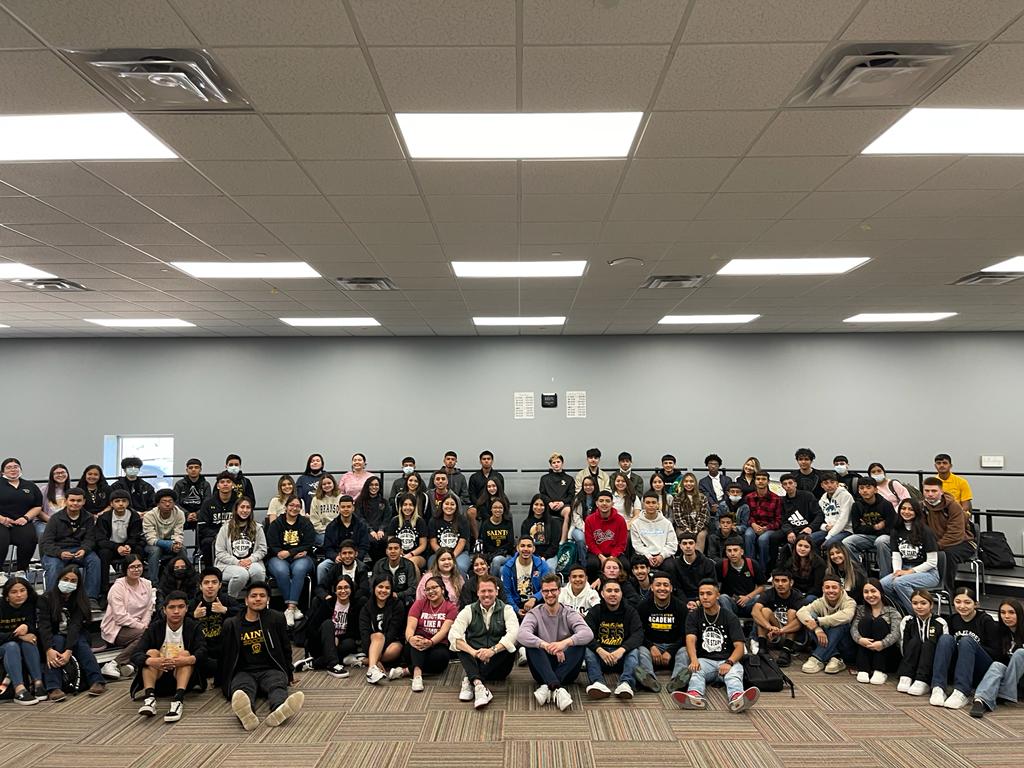
Among the highlights alongside the program was a talk given by Florian Sädler and Daniel Heyd to more than 100 local high school students in Norman, Oklahoma about life and the political situation in Germany.
In Indiana, Marita Wehlus and Adrian Liehr got a chance to meet State Senator Shelli Yoder, a Democrat. Even years after the 2016 Trump win, she is still not sure how it happened, asking the RIAS fellows what their take on it is. She furthermore told the fellows about how some Republican candidates in Indiana are now calling themselves “Conservatives” to show they are even further to the right than the Republican party as a whole. She also explained to the Germans how Democrats were able to stop an attempt to ban Critical Race Theory instruction in schools despite a Republican majority in the state senate.
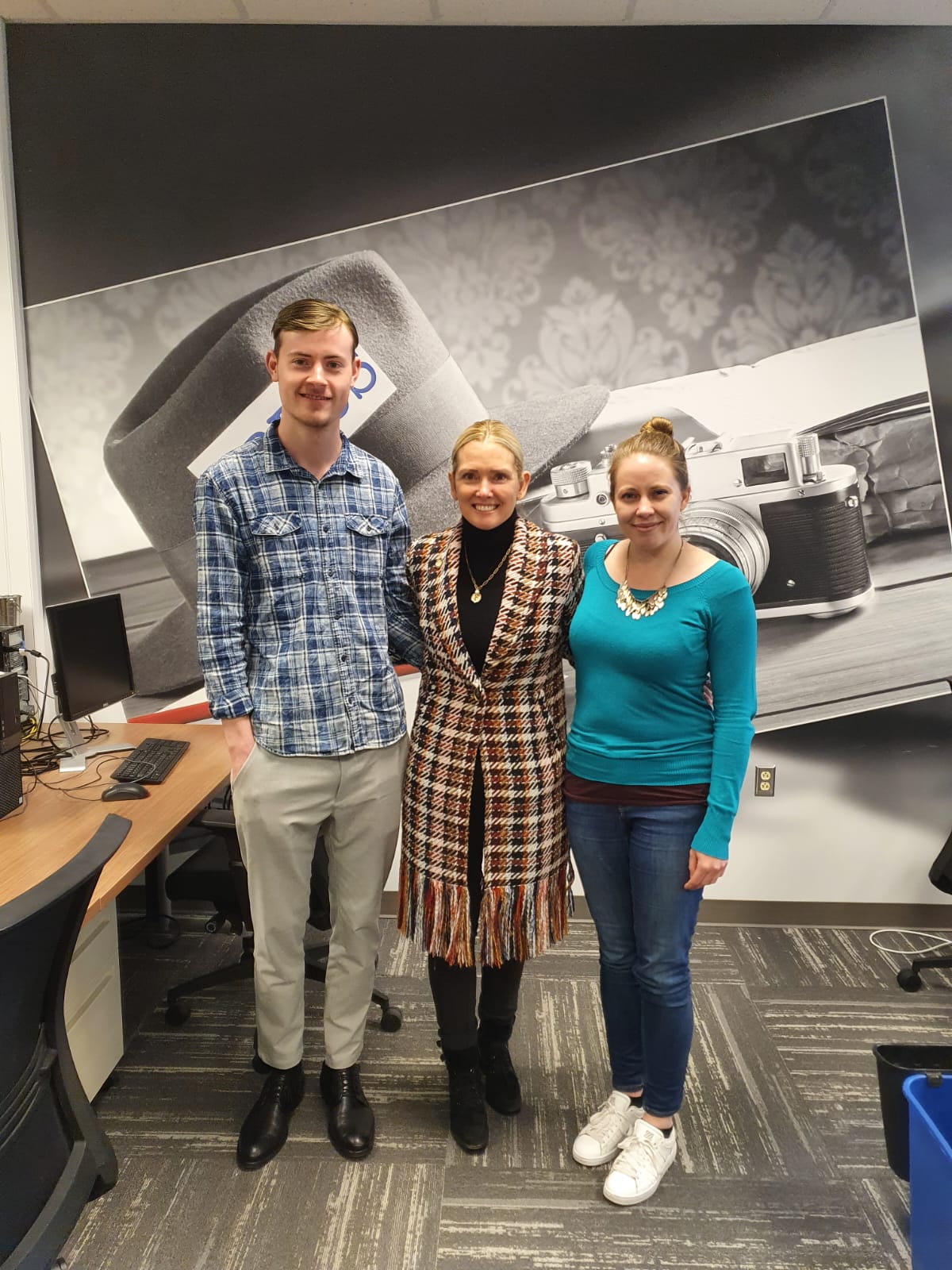
Wehlus and Liehr have also had the chance to visit the Channel 9 newsroom in Cincinnati, Ohio, where their station week host Sara Wittmeyer previously worked. They also visited journalism classes at Northern Kentucky University, talking to the American students about how journalism is taught in Germany and how the media system in Germany is organized compared to the United States.
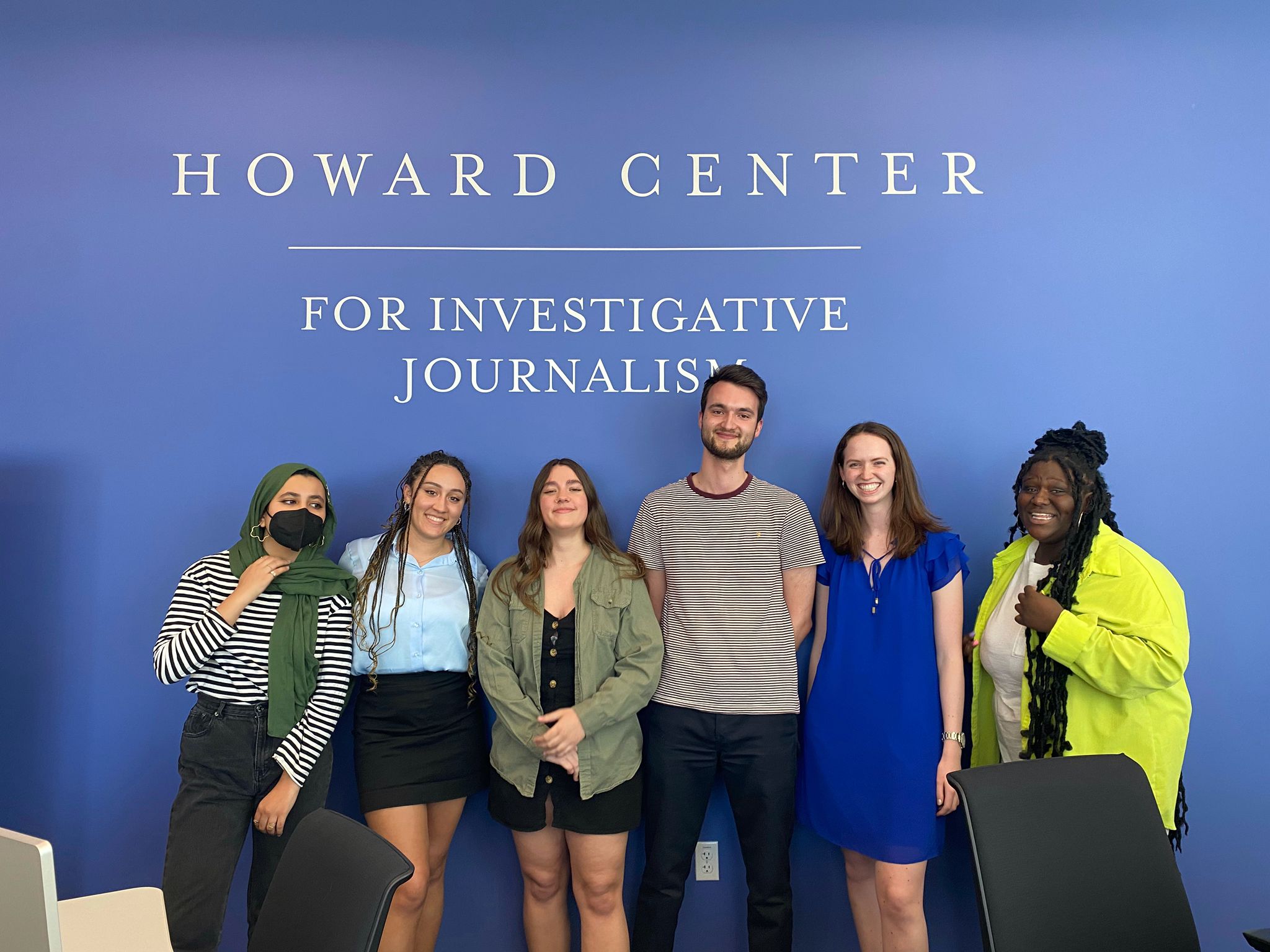
In Arizona, Friedrich Steffes-lay had the chance to visit the Howard Center at ASU thanks to his host Michelle Ailport, who had taken part in a reciprocal ERP program to Germany in 2019. At the Howard Center at ASU, Steffes-lay learned that students work on investigative journalism projects and sometimes actually publish scoops that are so important that they are later used by major media outlets, such as The New York Times.
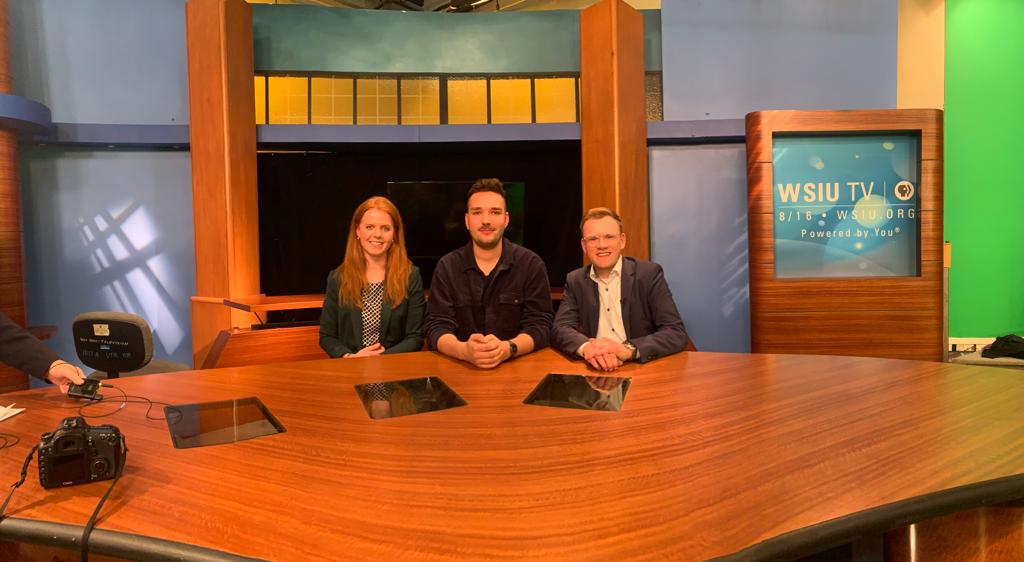
At Southern Illinois University, Leonie von Randow, Tom Wagner and Simon Lanzerath took part in a 30-minute interview on the local PBS station with host Fred Martino about a variety of transatlantic issues. They were also interviewed about their highlights of the RIAS Berlin Commission ERP student program as well as their thoughts on the January 6, 2021 siege of the Capitol building in Washington DC. The interview will be aired on PBS stations in May.
At the University of Wisconsin-Oshkosh, Amy Woyth and Emma Lübbert helped work as “honorary staff” members on the latest edition of the student newspaper the “Advance Titan”. Woyth also served as “floor director” at Titan TV news.
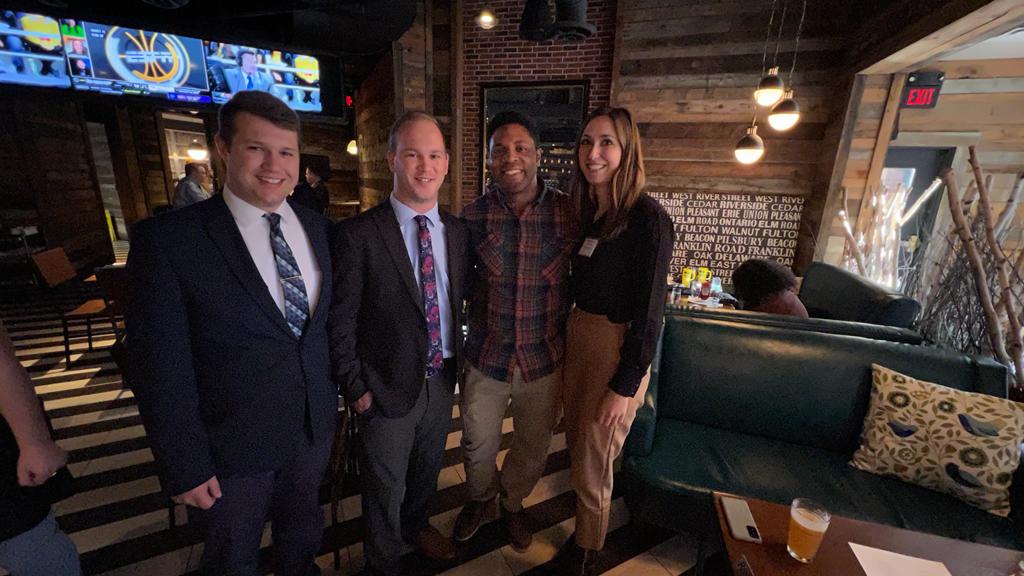
In Minnesota, Jessica Schäfer visited “Newcast producing”, “Advertising Law”, “TV/Radio Reporting” and “Multimedia Production and Storytelling” seminar courses for journalism students at the University of Minnesota. She was also invited to attend the Midwest Journalism Conference, where she met a number of other journalists who have plans to take part in RIAS Berlin Commission programs to Germany and who have hosted German journalists in the past.
At Texas A&M in College Station, Texas, Sarah-Maria Köpf and Lara Jäkel attended media writing courses where students discussed articles that had appeared in the most recent edition of the campus newspaper, the “Battalion”. They have also visited courses in the political and media departments to talk about differences between the German and U.S. media systems as well as the RIAS Berlin Commission exchange programs. They also visited the Bush Presidential Library, the newsroom of the “Battalion” and attended a guest lecture from Pew Research Center.
The ERP program is supported by the Transatlantic Program of the Federal Republic of Germany. It has been funded by the European Recovery Program (ERP) of the Federal Economy and Energy (BMWi) Ministry. There is a reciprocal program to Germany for American students studying journalism or a related field that focuses on the role of broadcast journalism and the role it played during the Cold War, especially in Berlin.


