
Why RIAS makes a difference – excerpts from two recent applicant essays
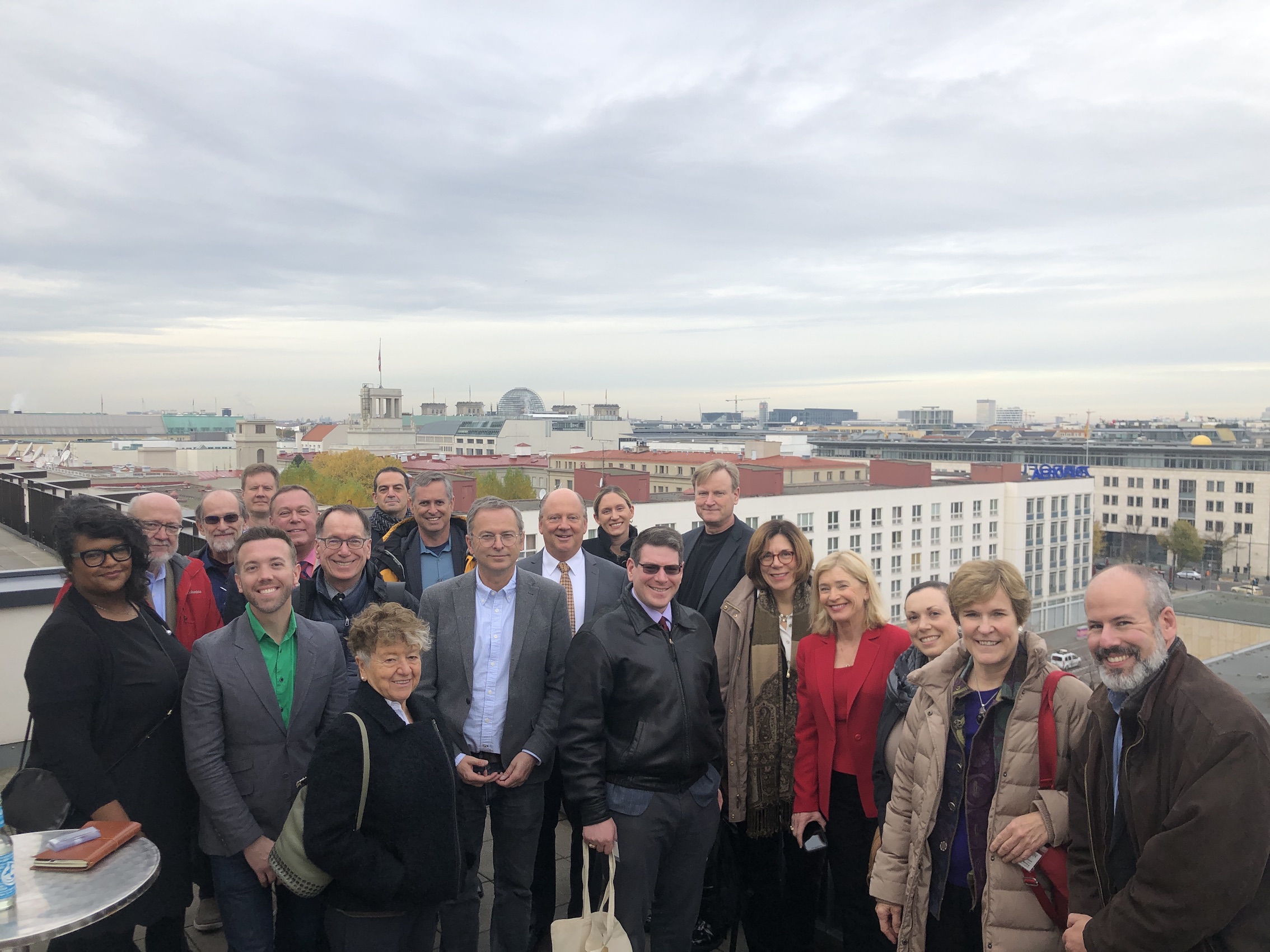
The RIAS Berlin Commission receives more than 100 applications each year for its seven exchange programs to the United States and Germany. Some of the essays are especially memorable, in particular when journalists describe in a personal way why they are interested in being part of the exchange program that was created in 1992 — to keep alive the spirit of the legendary Radio In American Sector (RIAS) long after the important Cold War-era source of news, information and music was for West Berlin and East Germany went off the air.
That desire to be part of the RIAS Berlin Commission programs and to become part of the loose network of 1,900 alumni in the United States and Germany was movingly illustrated with these two essays we received recently: the first from an American journalist in Washington DC (who applied for the June program to Germany/Brussels after taking part in a RIAS alumni reunion in Washington last year); and the second from a German journalist from Hamburg (who applied to be on the October program to New York/Washington/a Midwest TV station). Their essays were so moving that we thought we would share excerpts with you:
“Just before the pandemic I was invited to a ‘RIAS Alumni Happy Hour’ in Washington, D.C. A friend of mine had done the Fellowship that summer and he thought I might be interested. To be honest I had never really cared to look at journalism outside of the U.S. My goal and my focus had been on journalism here. But my view changed drastically that night.
I was introduced to journalists from Hamburg to Leipzig and everywhere in between. For one of the rare times in my life, I didn’t talk too much. I just listened to their stories. While their beats or coverage were completely different from mine, their struggles and successes felt very similar. I was intrigued. What was even more interesting was what they covered.
They were at the heart of the stories that are shaping Europe. They were dealing with class and socioeconomic issues of a very young Germany. One where East and West have been united, but only for a few decades. Needless to say, I was extremely jealous.
I walked away from that night with a burning question in the back of my head: what would it be like to cover international stories? How would I even begin?
As the pandemic wore on the questions didn’t fade, they just grew bolder in my head. I found myself checking in weekly on international stories, watching European News broadcasts, and just about anything to stay on top of what was happening there. The pandemic may have made us socially distant, but it also made us conscious that our world is interconnected and much smaller than we thought.
I told myself, if the opportunity to take part in RIAS happened again, I would try to go. So here I am, asking to take part in your eye-opening and fascinating fellowship. I want to learn how the German news media handles the socio-economic growth of Europe’s largest economy. I want to see the politics coverage up close, as the fault lines of Europe’s political landscape continue to grow. I want to walk away with an idea of how news is done in Germany, and how the country interacts with it. It’s an ambitious goal- and I am sure there is no way to learn it all in one fellowship.
I have had time to think about what is next for me after the pandemic. It occurred to me I may not want to be a US-based journalist for the rest of my career. There are fascinating economic, political, and social stories happening in Europe. I want to be part of that. I don’t expect a RIAS fellowship to prepare me for a career as a European journalist, but I see it as a jumping off point. While I am here, I can research all I want and watch as many stories as possible-but I won’t know if it is something I can truly pursue or look at, until I see it up close with my own eyes. I’d like to be considered for the RIAS fellowship. I see it as a learning opportunity for my career and possible starting point for a new direction in the next decade.”
— An American TV journalist in Washington DC
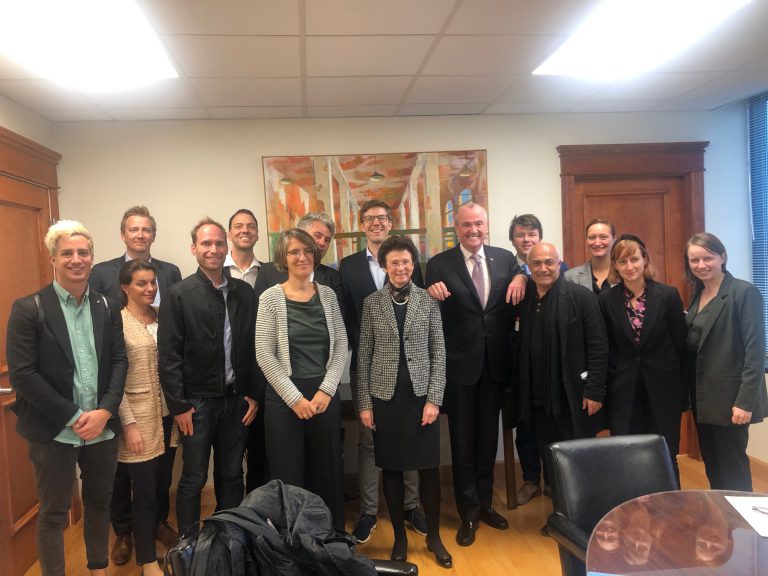
“Please accept this letter as the expression of my enormous interest in the RIAS Berlin Commission Program that I’d like to apply to.
Working as a TV-journalist for more than ten years it has always sounded almost mythical when senior colleagues talked about RIAS. As a former history student, I admire the thoughtful implementation of so many institutions that the allied forces offered Germany after the Second World War, especially in the media sector. “Offered” because it is a gift to a formerly totalitarian society to be given the chance of leaving dictatorship behind, improving itself, reaching democracy. A chance that unfortunately hasn’t been given to the country where my parents came from…that until today is struggling with democratic principles concerning its media, and society as well of course.
As a journalist I’ve been working internationally. And I do not only report but also observe and reflect on our reporting and broadcasting habits in Germany and of the media abroad. I am grateful that our way has been shaped by British and particularly American journalism and not by other principles…with a lack of transparency, or … that is often not comparable to media work according to democratic standards.
As I have never been to the States, all I know about American journalism is formed by the broadcasting available in Germany, newspapers, the Internet (and also movies). I often used The New York Times or Washington Post articles during the two years that I’ve been teaching English to professionals whom I also prepared to work with English speaking partners. But to get to know the different media outlets in the US live and not only from afar seems an extremely promising opportunity to me.
The last six years of my professional life I have been working… as a news anchor…. The outstanding colleagues who had taken part in the RIAS Berlin Commission program always seemed particularly brilliant to me and I always hoped one day to be as accomplished as them to fit the criteria for this important and fruitful exchange program. These colleagues have often reported about the huge steps taken forward in terms of innovation in American newsrooms and so I expect to learn a lot about that during the time spent in the different media outlets. Innovation is often neglected in public broadcasting in Germany and so I will concentrate on collecting tools to help improve the daily tasks of the companies I work for. I believe that social media, audience development and community must be handled in a more professional way than at present in German broadcasting units.
Apart from that I am especially interested in the ways that American outlets treat societal diversity, which is only an upcoming trend in Germany as it is acknowledging its own diversity and the fact that it is an immigration country. I am confident that the American history of ideas, with such important historic issues as the melting pot nowadays rather turning into the concept of the kaleidoscope, can be extremely helpful to my home country that has just decided to commit itself to these concepts. That’s why I am very keen on getting to know such different outlets like those that represent the views of American minorities such as Jewish communities in big cities…
Far from the big city lights, I also take particular interest in media outlets in rather peripheral regions: radio programs or podcasts run by native Americans shed a light on another America than the one perceived in German media day by day. As journalists we always look for the hidden places to be discovered, the untold stories to be told. Germany lacks a lot concerning native American history and I wish to bring back such reports to my editors by the end of the program.
Particularly with this experience, that somehow seems very American, and I hope you’ll forgive me that I didn’t avoid the cliché of “dream big, work hard”, I think that I qualify as a possible fellow to your program. I hope to be part of it this year.”
— A German journalist from Hamburg


