
Interview with RIAS Berlin Commission Grand Prize winner Wolf Blitzer
May 25, 2023
Interview with RIAS Berlin Commission Grand Prize winner Wolf Blitzer
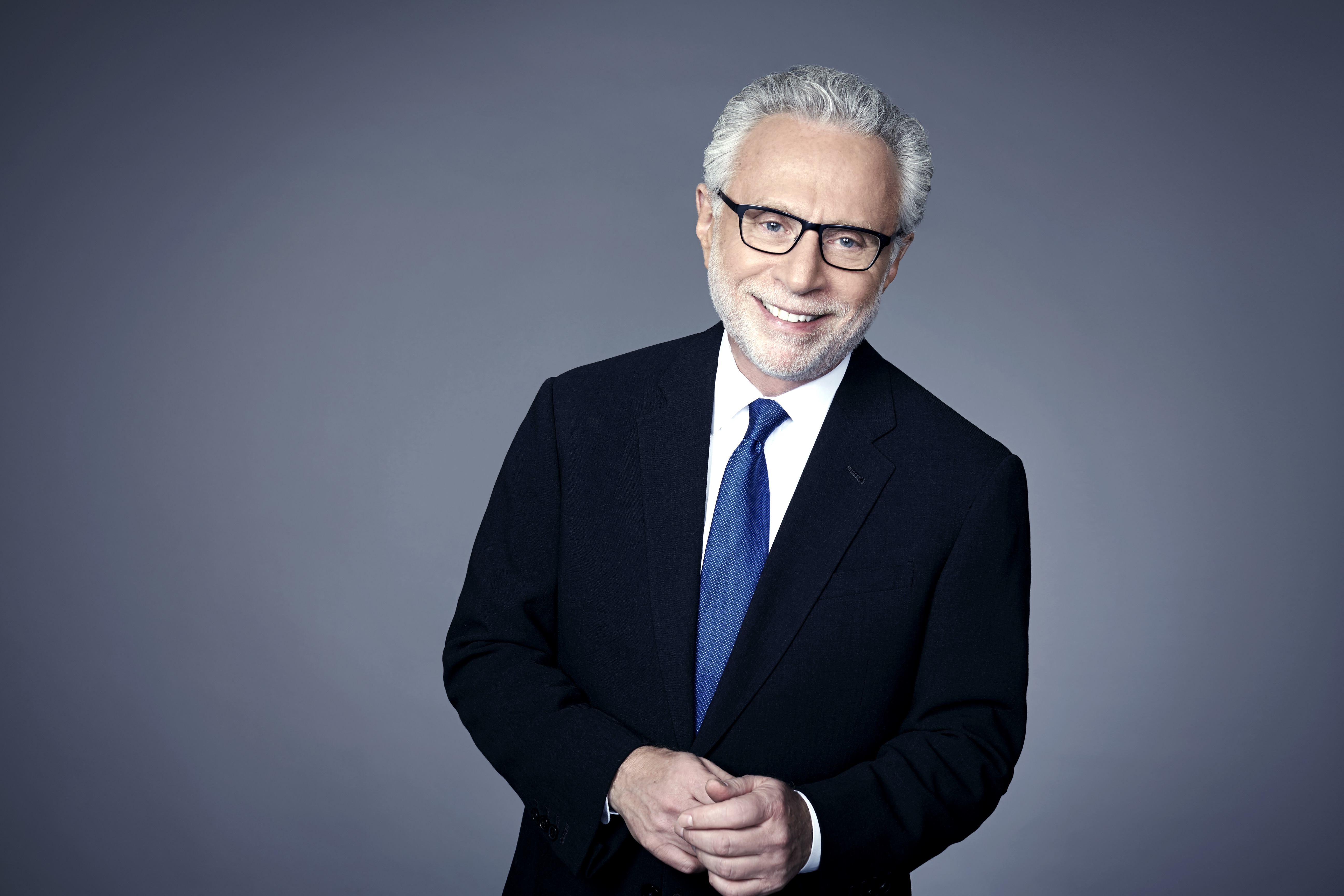
Wolf Blitzer, a CNN reporter and anchor, talked about his documentary film “Never Again” for CNN that won top honors in the 2023 RIAS Media Prize competition in an interview for the www.darkseagreen-dog-940501.hostingersite.com website. The film about the US Holocaust Memorial Museum in
Washington narrated by Blitzer also includes his own personal reflections about his family and his four grandparents who were killed in the Holocaust. Blitzer — a journalist, anchor and author who has been at CNN since 1990 — said in the interview with RIAS board member Michael Gargiulo and executive director Erik Kirschbaum that he felt honored to win the annual competition’s “Grand Prize Award” and was looking forward to receiving the awards ceremony in Berlin on June 1.
Question: Journalists traditionally avoid making themselves the center of a story. Why did you feel it was important to highlight your own family’s experiences in the Holocaust?
Wolf Blitzer: “It’s a good question and you’re absolutely right. When I started out in journalism I worked for Reuters and I would come back from an assignment and I would tell these older British journalists what I thought and they’d say the same thing: ‘Nobody really cares, Wolf, what you think. Just give us the facts, give us the facts and we’ll report the news’. So you’re right, journalists like to stay away from being part of the news. They just want to report the news. But a few years ago, the then-president of CNN Jeff Zucker asked some of the anchors to do pieces about their heritage, their family history, their roots to give the viewers a little bit more knowledge about where they’re coming from and what they’re all about. He asked me to do. When they asked me, I was on an assignment in Israel and covering one of the wars that was going on with Hamas and Gaza and of course said ‘yes, I’d be happy to do it.’ Ever since I was a little boy I knew my parents were Holocaust survivors and I always knew that my four grandparents were killed in the Holocaust. So I decided I would tell that story. And we do a roots piece on CNN. It was about 8 minutes long. When I was in Israel and went to the Israeli Holocaust museum Yad Vashem. I knew that my dad had done an oral history. I went there and met with the director and he gave me some information about what my dad had told them years earlier when he was visiting Jerusalem. I knew my grandparents had been killed in the Holocaust but I didn’t know any details. It was then I discovered that my paternal parents had been killed in Auschwitz, which was news to me at the time. There it was at Yad Vashem documented. I decided that, as part of this piece that I was going to do for CNN about my roots, about my family history, I would fly over to Poland and go to Auschwitz. I had never been there. I went there and did a tour of Auschwitz and Birkenau. It was really powerful for me, very personal obviously, to see it. I included all that in the piece that I did for CNN. That was how I, initially, was reporting to our viewers for CNN in the US and around the world about my own family history and how it came out. More recently, CNN asked me to do a documentary on the US Holocaust memorial museum in Washington, which I did and am so thrilled that you are honoring with the grand prize this year. In researching for that documentary, one of my producers discovered that my dad had done an oral history, a Q&A, with the Holocaust education Center in Hollywood, Florida. I found this one-hour Q&A. My dad had done a Q&A with the US Holocaust Memorial Museum in Washington too but that was audio only. The one in Florida was video, audio and video. It was so powerful for me to see it and learn more details. I included that in the documentary about the US Holocaust Memorial Museum in Washington with some actual sound from my dad talking about his experiences. It was very personal, very powerful for me. And I think it was very powerful for the viewers who watched it. So that’s how I came about reporting about my family history.”
Question: What was it like for you in the course of making that documentary to walk though the Holocaust Museum, hear the descriptions of the exhibits, how emotionally difficult for you?
Blitzer: “It was very emotionally difficult but it was very important. I’ve been to the US Holocaust Memorial many times over the years so in connection with doing the work for the documentary it wasn’t new for me to see it because I had visited it on many occasions. But no matter how many times you go there, you see the images, you see the video, you see the pictures, you see the stories, it’s very meaningful, it’s very powerful. It’s part of our tradition of ‘Never Again’. That if we don’t learn from history, we’re bound to repeat it. That’s why it’s so important to learn and to say never again.”
Question: The youngest Holocaust survivors are now in their 80’s. Are you concerned that in the future, the Holocaust will be part of history, without the power of their personal testimony?
Blitzer: “That’s why it’s so important for these Holocaust survivors to give that personal testimony and to do it on video, to do it on tape, so that it’s going to be there forever. It’s going to be online. It’s really important. You’re absolutely right. Holocaust survivors sadly are dying. Years ago, 15 or 20 years ago, when I would go to the annual dinner of the US Holocaust Memorial Museum, at the beginning of the dinner, they would ask ‘Would all the Holocaust survivors please rise’. And we would all give them a big round of applause. In those days, several hundred people would stand up. In recent years, and I’ve gone to these dinners as well, when they ask for the Holocaust survivors to stand up, the last time I think maybe five or 10 people stood up, if that. So sadly they’re dying. Both my parents have passed away. My other relatives who are also Holocaust survivors have mostly passed away. I have one uncle who is still alive in Chicago, my mother’s younger brother. But everyone else is older, in the 80s or 90s and beyond and they died So it’s important to get their testimony to get their testimony on tape so it will be around forever.”
Question: In your documentary, you tied the anti-Semitism of the 1930’s with a rise in anti-Semitism today and a rise in anti-immigrant prejudice around the world. Are you concerned that history is repeating itself?
Blitzer: “It’s sad to see a rise in anti-Semitism here in the United States, as documented by the Anti-Defamation League. And it’s especially sad to see a rise in Holocaust denial in the United States and probably around the world but especially in the United States, where people are saying, you know, six million Jews were not killed. That’s just some fake story out there. To hear that, it’s pretty depressing. It’s obviously very sad when you see neo-Nazi movements gaining some strength. In Charlottesville, Virginia a few years ago, when you saw those young men walking and protest and screaming out ‘Jews will not replace us, Jews will not replace us’. It was hard for me to accept that and believe that was happening. At the time I remember thinking to myself ‘I’m sort of glad that my dad had passed away’ because he would have never believed he would hear or see something like that in the United States because this country had give our family a second chance to rebuild and establish new lives. He became an extremely patriotic American and loved this country for the opportunity it gave to him and his family. He would have been so upset to hear those young American men chanting ‘Jews will not replace us’ in Charlottesville, Virginia.”
Question: How do you feel Germany has reckoned with the Holocaust and you said you’re excited about coming to Berlin, how do you feel about coming to Berlin to receive this recognition?
Blitzer: “I’m really honored that this film is being given the Grand Prize and I’m very excited about coming. I’ve been to Germany on many occasions and it’s always been an excellent opportunity for me. I was actually born in Augsburg, Germany. My parents had met after the war and they got married. They found a rabbi in Augsburg, a US army chaplain who married them. My older sister was born in Augsburg and I was born in Augsburg and eventually my family got immigration visas to come to the United States. The US House of Representatives and Senate had placed what was called the ‘Displaced Persons Act’ after World War Two that granted 400,000 visas to displaced persons, including Holocaust survivors. My dad waited in line one day in Munich and signed him up and the rest of the family that survived. Within a few weeks they had got permission to come to the United States. But they would tell you where you were going. They said to my dad, you’re going to Buffalo. My dad said: ‘Buffalo, where’s that?’ And they said ‘Buffalo, New York.’ My dad said ‘oh New York, there’s probably a lot of Jewish people in New York.’ He didn’t know that Buffalo that is 400 miles away from New York City. The family arrived in New York, started a new life. My dad did well. Eventually became a successful home builder. He would have been so angry, so upset if he would have heard the anti-Semitic comments coming from Charlottesville, Virginia. He wouldn’t have believed that would be possible in the United States.”
Question: In a talk last year that you gave to a group of RIAS Berlin Commission from Germany visiting Washington DC, it seemed that you know Germany well and appreciate the country’s coming to term with its past. Germany, as you know, has strict laws banning Holocaust denial. You can go to jail for Holocaust denial. How do you feel about Germany. Is it a force for good in the world?
Blitzer: “I think Germany has come to terms with its history and I’m very positive about what the reaction has been, especially in recent years. Recently, a few weeks ago, I went back to Auschwitz for what’s called ‘the march of the living’ where all these people come and do a little march from Auschwitz to Birkenau, which was the death camp right next to Auschwitz. And then there were all these events going on in Warsaw remembering the 80th anniversary of the Warsaw ghetto uprising. One of the highlights for me at an even at the Polin Museum, which is a relatively new museum dedicated to the 1,000-year history of the Polish Jewish community. The presidents of Poland, of Israel and of Germany spoke there. And the most powerful speaker was the president of Germany, Frank-Walter Steinmeier. He delivered a really powerful speech. It was so important because he didn’t just talk about Nazis, it wasn’t just the Nazis. He spoke about the Germans. ‘We Germans did this’. It was a very personal statement from the president of Germany acknowledging what was going on during the Holocaust. We all walked away, really admiring his words. He was very blunt, and very outspoken. He didn’t try to mince it. He didn’t just talk about Nazis. He spoke about Germans. And I thought that was very significant. This past weekend here in Washington DC I went to a premiere showing of a film ‘A pocketful of miracles’ about some Holocaust survivors. A really powerful film. They sat me next to the German ambassador to the United States, Emily Haber, who wanted to make a point of coming to the premiere of this film as well. So it’s really powerful to me, with just these little examples that I’m sharing, of how Germany has come to terms with their history. And I admire the Germans and the German people for doing that. It’s not easy, I’m sure, but it’s something that I admire and think it’s really important.”
Question: Is there anything else you’d like to add?
Blitzer: “I’m just very proud that you guys are going to be giving this film that we worked on this award. I’m looking forward to being there. I’ve really enjoyed meeting with these German journalists and students who’ve been here in Washington DC and I think it’s really important that we continue our dialogue. And that’s why I’m just excited about coming to Berlin and being there, and spending a few days and getting a little bit better sense of what’s going on. It’s exciting and important for me.”


