RIAS Journalists in the USA, October 11–24, 2026
Twelve German journalists traveled across the United States with the RIAS Berlin Commission from October 11 to 24, 2026, just weeks before the midterm elections. Here they describe what they experienced and what they took home.
Max Hermes
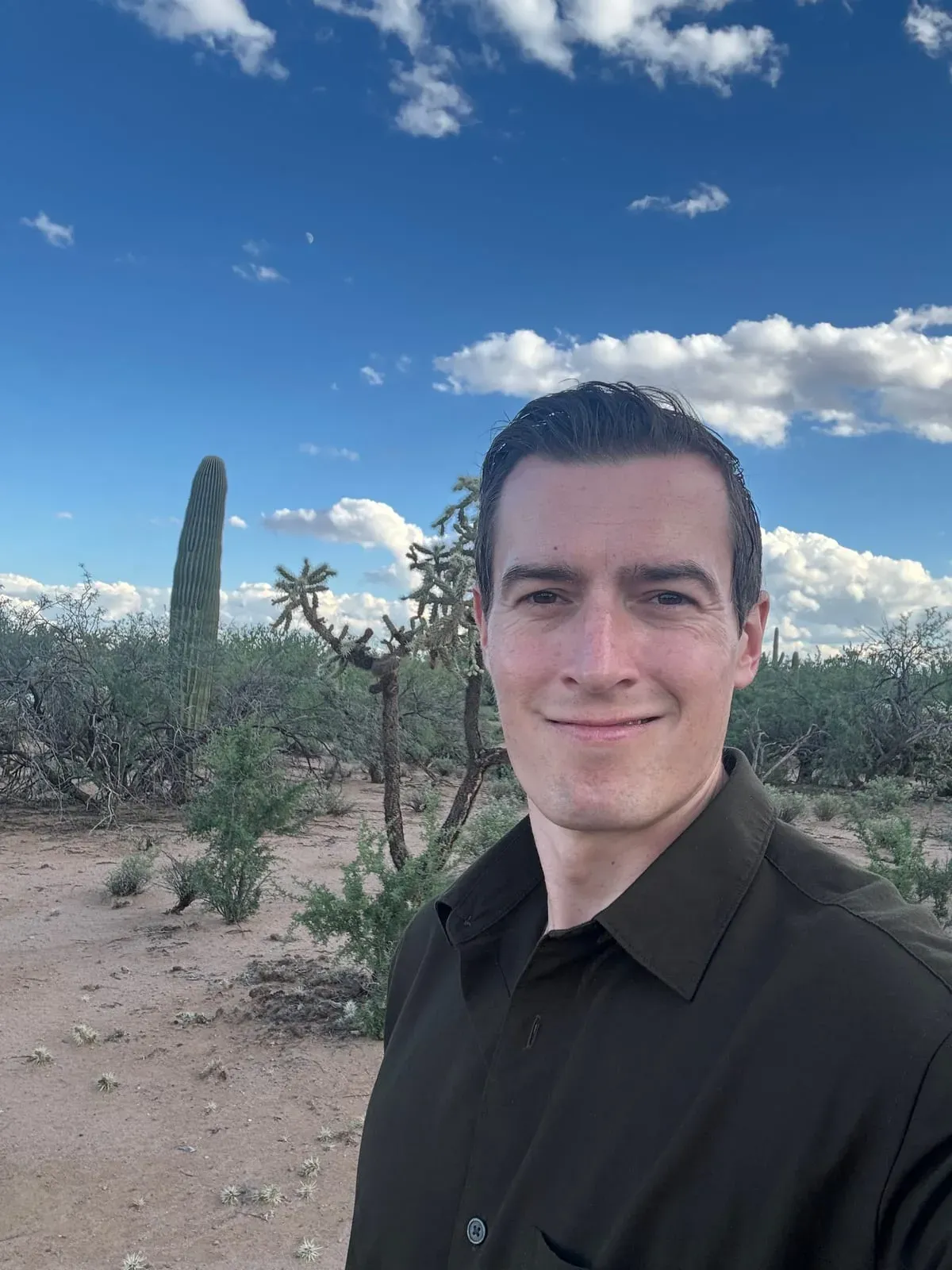
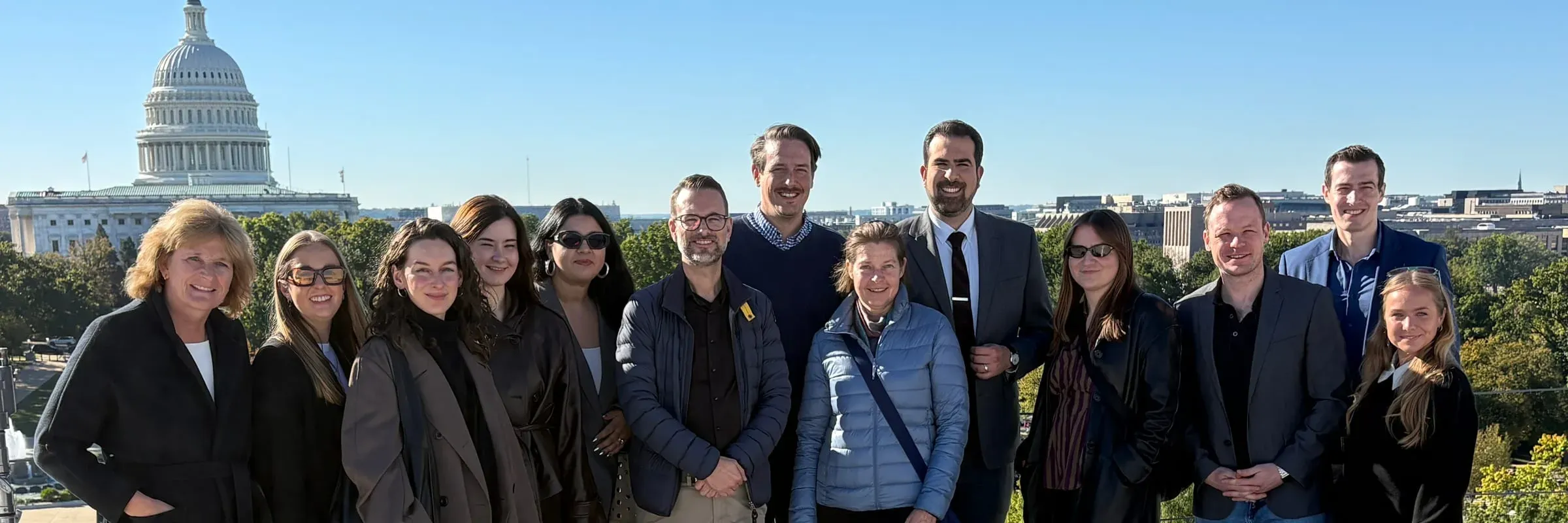
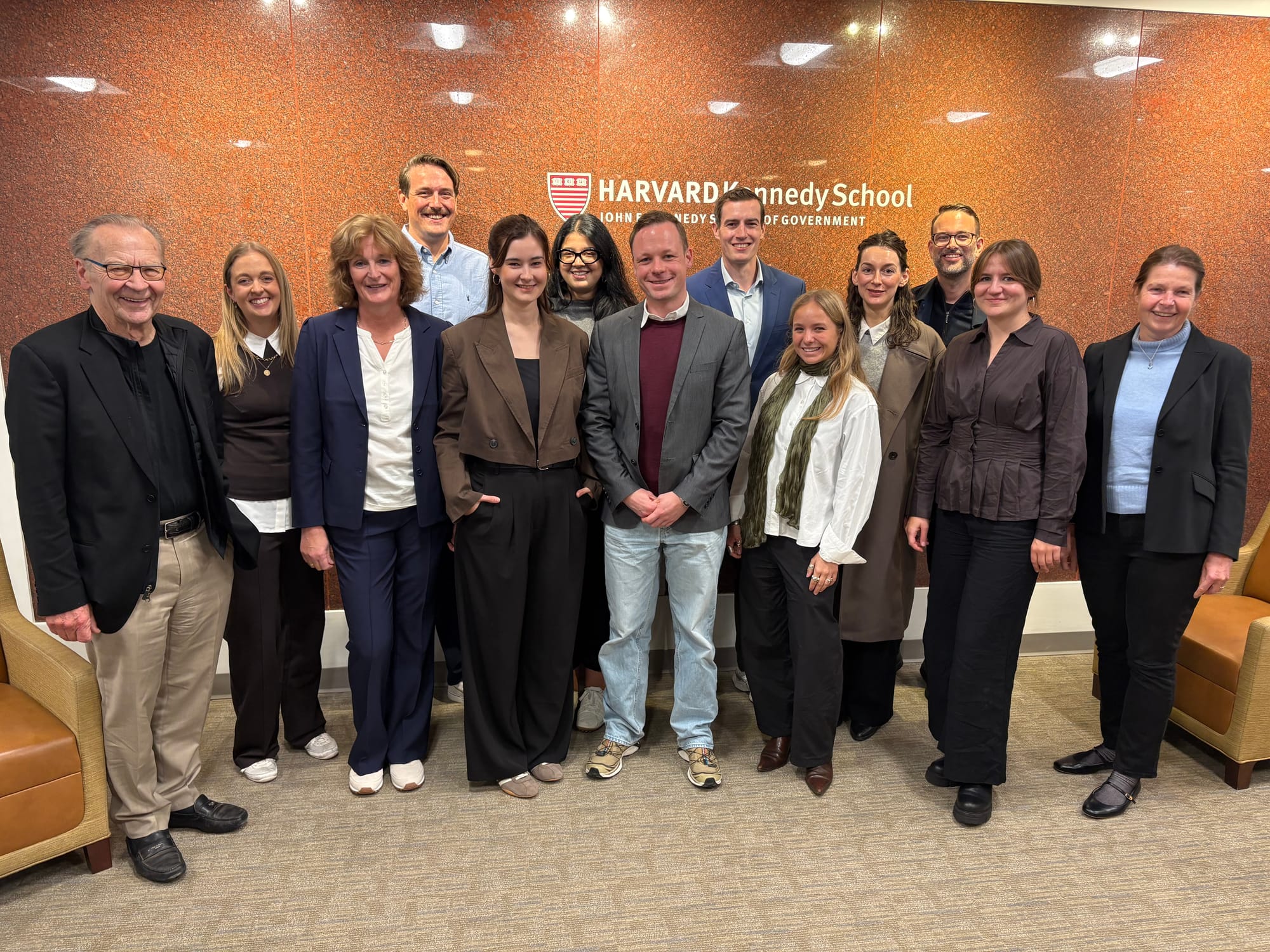
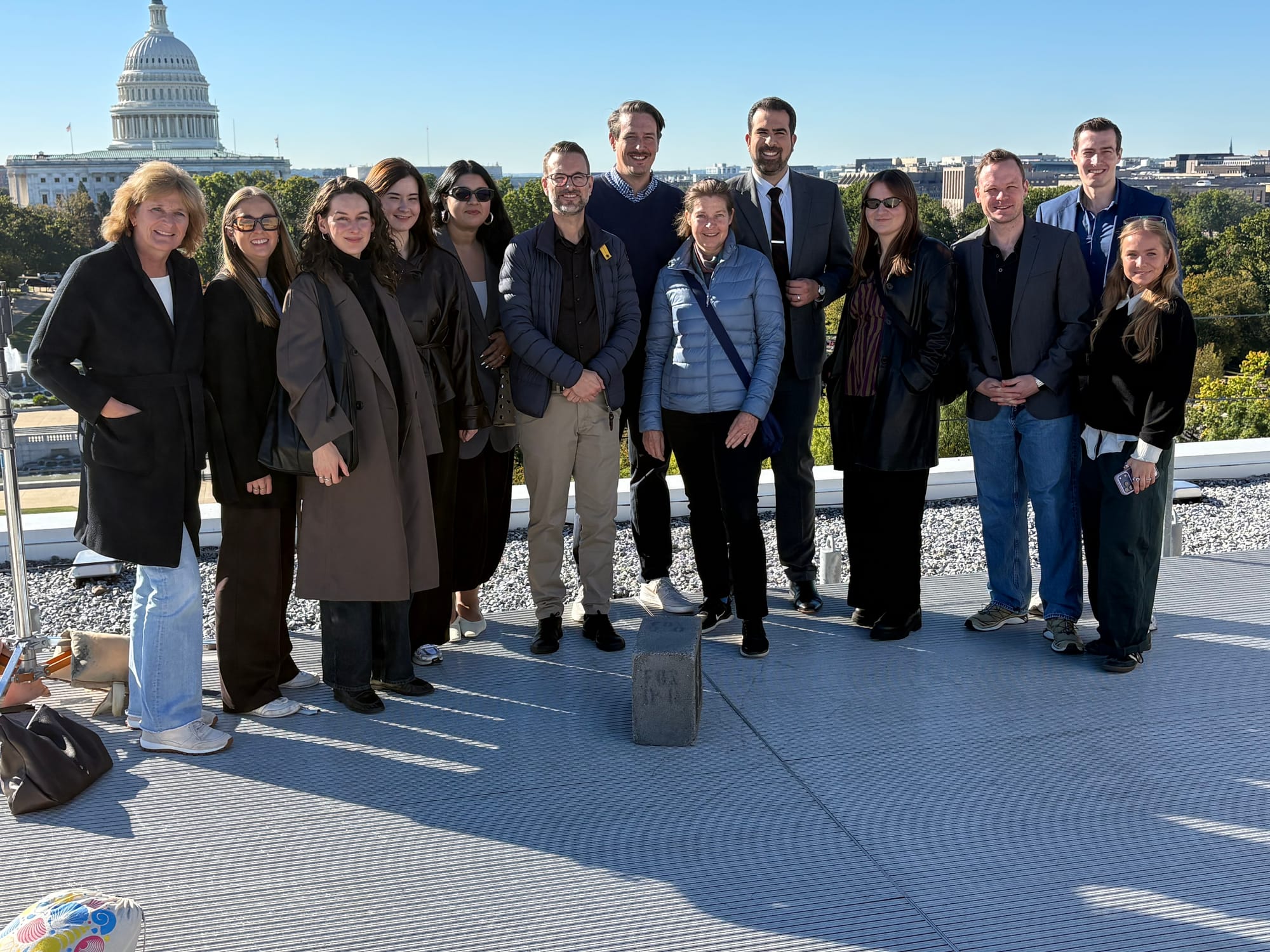
Looking through my notes app fills me with awe as I reflect on what we were able to experience with RIAS in two weeks. There are so many memories and impressions that I could hardly process them all in such a short time. But that’s what the notes and hundreds of great photos are for.
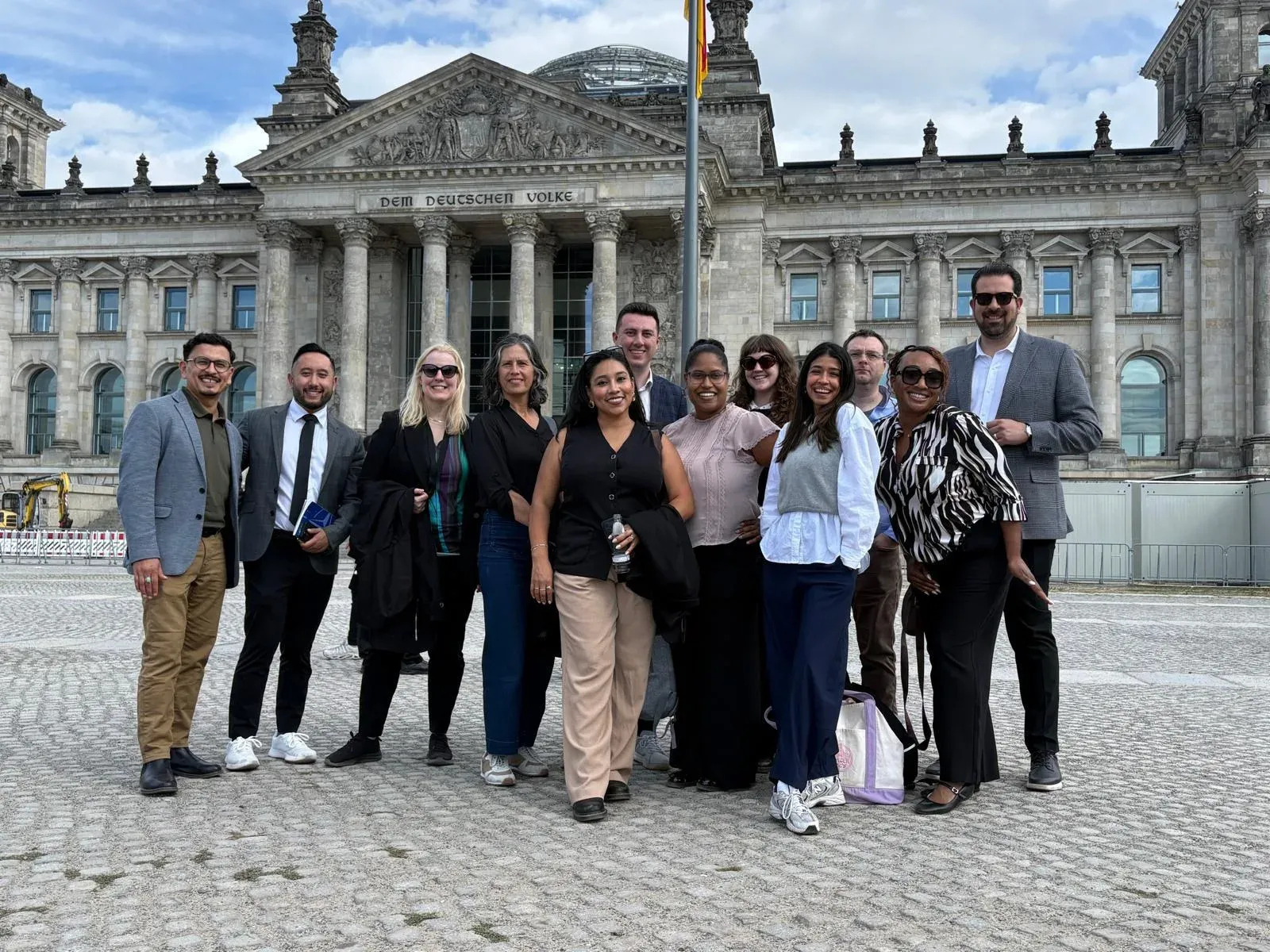
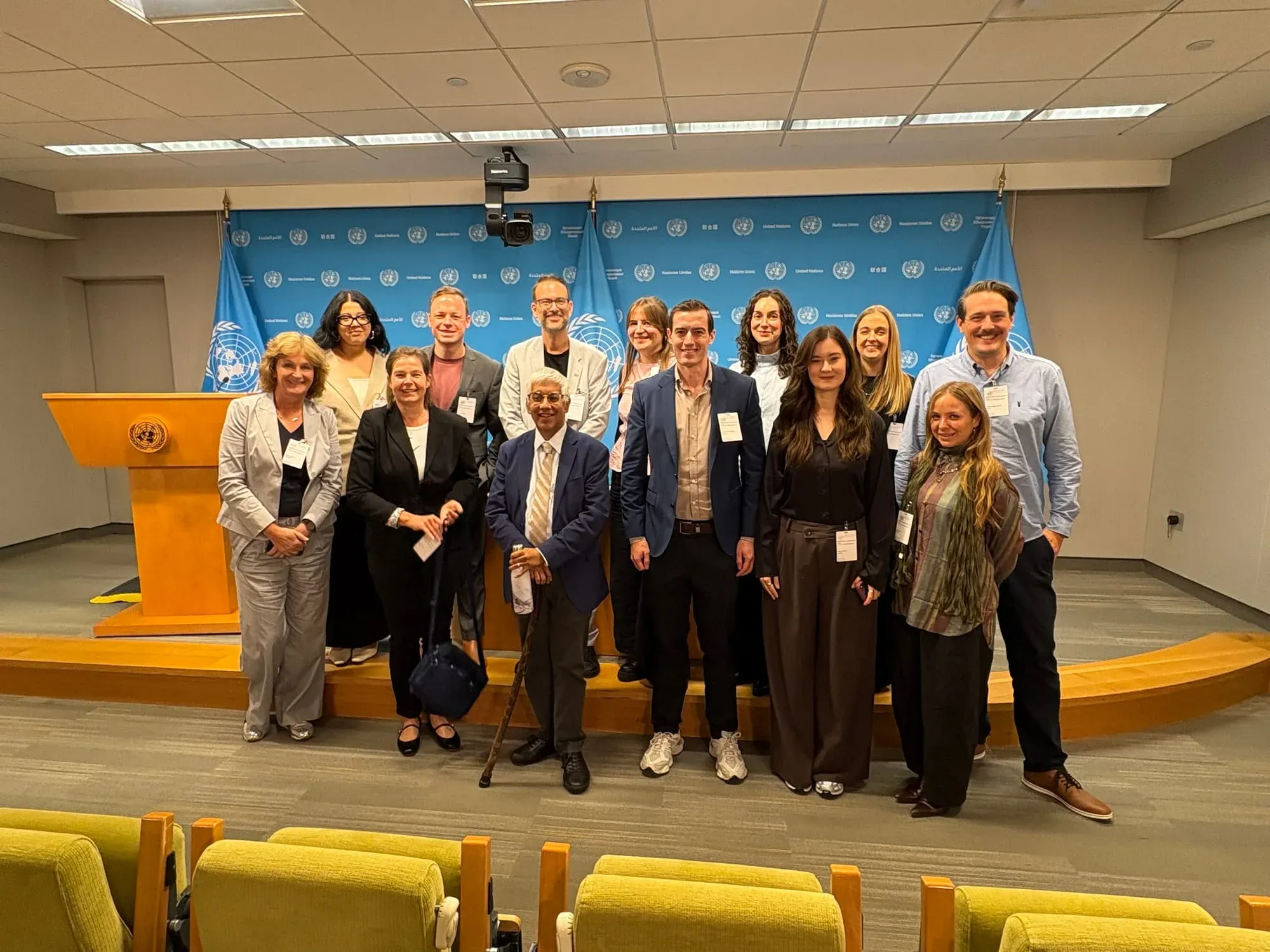
Let’s look back on our time together in Boston, New York, and Washington, D.C.: twelve German journalists, most of whom didn’t know each other beforehand and who have grown into a community. And let’s not forget our mastermind Chris and the wonderful Pam, who made it possible in the first place for us to draw on all these experiences and insights today.
I found the discussions with the political think tanks particularly formative—especially with the Quincy Institute, which advocates for a U.S. foreign policy more focused on diplomacy and military restraint, and the progressive Center for American Progress. Getting to know different points of view, critically examining them in discussions, and ultimately coming away with new insights is something that will also be of great benefit to me in my journalistic work.
My absolute highlight, however, were Station Days in Tucson, Arizona. Danyelle Khmara picked me up at the airport and spent an entire day with me at the U.S.-Mexican border. While filming in the desert with Katya Mendoza, I was caught off guard by a sudden rain shower, and on a day packed with important appointments, a car breakdown also threw a wrench in our plans. You showed me so much of Arizona in just three days that I am infinitely grateful to you.
I experienced a divided country where an end to polarization is not in sight. At the same time, I met people who have visions of how things can get better and who are working to foster understanding at the local level and beyond.
I’ll take all of this with me into my work as a video journalist—someone who frequently travels internationally, has long had ties to the U.S., and, through RIAS, has now come to understand the country even better.
The great thing is it doesn’t end when the program ends. I look forward to staying in touch with you as alumni and continuing to deepen our transatlantic connection.
Stefan Mack
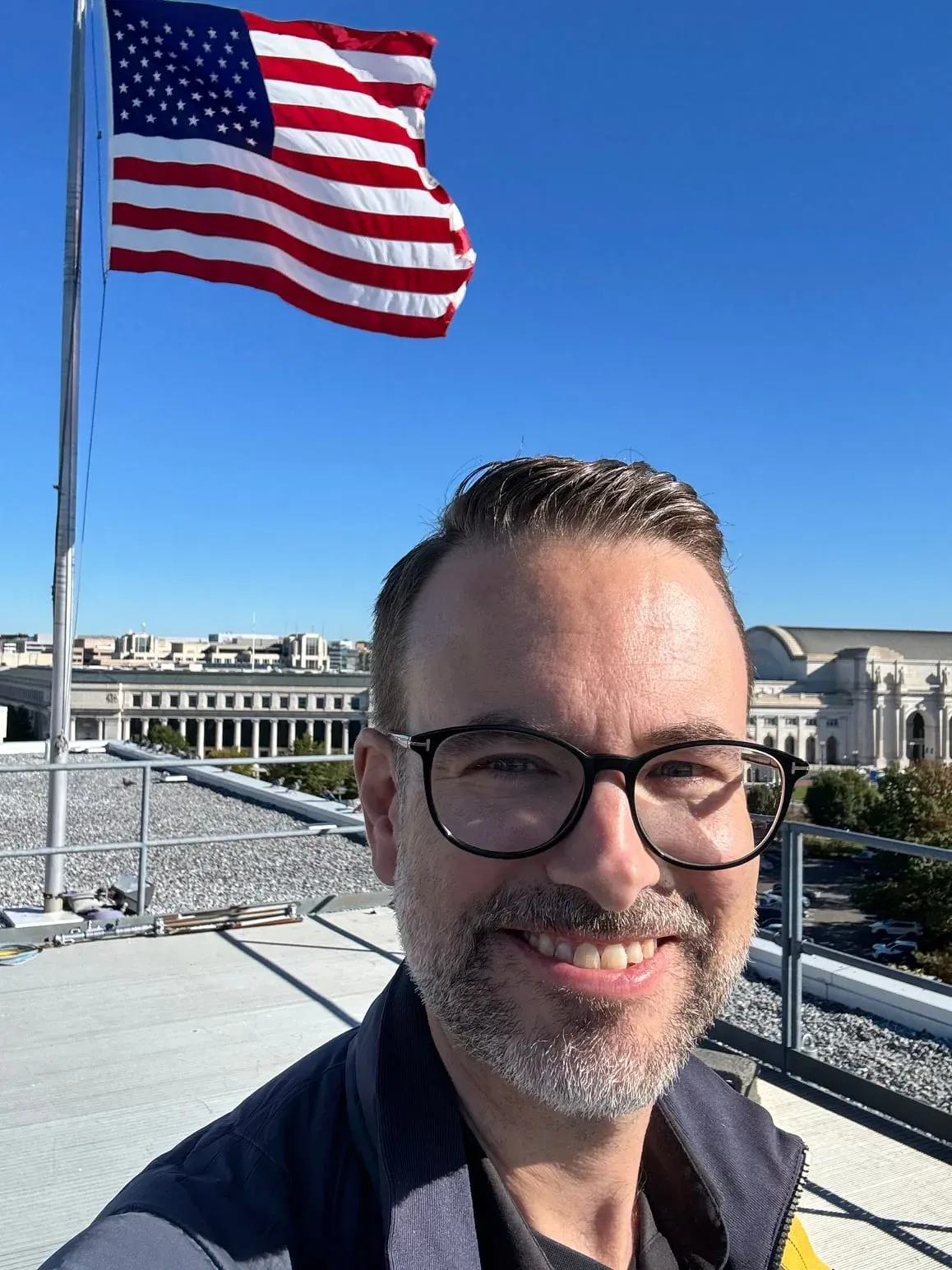
When I was back home in Bavaria, my nine-year-old son asked me what the best part of the trip was. To be honest, I didn’t have an answer at first. The two weeks just went by so quickly, with so many unique impressions and unforgettable memories.
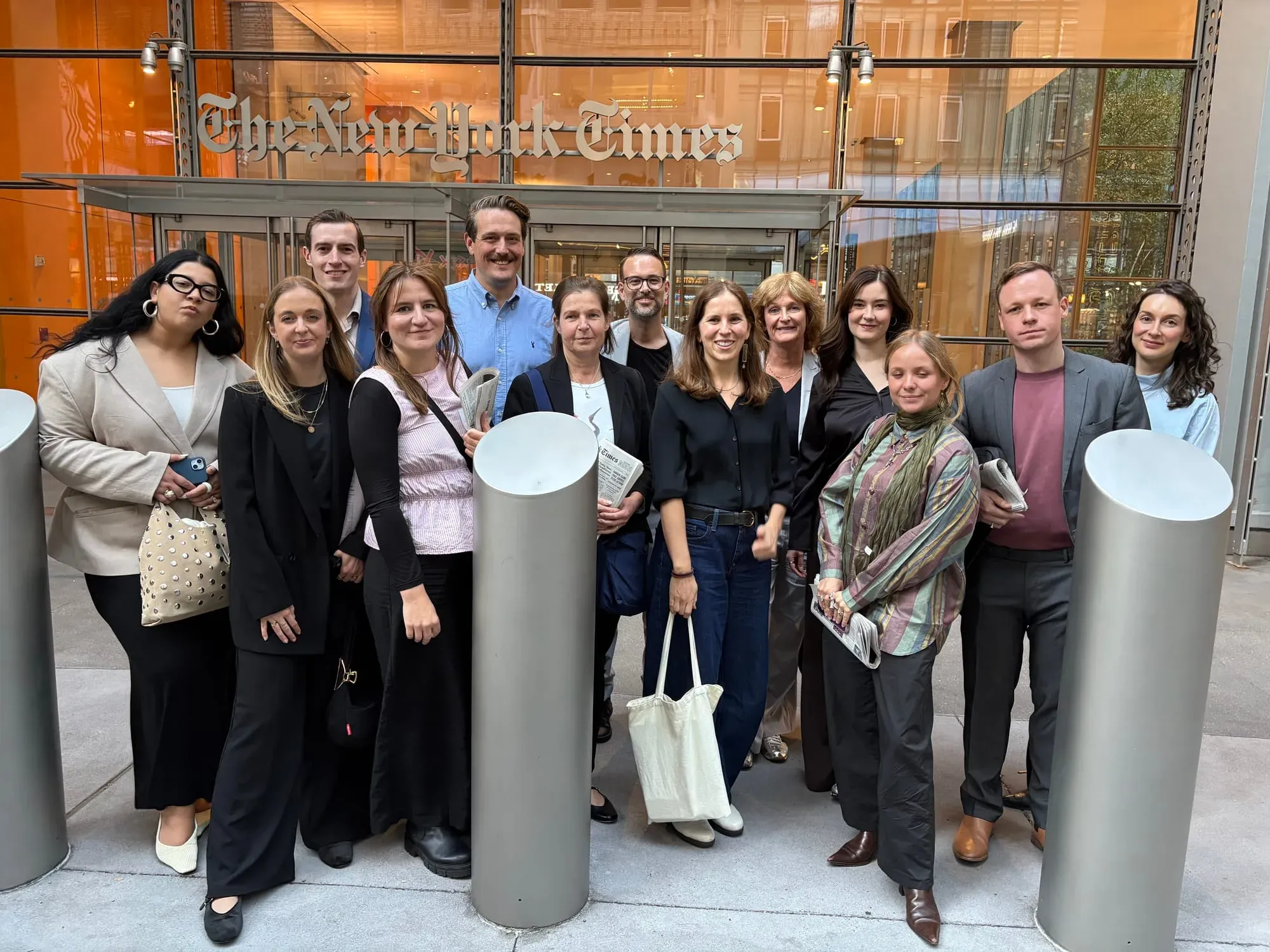
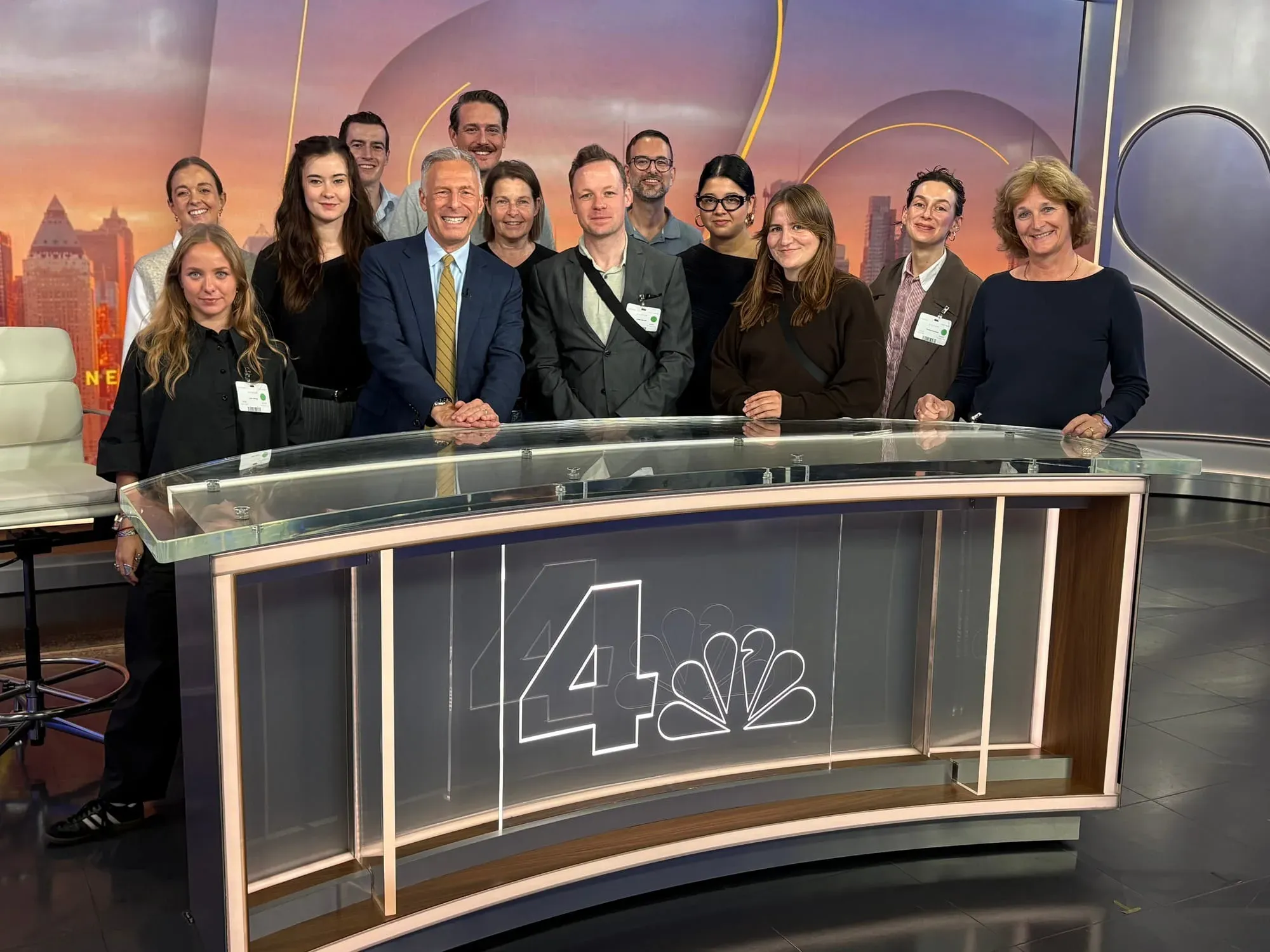
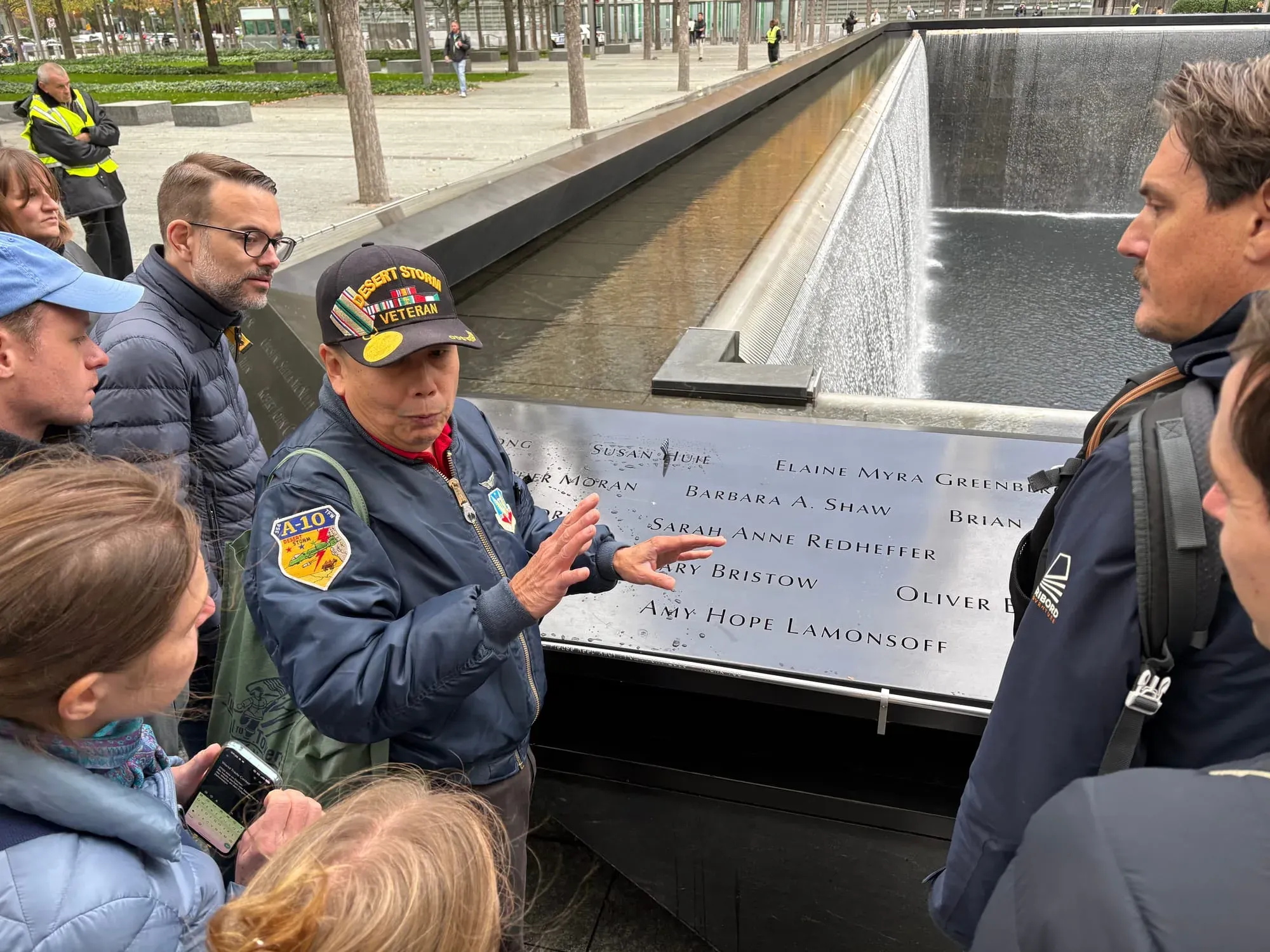
Our starting point was Boston, where we had the privilege of visiting Harvard University and attending Indigenous Peoples’ Day at a high school. In New York, our group was able to visit the NBC studios and The New York Times, where we got a behind-the-scenes look at the successful podcast “The Daily.” One particularly moving moment for all of us was meeting Gordon Huie, who experienced the 9/11 terror attack, as a first responder and lost his sister.
After that, I headed to Harrisburg, the capital of Pennsylvania, for Station Days. As a parliamentary reporter from Bavaria, it was especially interesting to see how my colleagues work in the impressive State Capitol. I was fortunate to have many conversations with journalists and politicians there and had a fantastic host, Gillian McGoldrick from the Philadelphia Inquirer. I was surprised by how many similarities there were (for example, I was able to sit in on a debate about a mobile phone ban in schools), but also by the differences in parliamentary procedures and conditions.
For the final stretch, our group met again in Washington, where we spoke with leading think tanks in the capital as well as reporters from the White House and the Pentagon.
I am endlessly grateful for this unique opportunity, was able to make many new contacts and friends, and was thrilled by how well our group got along. A special thank-you, of course, also goes to our guides Pam and Chris!
Lukas Weyell
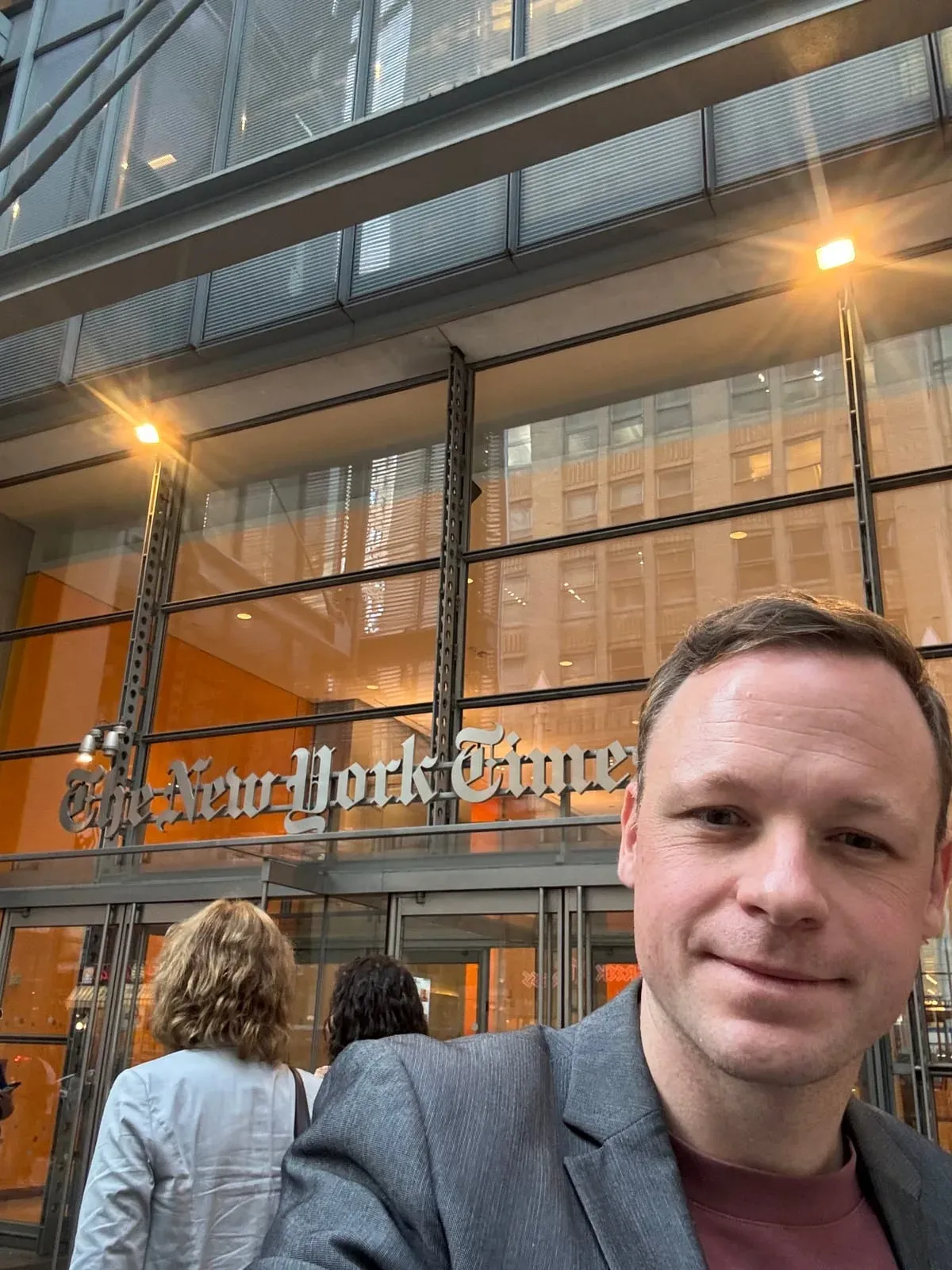
Two weeks of the RIAS program have come to an end, and it’s hard to know where to begin. There’s simply too much from this intense experience to process all at once.
Whether it was the discussions at Harvard about the future of journalism and democracy, the debates in Washington about U.S. and European policy toward Ukraine, or the tour through the hallowed halls of The New York Times: the input was as immense as it was diverse.
We had the opportunity to debate with colleagues and exchange experiences—and in doing so, we realized that many of the challenges we face in our daily journalistic work, particularly when dealing with right-wing populism or artificial intelligence, affect Americans just as much—and often even more severely.
In discussions with think tanks, politicians, and analysts, we were able to gain insight into the political situation in the U.S. and transatlantic relations, and explore the question: Where are German American relations headed? Where do the opportunities lie, and where are the challenges? And just how important is our shared heritage?
The real highlight, however, was the guided tour led by Gordon Huie, a 9/11 survivor. He told us his story: how he witnessed the collapse of the Twin Towers with his own eyes, helped the injured, and finally learned that his sister had also been in one of the towers when the planes crashed into the skyscrapers and changed the history of this country forever.
These two weeks were among the most intense trips of my life—and I can only urge everyone to apply.
Claudia Aichberger
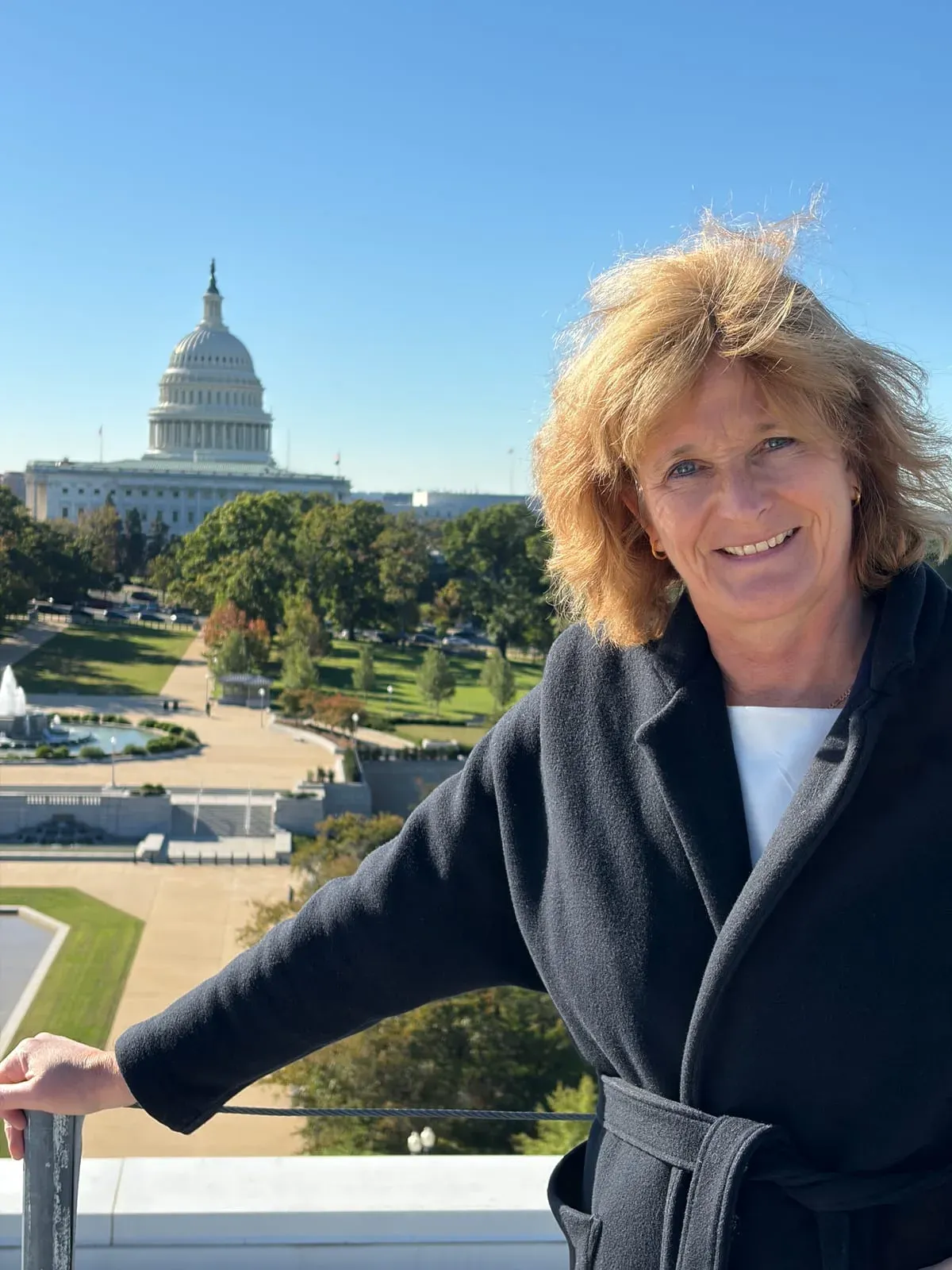
Two weeks in the U.S., three major cities, more than 20 meetings with journalists, professors, researchers, experts, and members of Congress. In between, two “station days” in Ann Arbor, Michigan. This experience could not have been more impressive or intense.
With the midterms just around the corner, the discussions were dominated by the election campaign. How will the Democrats manage to regain control of both houses of Congress? Which candidates are suited to enter the race for the White House afterward? And, on a more fundamental level, the conversations often centered on the direction in which the U.S. has changed under Trump.
It was interesting to see how deeply rooted the frustration with current politics is among some people. One (Democratic) member of Congress asked that we not reduce U.S. politics solely to Trump but also recognize that the transatlantic partnership is being contested on many other levels. Others expressed concern that it will take years to restore the trust that has been lost on both sides of the Atlantic.
The exchange with colleagues at Michigan Public was also very valuable. The focus was on how radio can reach a younger audience. Nevertheless, formats like the 1A Show and its hosts remain popular with the core audience. I was able to attend a live public broadcast and followed a very nuanced discussion about the Senate race.
In New York, the conversation with Gordon Huie at the 9/11 Memorial was particularly moving. He was affected by September 11 in three ways—as a family member, a survivor, and a first responder—which made his positive and empathetic demeanor all the more inspiring. His accounts and experiences really touched us, especially in the museum’s Family Room. Unfortunately, his own museum had to close during the COVID-19 pandemic.
And what else? We learned that journalists no longer have easy access to information under Trump. The Pentagon, for example, no longer holds press conferences. It’s not a given who gets into the White House press pool, and even Republican supporters of the conservative think tank Advancing American Freedom are voicing fierce criticism of the Trump administration and are concerned about the future of the GOP.
These were truly unique insights. Many thanks to Chris and Pam for organizing the event.
Moritz Rödle
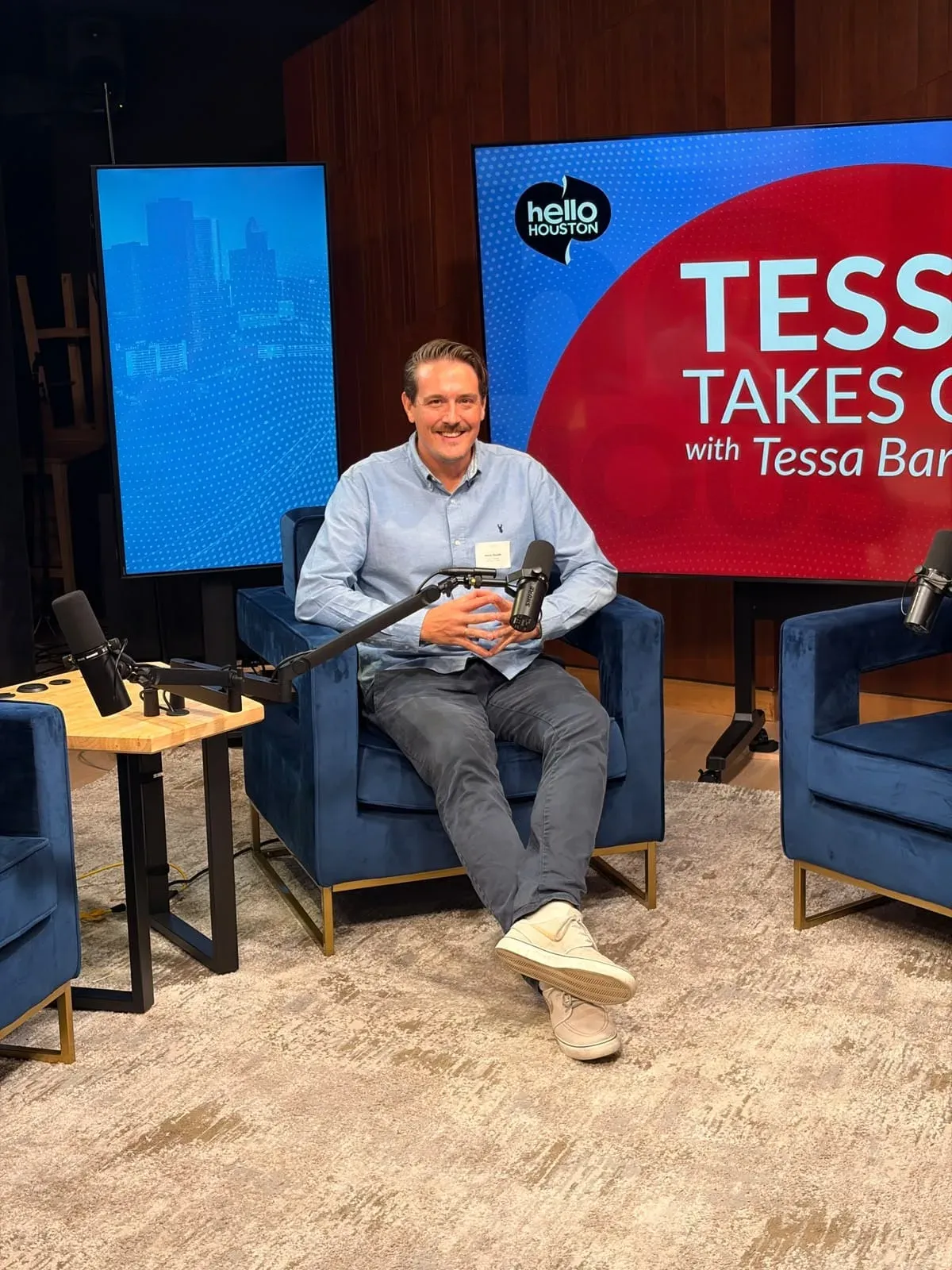
Gordon Huie is sitting in an armchair at the 9/11 Museum. He tells us about the day of the attacks and the days, weeks, and years that followed. The room we are sitting in is reserved for the families of the victims and their guests. Messages to the deceased hang on the walls. Some of them were written just a few days ago. One letter has stayed with me in particular. A woman is writing to her late husband, telling him that they have just become grandparents.
For me, Gordon was the most impressive person we met during our two weeks with RIAS in the United States. But every other appointment was incredibly valuable in its own way, too.
During my Station Days in Houston, Texas, my host Andrew Schneider took me along to two campaign rallies for Republicans who are facing unexpected challenges in these midterm elections. For me, it was an opportunity to step into worlds I had never encountered before and gain a better understanding of them.
In Washington, Telemundo correspondent Javier Vega explained to us how the Trump administration is making their work more difficult. In New York, Clare Toeniskoetter gave us an insight into her work on “The Daily”, the New York Times podcast. It was great to be able to talk with fellow journalists about journalistic projects that everyone knows.
Another wonderful part of this experience was getting to know the fantastic German colleagues who joined me on this trip. I feel very fortunate and grateful to have had these experiences. Many thanks to the RIAS Berlin Commission for making this opportunity possible.
Chiara Pas
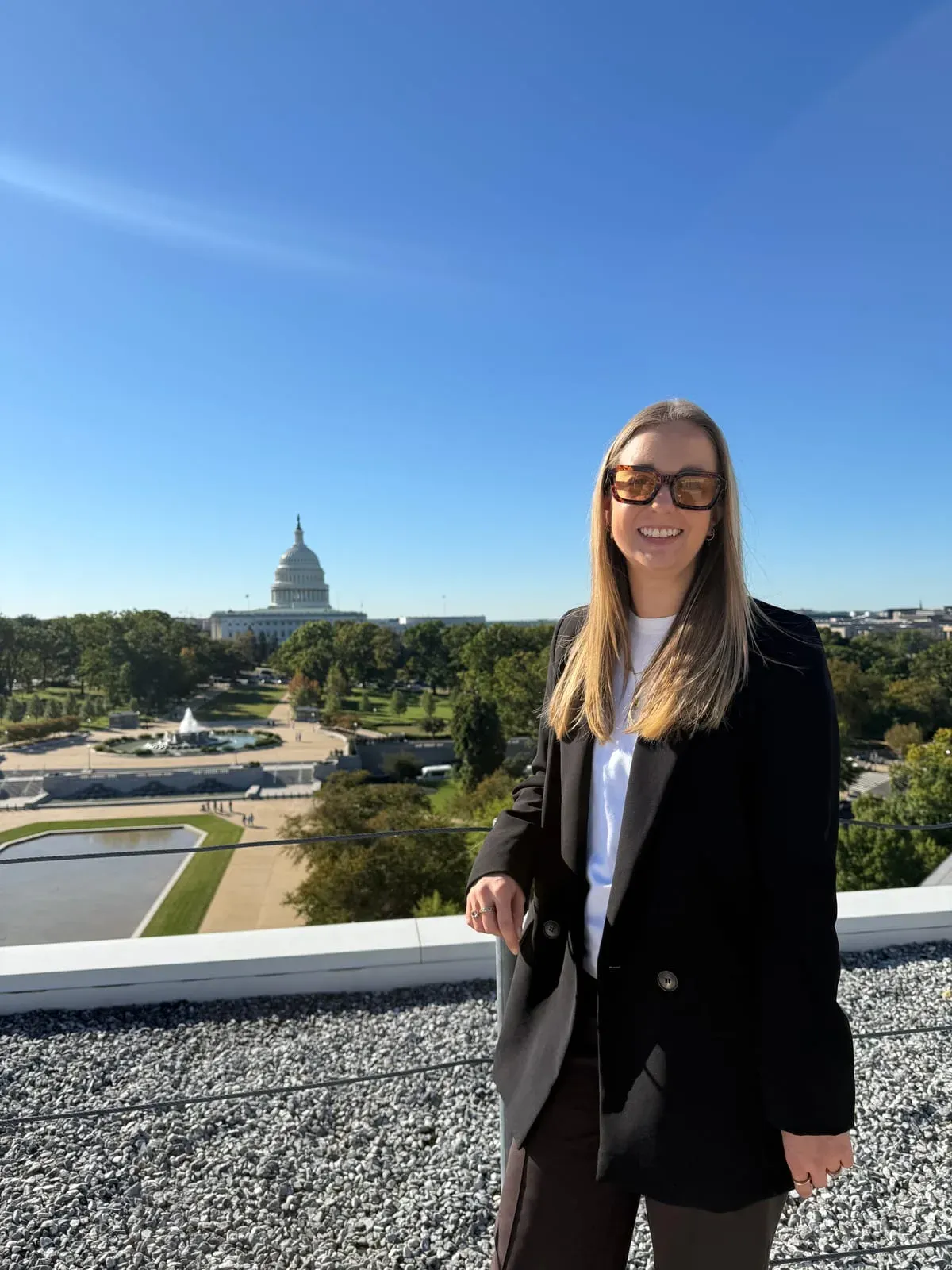
I probably won’t experience a trip like this again anytime soon. That thought stayed with me throughout the entire RIAS program in the United States. During these two weeks, we had the unique opportunity to gain deeper insights into the country’s political landscape and media industry. And the timing couldn’t have been better: just a few weeks before the potentially pivotal 2026 midterm elections. We spoke with representatives from various media outlets and think tanks about the political future of the United States. About voters who had placed high hopes in the president but are now disappointed with his policies. About disillusioned Republicans, die-hard Trump supporters, and Democrats who are still debating which direction their party should take.
All these conversations helped me gain an even better understanding of how politics works in this country – and I was able to put that knowledge to use right away, reporting on the midterm elections for my newsroom back home.
One of the highlights was our visit to The New York Times, where we learned a lot about what is arguably the most successful news podcast, “The Daily.” Another particularly fascinating experience was our conversation with a White House correspondent from Telemundo, who gave us a vivid account of how press relations at the White House have changed under Donald Trump.
Another topic that came up in (almost) every conversation was how AI and social media are transforming the media landscape in the United States – and how every news organization is trying to find its own way to adapt. The growing influence of so-called news creators (including in the White House press briefing room) raises questions and concerns – and I’ll be closely following how this trend develops in Germany as well.
During my Station Days in Charlotte, North Carolina, I got to explore a completely new side of journalism for me: local television news. Erika, Joe, and Jonathan showed me what working at WSOC looks like – from early-morning live reports outside a police station and interviews with voters outside a polling place to writing scripts in the car on the way to the next story. I’m incredibly grateful for my time there, and it reminded me once again just how important local journalism is – not only in the United States.
What else am I taking home? An (almost) full notebook, a WhatsApp group filled with amazing people, and an overwhelming sense of gratitude! Thank you to the entire group, as well as Chris and Pam, for this unforgettable experience!
Valerie Dörner
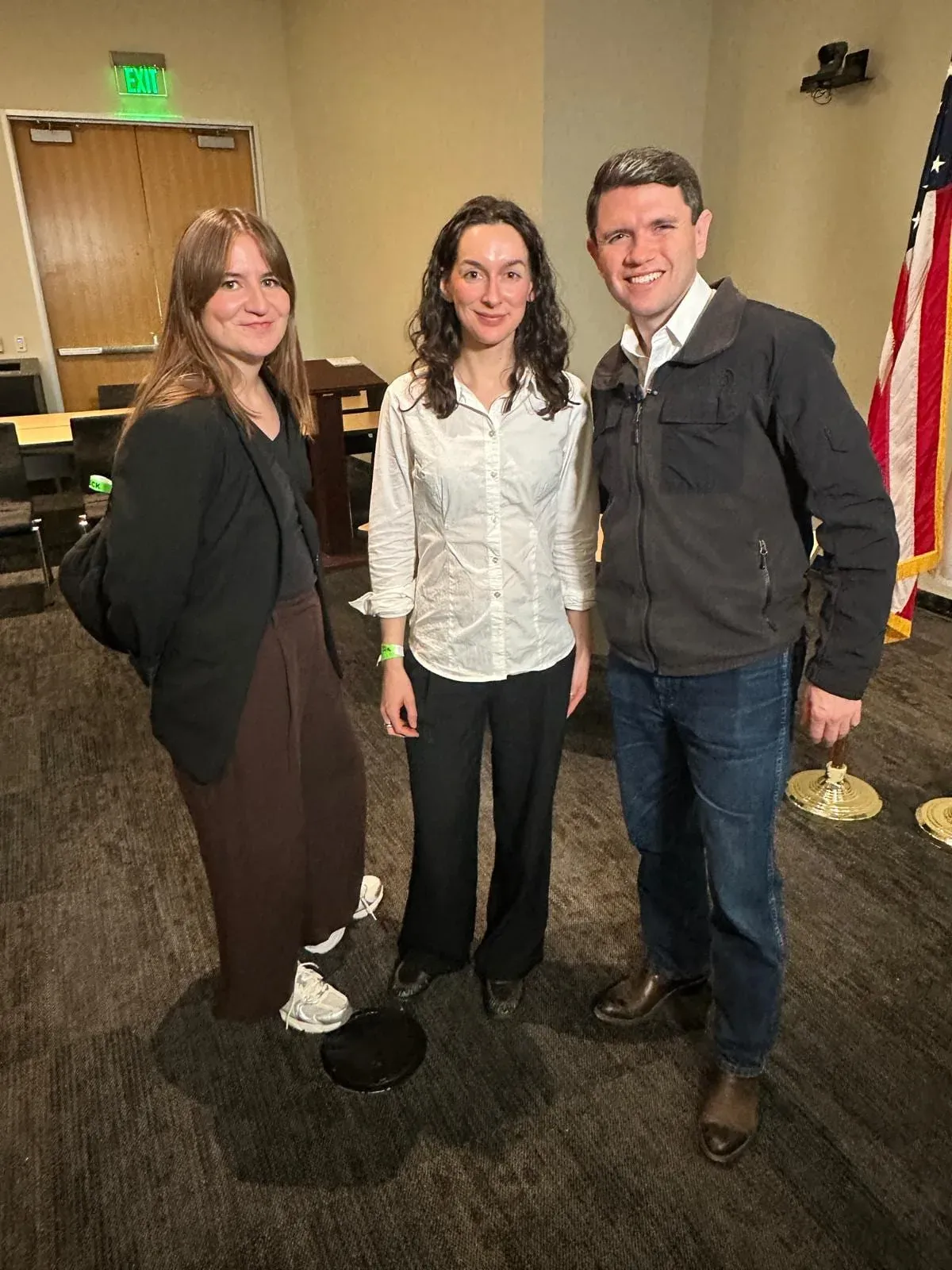
How am I supposed to process all of this? Before this trip, I expected the two weeks to be exciting and also a bit exhausting—but I could never have imagined beforehand just HOW many new impressions, food for thought, and connections I’d end up with. RIAS offers its participants a unique glimpse behind the scenes: into foreign newsrooms, campaign events, universities, and—above all—into the thoughts and opinions of a wide variety of people. And not just through meetings with think tanks or university professors, but also through exchanges with the other German journalists. After this trip, I see not only the U.S. but also journalism in a completely different light.
The timing of our trip couldn’t have been more exciting—with the midterms just three weeks away; the country is abuzz with excitement. Aside from our visits to The New York Times and the AI research team at NYU, my visit to Texas impressed me the most by far. Together with another RIAS participant, I was able to experience two very special days in the “Lone Star State.” We spoke with (former) Republicans who are disappointed in Trump and are therefore supporting the Democrats. We got to take a look inside various television studios and listen in on a podcast recording. And we were able to attend a campaign rally for Democratic Senate candidate James Talarico. This event was particularly exciting for me, and not just because of his rousing manner and charisma. I was also surprised to see just how much U.S. politics differs from German politics, right down to the grassroots level. The atmosphere at the rally was more like a concert than a campaign event—there was even a cheerleader. And Talarico was greeted—like a music star—with cheers and signs held aloft.
It was all so different, so unfamiliar. And this in a country I’ve visited many times before and whose influence on Germany—both politically and culturally—is so great—yet at every single event, in every single conversation, I learned something new and surprising. RIAS opens doors that I could never have opened on my own. So, I’m bringing back from the U.S. not only red cowboy boots, but also a whole host of new experiences.
Julia Weber
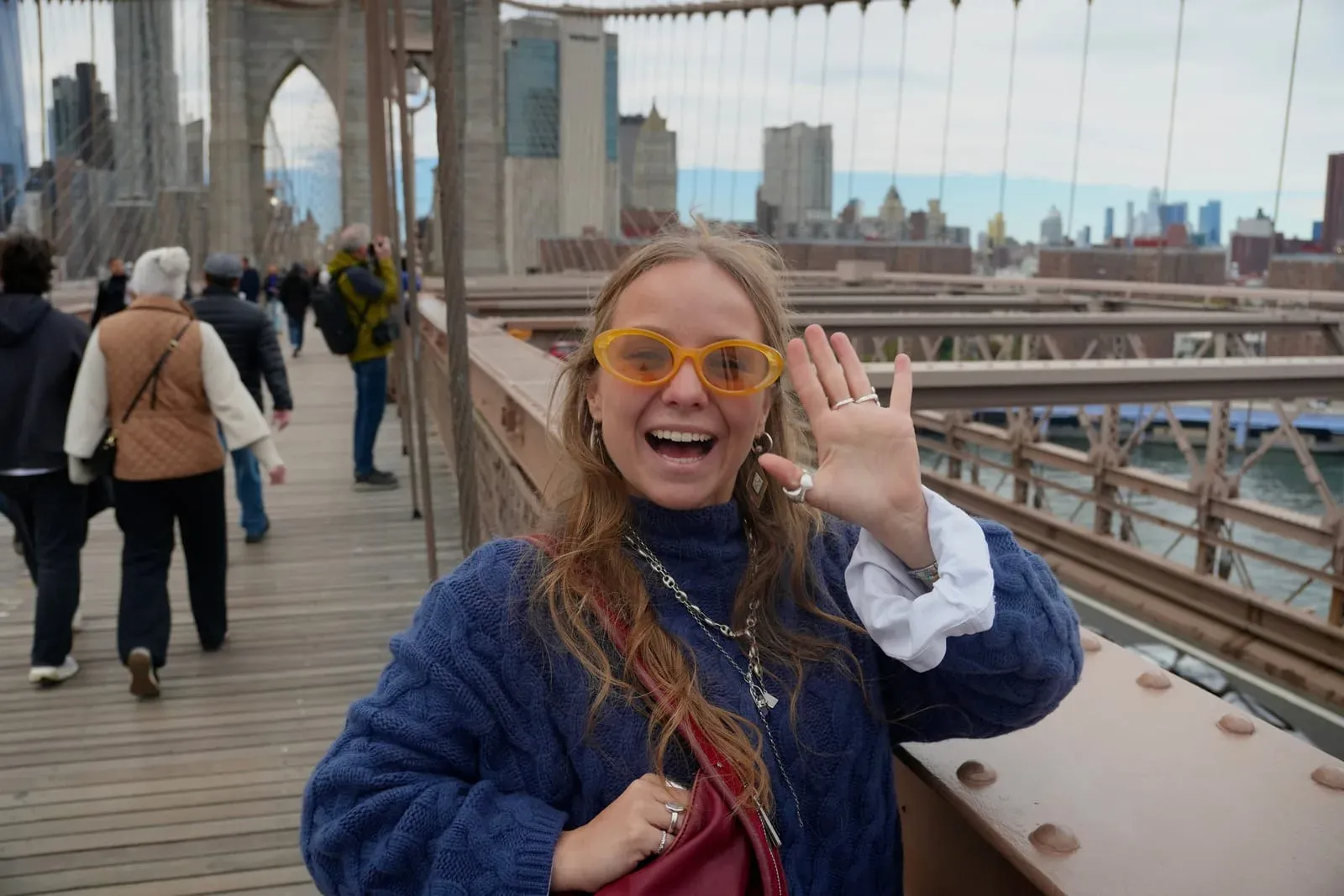
How often have I reported on the U.S. in recent years? On its conspiracy theories, the “stolen” 2020 election, AI-generated videos here and fake news there. In the midst of it all, I lost sight of my personal feelings and fascination with this country. At some point, I was almost annoyed whenever we reported on yet another Trump statement. I set out on this trip with mixed feelings. Of course, I was looking forward to the adventure and the exciting conversations, but I was also afraid—afraid that the trip would only increase my frustration with the country.
Within two weeks, we’d been to Boston, New York, Washington, D.C., and I’d been to Atlanta. But it only took two days (and four iced lattes with oat milk, please) for my fascination with this country to return. In the countless conversations with professors, politicians, think tanks, and other journalists, it became clear pretty quickly: almost all of the people we spoke with know that we’re in the same boat and facing very similar problems. At the start of the trip, I had a naive dream: maybe someone would finally explain to me how we need to deal with propaganda and disinformation—after all, journalists in the U.S. should be experts on that by now, right?!
In the end, I accepted that no one probably has a 100 percent solution to this problem—but that isn’t even the most important thing. The Massachusetts Historical Society collects virtually everything, from current posters of the “No Kings” protests to ancient documents from the early history of the United States. Why do they preserve these thousands of documents? They want to record the facts—the visible and documentable reality—so that no one can distort that reality later.
Our job is to listen, to understand, and to constantly question ourselves. To understand other people’s realities, you simply have to be there, gather your own little impressions—and that’s exactly what the RIAS Commission made possible for our whole wonderful group and for me. <3
Yasmine M'Barek
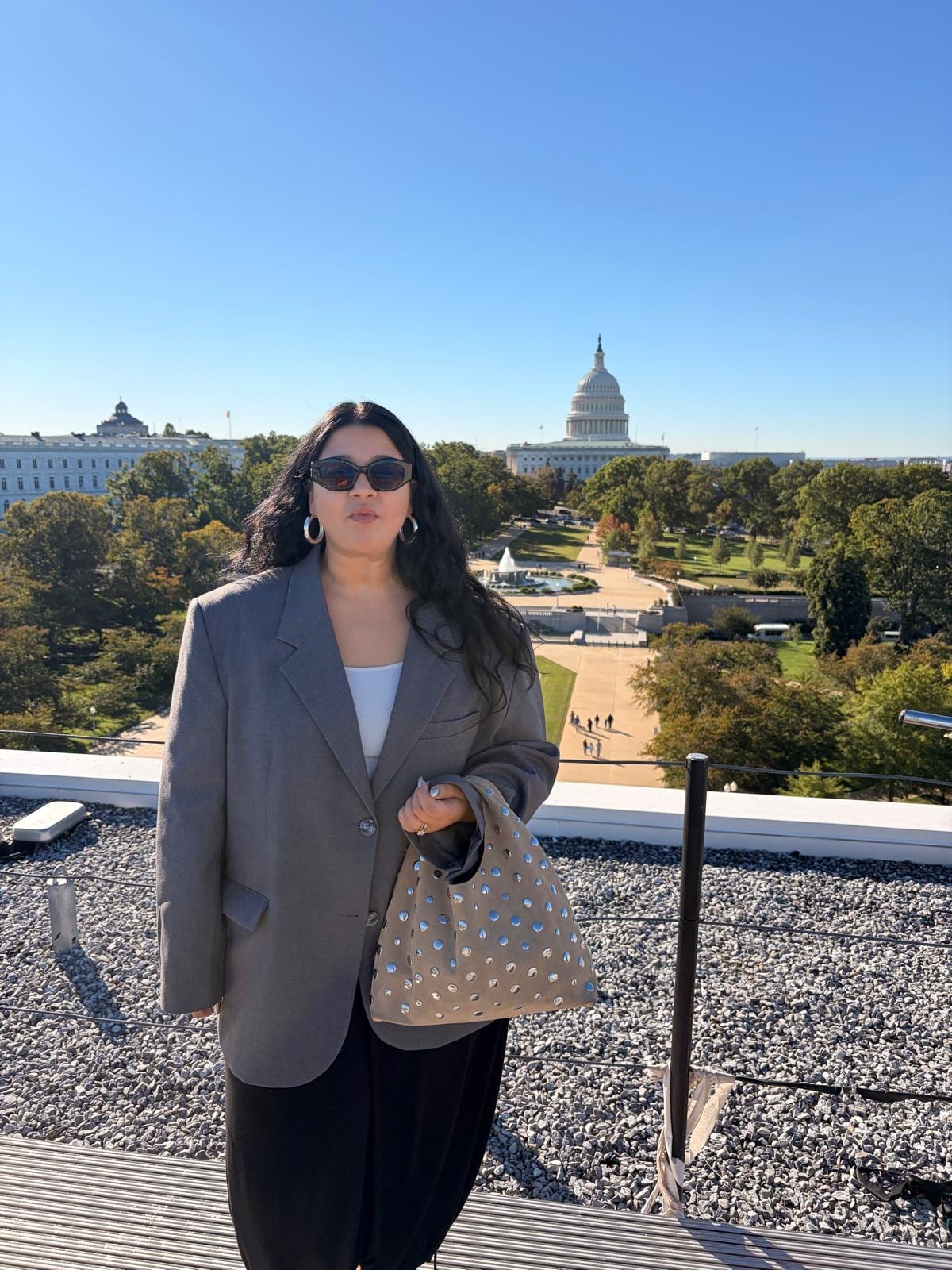
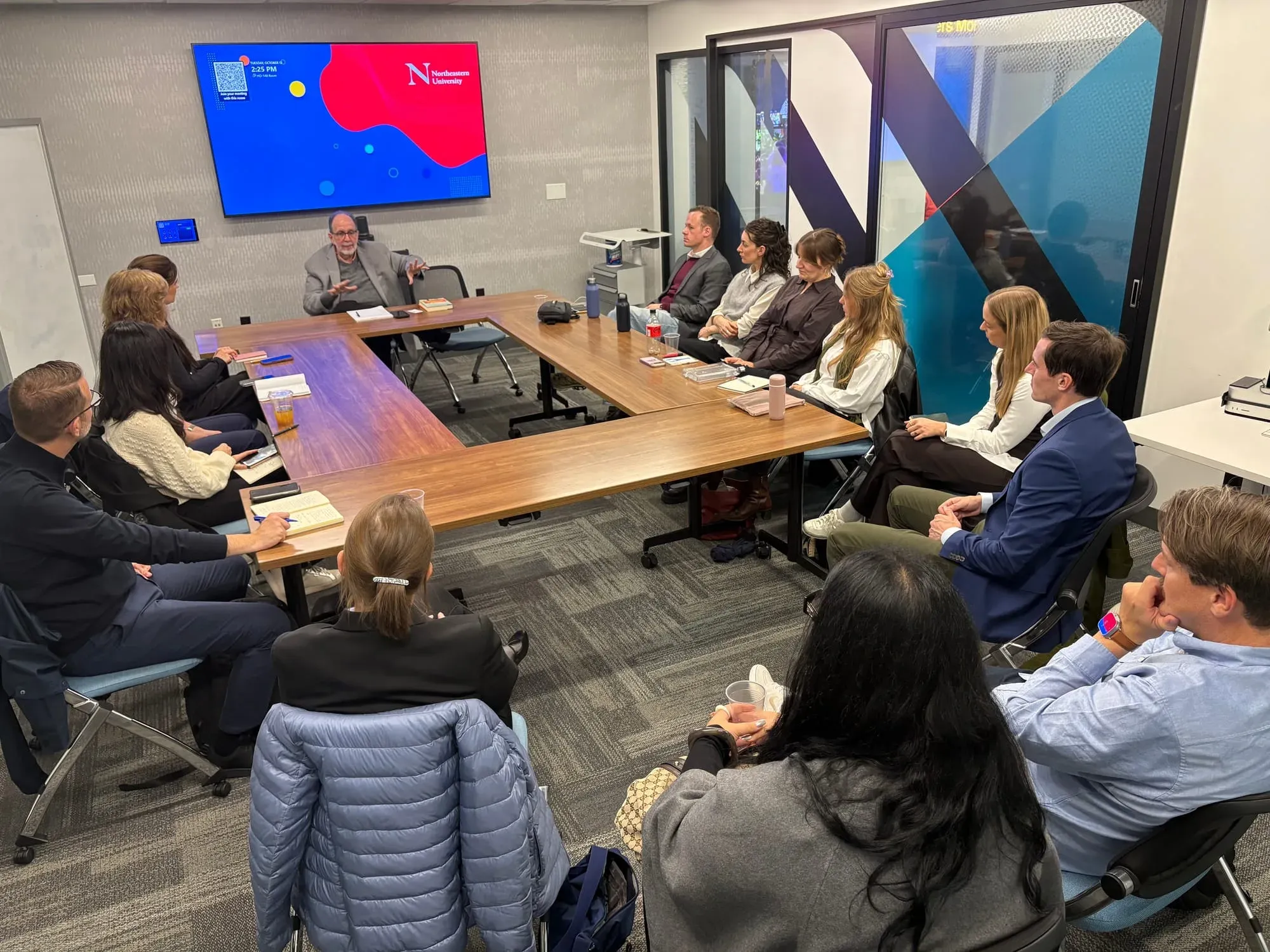
Two weeks before the midterm elections—arguably the most exciting time to travel across the USA with RIAS. That made it all the more thrilling to speak and discuss with the country's leading thinkers and decisionmakers. Can a Democrat win Texas? And how does Chicago view a potential Kamala Harris candidacy? Meanwhile, the growing polarization was palpable, and we learned even more about its origins, such as witnessing the departure of a press secretary firsthand and observing the underlying mechanisms. A particular highlight was the exchange with academic institutions and their approach to political debate, such as Harvard and Northeastern University.
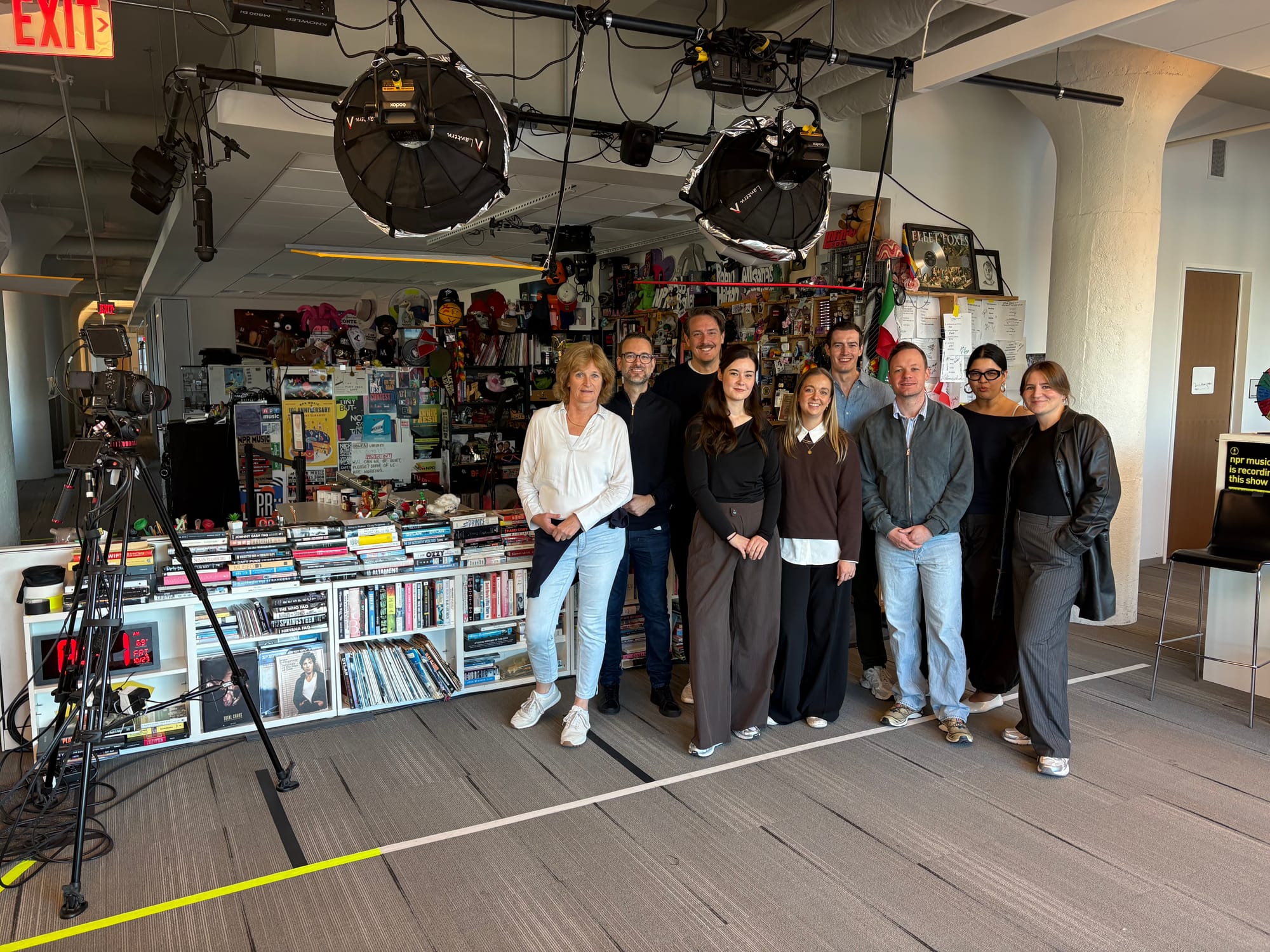
The station days in Chicago also provided an opportunity to immerse oneself in the city's overall picture, recognize social inequalities, and explore the workings of local journalism. Intriguing discussions took place in think tanks like the Center for American Progress, the Quincy Institute, and Advancing American Freedom. The focus was on the major questions facing the West and the status quo: Where are we headed geopolitically? Who are the driving political forces, and how does democratic cooperation function? And of course, there were also some social and pop-cultural highlights, such as NPR's Tiny Desk or the fascinating insights into the production of "The Daily" at the New York Times, which, as a political journalist and podcaster, was a particular personal highlight.
We were in constant contact with RIAS alumni from all the cities, who assured us: This network will last. What was especially remarkable was the way our American colleagues welcomed us – open, approachable, and with such interesting background information. Last but not least, I'd like to thank Pam and Chris, who organized and supported us throughout the trip; we had a fantastic time!
Marisa Uphoff
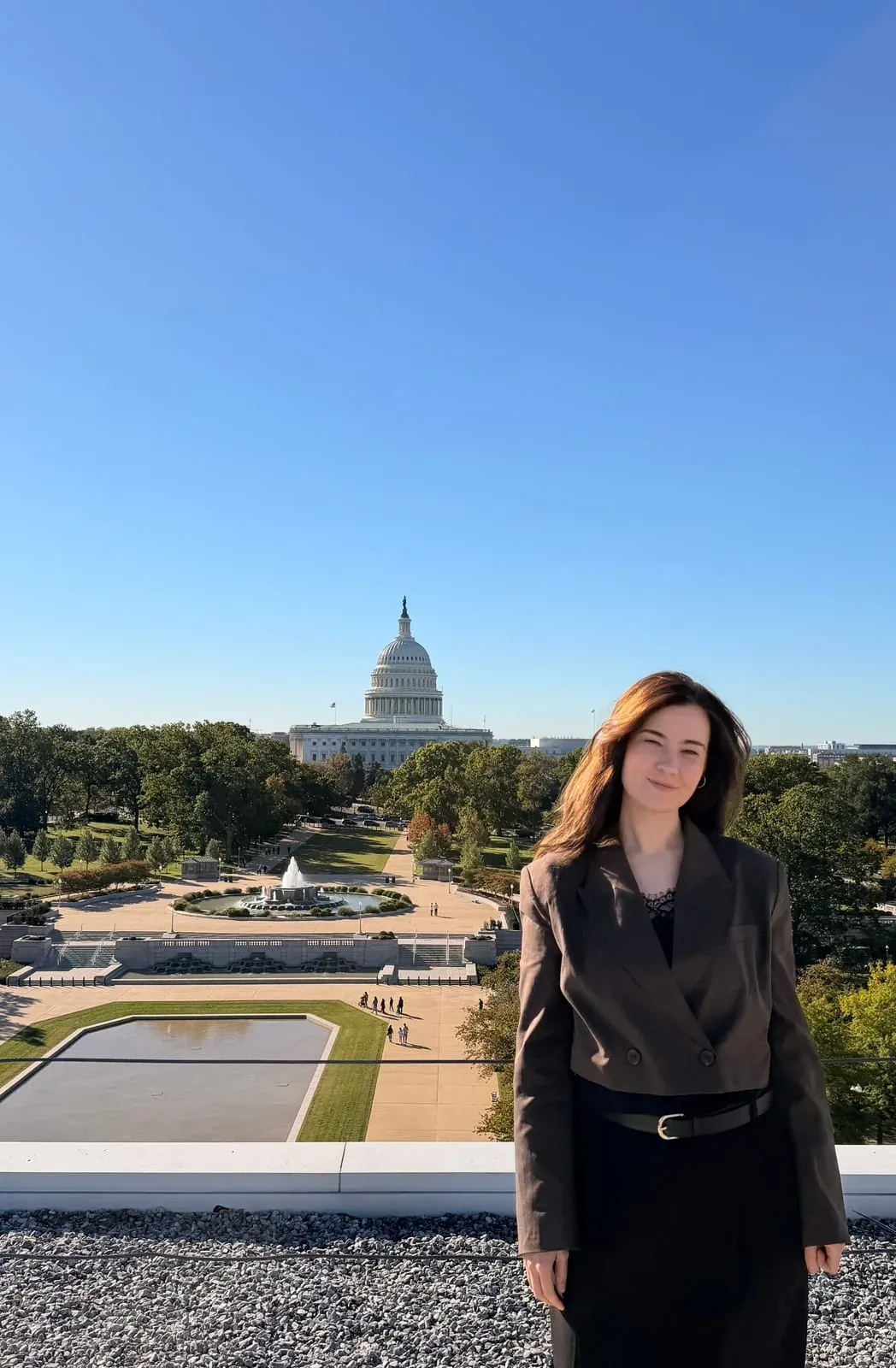
The trip with the RIAS Journalist Program in October 2026 opened truly extraordinary perspectives for me on the working realities of media professionals and current political developments in the U.S. I had the unique opportunity to speak with many different people from politics and academia, as well as think tank staff, in a short period of time, and this gave me insights into political decision-making processes and underlying contexts that I consider a great enrichment. The particular significance of these encounters stemmed not least from the country’s current situation: while the United States remains embroiled in a conflict unwanted by many of its citizens and the cost of living for Americans continues to skyrocket, the midterm elections were also just around the corner. Witnessing the start of these elections—which, from today’s perspective, are now historic—as the first polling centers opened and the final campaign rallies took place, meant being able to observe a special moment in American history up close. Time and again, geopolitical issues also took center stage in our conversations. For me, the focus was particularly on how the U.S. is handling the conflicts of our time, U.S. foreign policy interests, and the future relationship with its allies. I was able to have incredibly fascinating discussions on these topics with both our guest speakers and my wonderful colleagues.
Another particularly special experience for me was the candid exchange with my American colleagues, who warmly welcomed us into their newsrooms and production studios. I found it especially valuable to gain insights into their day-to-day work on the ground—whether during a visit to The New York Times’ podcast The Daily, a discussion with editors from the Washington Sun, or conversations with journalists Javier Vega (Telemundo) and Emily Feng (NPR). Last but not least, I’m very grateful to have had the opportunity to connect with American RIAS alumni time and again. The challenges they face in the industry, as well as their visions and hopes for journalism, continue to occupy my thoughts.
However, I experienced a moment that was personally magical for me—separate from discussions about geopolitics or the future of journalism—when our tour of the NPR headquarters in Washington, D.C., didn’t end in a newsroom or a recording studio, but on the set: the backdrop of NPR Music’s Tiny Desk Concerts. For years, I’ve religiously watched every new episode recorded on that set, and over time I’ve come to realize that the Tiny Desk is much more than just another music format on YouTube. It’s more like a declaration of love for pop culture and all the sounds, influences, and artists who shape it in the U.S. For me, this visit felt like the perfect finale, because both of these things are part of my work: the tough political debates and American pop culture. I’m very grateful to have had these experiences and have learned a great deal.
Chiara Kempers
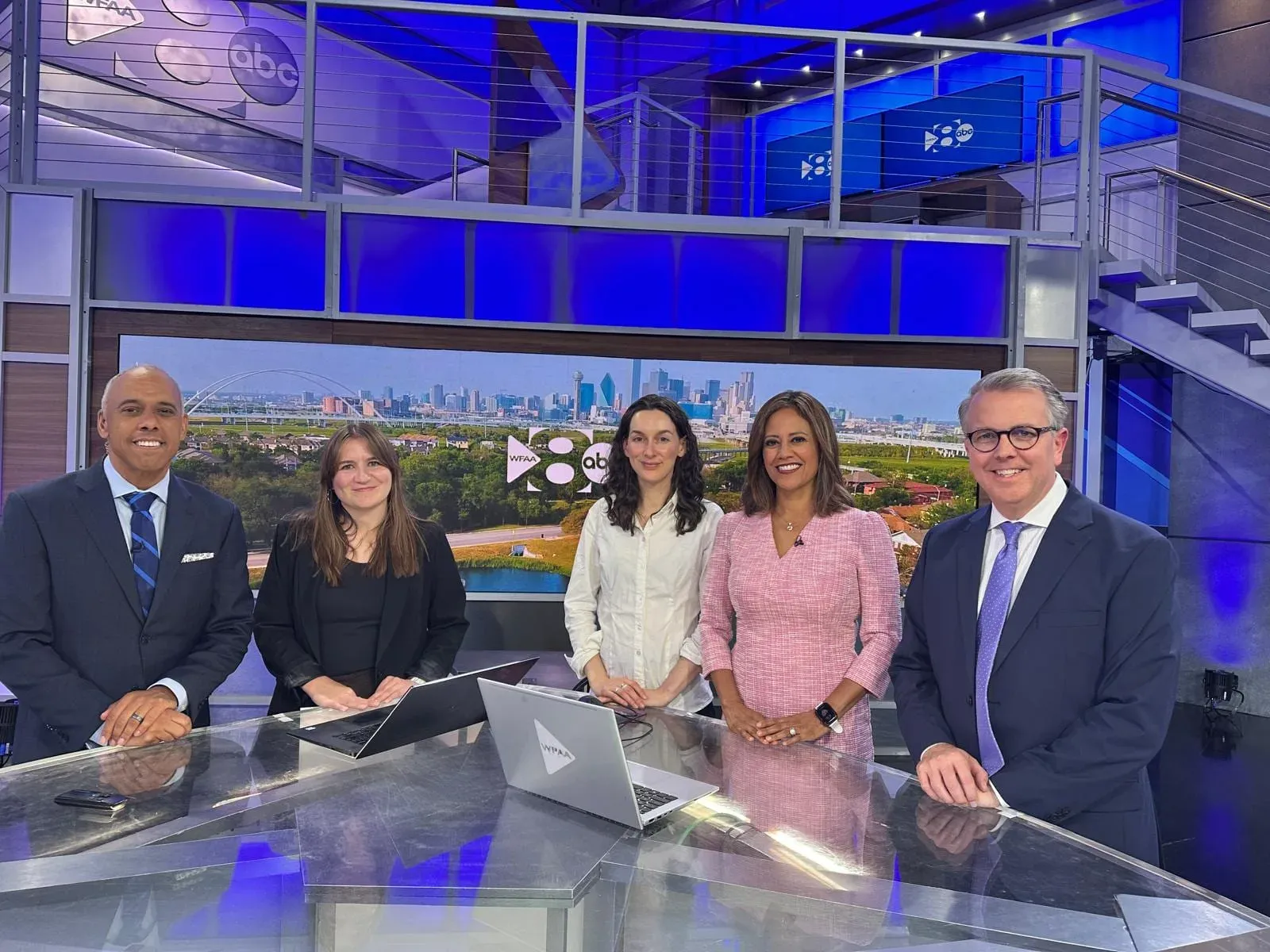
The RIAS Program in autumn 2026 took me to the United States for the very first time in my life and proved to be an incredible experience, both personally and professionally.
What I take away most from conversations with fellow journalists, think tank representatives and government officials is one key insight: as journalists, we face many of the same challenges, wherever we work. Building personal connections and exchanging experiences across borders can help us learn from one another and, perhaps, prevent us from making the same mistakes in the future. The fellowship offered a unique combination of professional exchange and networking. It challenged my expectations, surprised me in many ways, and pushed me beyond my comfort zone. One experience in particular stands out: I never imagined that one day I would find myself holding a Romanian-made Kalashnikov in a suburb of Dallas, Texas. Our host, Jason Whitely from WFAA Channel 8, wanted to make sure we got the full Texas experience. So, on our very first day, he took my colleague Valerie Dörner and me to a shooting range, where we tried firing some guns. In Texas, one of the states with the most permissive gun laws in the U.S., anyone aged 21 or older can own a firearm and carry it openly. What was a once-in-a-lifetime experience for us is simply part of everyday life in Texas.
Still buzzing with adrenaline and our knees slightly shaky after the shooting session, we headed straight to the next highlight of my stay: a rally for James Talarico, the Democratic candidate in the Senate race. Just a few weeks later, he would become the first Democrat from Texas elected to the U.S. Senate since 1988. The atmosphere at the rally was truly striking. There was a sense of optimism and change in the air, a feeling that would soon be confirmed by what followed, and one I will probably never forget.
I'm returning, still filled with excitement about everything I've experienced, with a greater awareness of the challenges facing our profession, and an even stronger conviction that cross-border dialogue between journalists is essential.
Ultimately, the RIAS Fellowship sparked new curiosity and reinforced how much journalists on both sides of the Atlantic have in common, not only the challenges and tensions we face in our work, but also the passion that drives us.
Katja Charlé
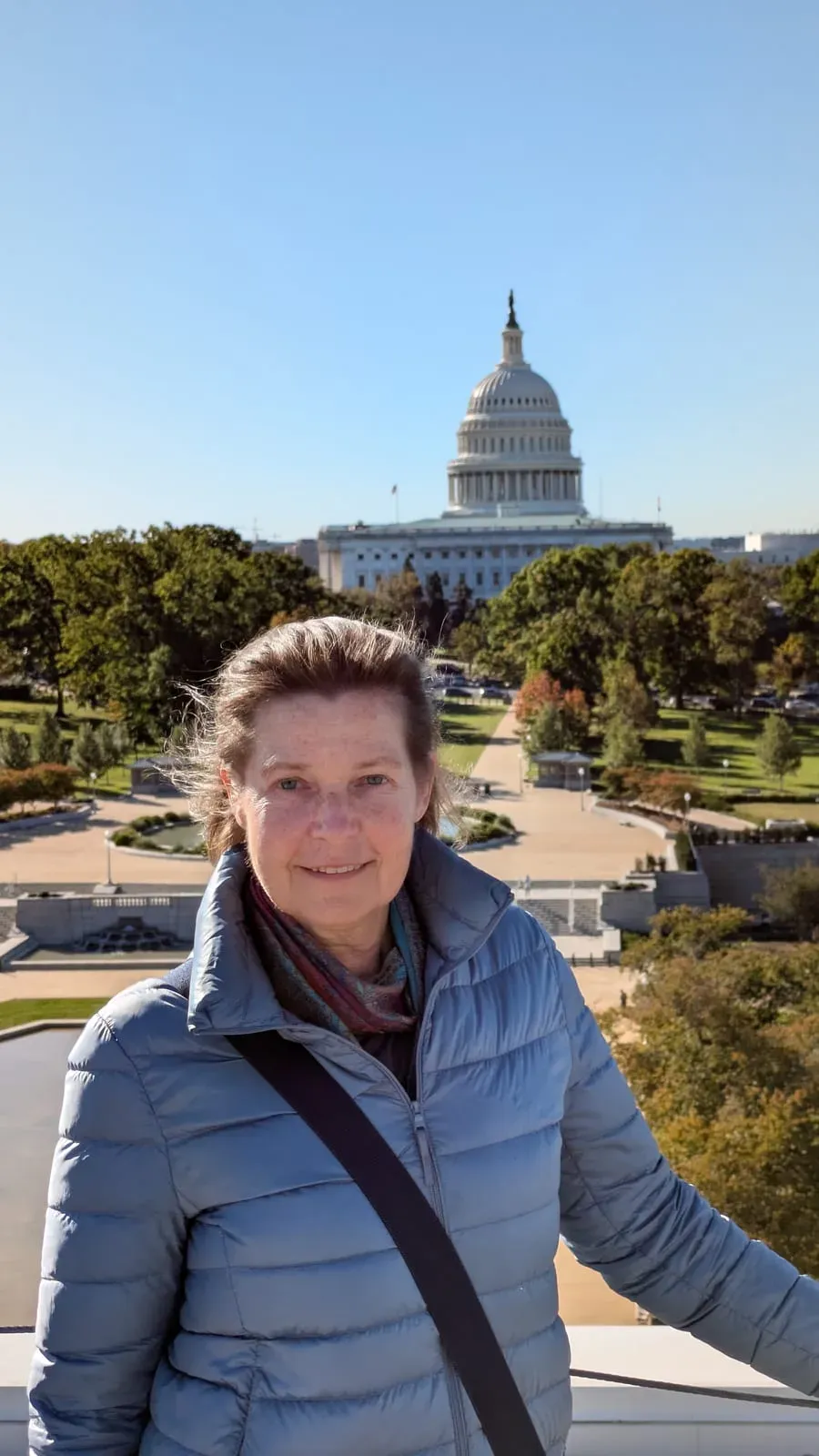
The nearly two weeks I spent in the U.S. were among the most exciting days I have ever experienced. To this day, the diverse impressions I gathered continue to resonate—impressions I can only briefly summarize on a single page. Being able to participate in this program was not only a personal enrichment but also gave me a new perspective on the U.S.
At a time when the world’s attention was focused on the midterms, we received a wide range of perspectives on the political balance of power and the current working conditions for journalists in the U.S. This allowed us to immerse ourselves firsthand in the latest developments surrounding the election campaign. In Boston, New York, and Washington, we were able to attend about four meetings a day with a wide variety of institutions and interviewees. Among them was Javier Vega, a correspondent for Telemundo in Washington. He provided insight into the increasingly difficult day-to-day work at the White House. Free, critical journalism is hardly possible, as it risks exclusion. Overall, the mood in the country pointed toward a change, but none of our many interlocutors dared to predict the election outcome. I was more surprised by the candor with which five members of the Republican think tank “Advancing American Freedom” vented their anger at Trump’s policies, tariffs and spoke of a deeply corrupt government. I couldn’t help but think of those very five gentlemen when the election results were finalized. I wonder what they had to say about the Democrats’ landslide victory?
To this day, I am deeply moved by the story of Gordon Huie, whom we met in New York at the 9/11 Memorial. The doctor and highly decorated veteran lost his 43-year-old sister, Susan, in the attacks of September 11, 2001. That morning he tells us, his father called him and said that Susan was at a conference in the World Trade Center, all the way up on the 106th floor. He immediately rushed to the scene of the attack, administered first aid, and tried to help as many injured people as he could. Body parts were scattered all over the street, he recalls. That image is seared deeply into his memory. To this day, those images and the loss of his sister continue to haunt him. He vividly describes his experiences and recounts his search for Susan. For two weeks, he spent 16-18 hours a day at the site of the rubble, breathing in the toxic dust—and as a result, he now suffers from several forms of cancer. The official death toll of 2,753, he says with a smile, doesn’t even come close to reflecting reality. And to this day, four more people die every week. Furthermore, not all of the victims have been identified yet; 1,100 bodies have not yet been found. He has been telling his story for over 20 years now, repeatedly revisiting the most horrific moments of his life. When asked why he keeps bringing up what happened, he replies: so that it won’t be forgotten, and adds that he is grateful to us for listening to him and taking an interest. And then he grants us access to the “family room,” which is otherwise reserved for relatives. Here, they can commemorate the deceased in peace. The walls are covered with letters, little notes, drawings, and photos. They all tell individual stories, each of which gets under your skin as you look at and read them. During the subsequent tour of the museum, his descriptions linger in our minds. They heighten the poignancy of the exhibition, reinforcing just how important such firsthand accounts are for good journalism and the power that comes from primary sources.