
Leander Löwe, ARD, Hamburg
The RIAS program has already been the best thing that has happened to me in 2026. From insightful discussions on current U.S. politics about the Iran conflict and the preparations for the midterm elections, to direct comparisons of journalistic practices (with visits at The New York Times, Telemundo, or NPR), I am now bringing many new insights back to my daily work in the newsroom at ARD. Many of the events helped me better understand the situation in the White House and the local press—an experience that is extremely important for journalists working from Germany. My days at ABC15 in Arizona broadened my horizons. Although I’ve already experienced quite a bit in my career, I would say that these three days rank among the most memorable of my professional life so far. Experiencing Phoenix and the historic “Wild West” from a contemporary perspective (in the 21st century); understanding why a swing state that was originally strongly Republican suddenly turned blue; feeling the heat of the desert in contrast to chilly New York — all of this made the trip unforgettable for me. The program was rounded out by a postcolonial perspective on the U.S.—both with Native Americans at the Mattaponi Reservation in Virginia and with African Americans at the Lest We Forget Slavery Museum in Philadelphia. This exchange vividly illustrated the barriers that marginalized groups still face today. The RIAS trip was well-organized; we were a great, diverse group and were able to ask many questions (including follow-ups), which allowed us to delve deeper into our own areas of interest. I wholeheartedly encourage everyone to apply!
Angela van Brakel, Seven One, Munich
“It’s like Björn Höcke is our chancellor.” “Oh no, the United States is no longer one country, but divisively split into two.” “We’re thrilled with this administration and with the progress of Project 2025. It’s all going as planned.” These are sentences that linger. Sentences that unsettle. Sentences that echo long after they’re spoken. What made them resonate so deeply was not just their content, but the context in which they were spoken. We were in rooms rarely accessible, engaging with think tanks, lawyers, politicians speaking off the record, and journalists with decades of experience covering the White House. And all under the weight of a country at war, and a tumultuous political climate intensifying just months ahead of the midterms. The urgency was palpable. Questions came quickly, follow-ups cascading in rapid succession. Time slipped away unnoticed. Discussions grew intense: at times emotional, often controversial, occasionally shocking. These were not rehearsed narratives, but raw insights of a nation grappling with itself. Another moment stood out on a more personal level: a conversation with a producer from The Daily, one of the world’s most successful podcasts. As someone who has only recently begun her own journey in podcasting, the opportunity felt almost surreal. Practical advice, behind-the-scenes insights, small but crucial tips - it was the kind of exchange that rarely happens, and when it does, it stays with you. During the trip, I found myself particularly drawn to one question: What happens to journalism in a time when audiences seek confirmation rather than information? The discussions that followed, whether in professional settings at networks or over dinner with American colleagues, were illuminating. They revealed not only differences in working methods, but also striking similarities in the challenges we face in Germany. And then, toward the very end, something happened that luckily hadn’t occurred in decades (the death sentence for an anchor and podcaster): I lost my voice. Literally. An inside joke amongst the journalists in attendance, perhaps, but more tellingly a fitting metaphor. Because some experiences leave you speechless not for a lack of words, but because words simply aren’t enough. Two weeks. Four cities. Countless experiences and impressions. Days so dense with experience that each evening became an exercise in preservation, writing thoughts down before they could fade. What remains is a profound sense of gratitude: for the RIAS Berlin Commission Fellowship, for the opportunity, for the access, for the learning, for the people who made it unforgettable, and for the conviction that all of this will make us better journalists. And for that, a heartfelt thank you to Christoph, Pam, and Christina.
Vanessa Materla, RBB, Berlin
A Wednesday in Washington, D.C.: The day begins with bagels and coffee at Telemundo – we discuss how they cope with the pressure White House correspondents are currently facing from politics and society. Next stop: the ARD and Deutsche Welle studios. What challenges do our German colleagues face in their reporting? At the American-German-Institute, we then discuss how the German government is currently perceived in the U.S.– before heading to The Cook Report to get initial assessments of the midterms. At Spectrum News, a Republican senator answers our questions. Last item on the agenda: snagging a table at a rooftop bar with a view of the White House. This day offers a brief glimpse into the exciting and varied program we were treated to during our two-week stay in the U.S. We had interesting (behind-the-scenes) conversations and discussions with various think tanks, pollsters, journalists, lawyers, politicians, and colleagues. But also: with members of the Mattaponi Tribe, with a 9/11 survivor and rescuer, with relatives of a Jewish reporter covering the Nuremberg Trials – and, of course, with many wonderful RIAS alumni – in Washington, New York, and Philadelphia. For our Station Days, we were sent all across the country. I had the chance to accompany investigative reporter Yami Virgin as she conducted research for FOX SA in San Antonio, Texas. In just two weeks – which were as eventful and educational as several months – I gained unique insights into the world of journalism and the political landscape of the United States. My highlight: the group with whom I had the privilege to spend those two weeks. My heart is full of memories of this incredible time, the exciting experiences, and the wonderful people I had the privilege of meeting thanks to RIAS.
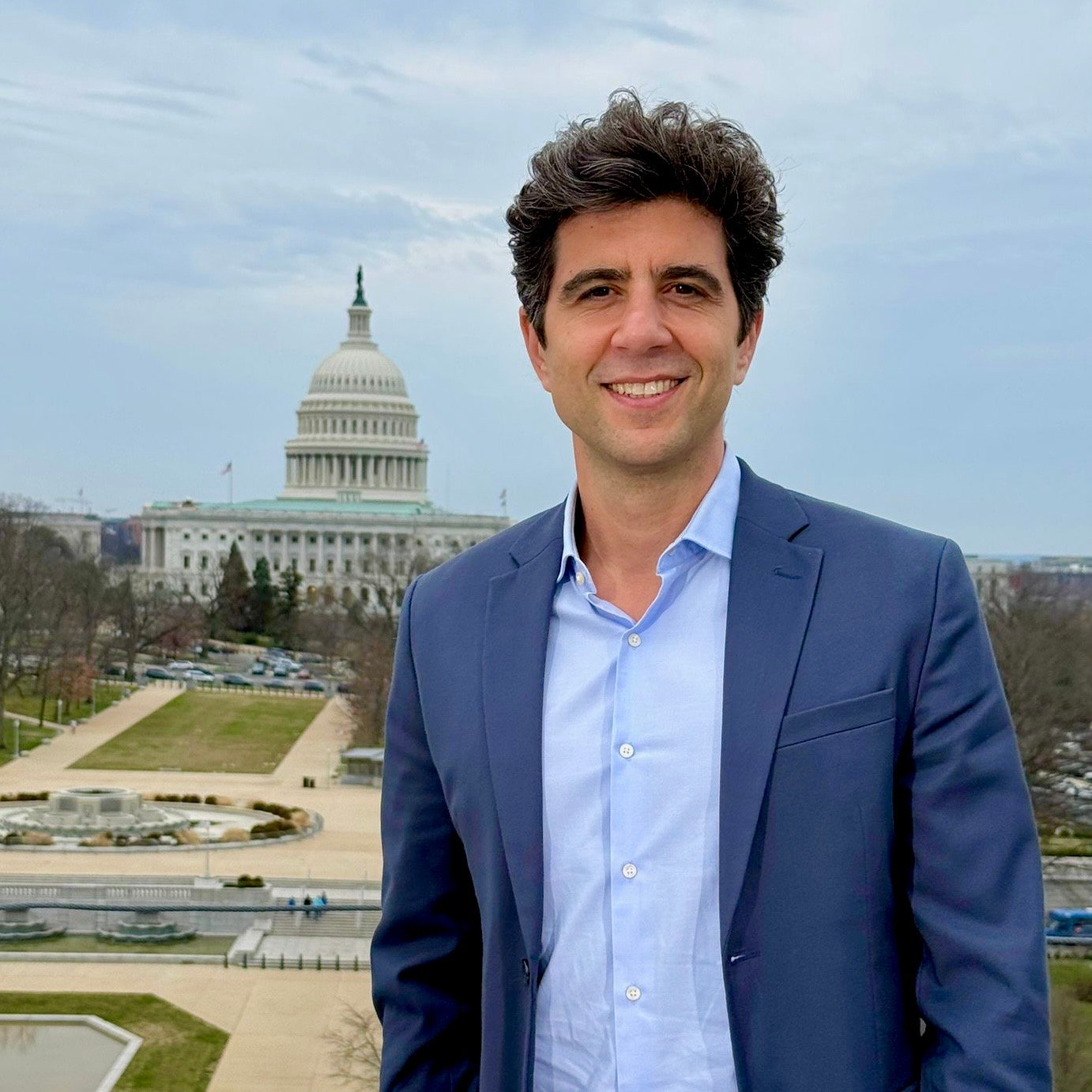
Jaafar Abdul Karim, Deutsche Welle, Berlin
There are journeys you remember for the places you saw, and then there are journeys you remember for the way they changed you. For me, the RIAS Transatlantic Fellowship was the second kind. Before starting the RIAS Transatlantic Fellowship journey, names like The New York Times, CPJ, Pew Research, The Heritage Foundation, the Center for American Progress, NPR, Voice of America, NOTUS, Telemundo, Ballard Spahr, the German-American Institute, or meetings with U.S. Senators belonged to a familiar public vocabulary. They were institutions I knew by reputation — _places that shape debates, frame narratives, and influence the way America speaks to itself and to the world. But during those two weeks, they became something much more human. They became faces, conversations, and moments that stayed with me long after we had left the room. What made the fellowship so powerful was not only the prestige of the visits, but the density of perspectives it offered. Each meeting opened another door, and behind each door there seemed to be yet another voice of America — _voices that often disagreed, challenged one another, or approached the same reality from entirely different angles. The rhythm of those meetings was intense: listening carefully, asking questions, reflecting, comparing, reconsidering — _then asking again. But what made it unforgettable for me was what happened after the official meetings ended. The conversation did not end when we left the building. It continued in our conversations, in our disagreements, in our laughter, in the way we tried to process together what we had just witnessed. And that „together“ mattered. For two weeks, I was surrounded by a group that made every part of the journey deeper, warmer, funnier, and more meaningful. What we shared was not limited to meals, sightseeing, or the simple pleasure of spending time together. It was also the joy of thinking together. Debating together. Sitting with difficult questions together. The group dynamic, the generosity, the openness, the humor — _all of it turned the fellowship into something that nourished both the heart and the brain. For me personally, this deep dive into American politics was a turning point. There is a profound difference between reading about a country and encountering it from within its own institutions. This made the RIAS Transatlantic Fellowship so special. It reminded me that the most meaningful journeys are not those that simply show you something new, but those that leave you seeing old things differently. None of this would have been possible without the support, leadership, and guidance of Chris and Pam. Their commitment created the space for us to make the most of this extraordinary experience. A million thanks for giving us this opportunity.
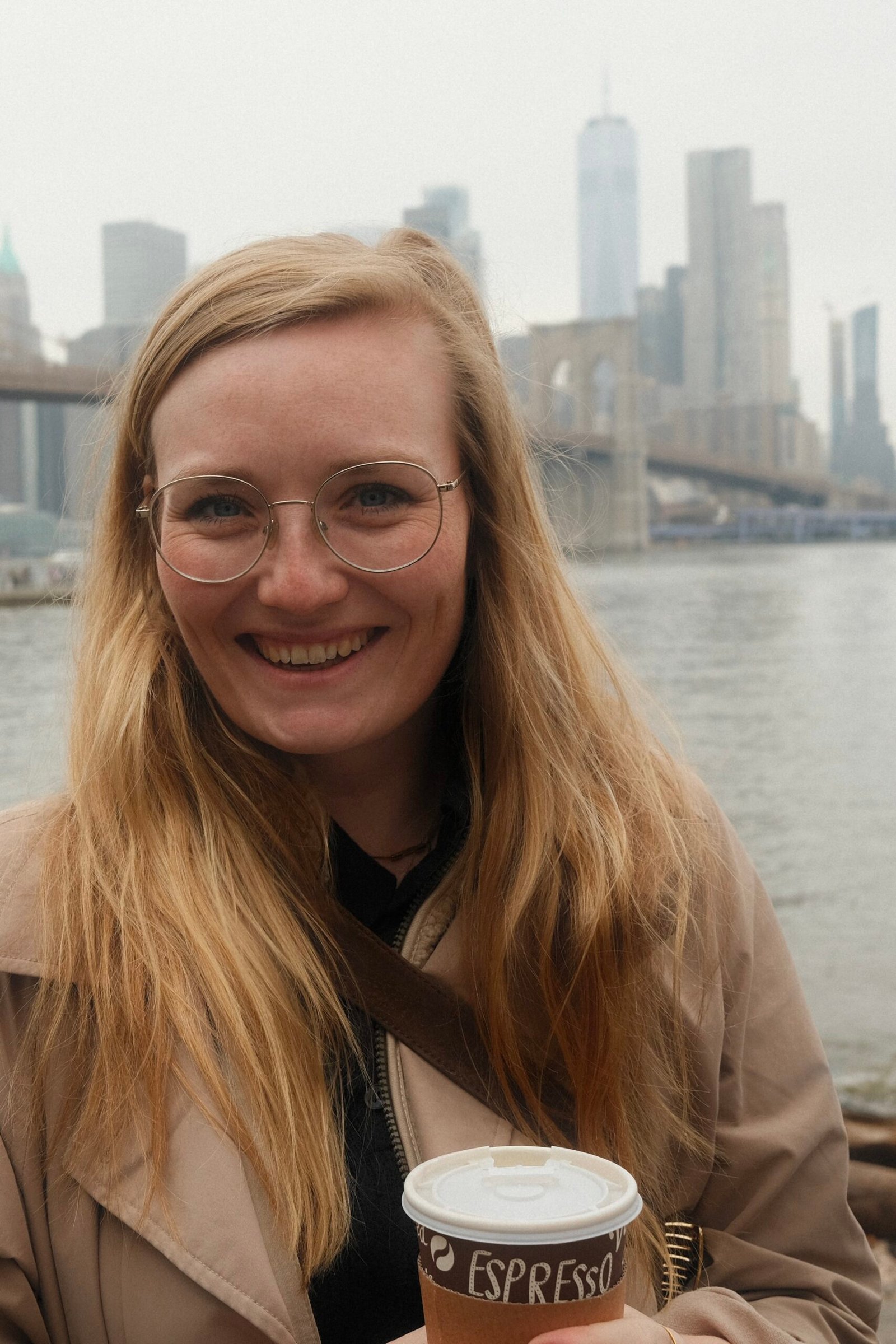
Anna-Lou Beckmann, ARD/NDR, Hamburg
After two weeks with RIAS across four cities - sometimes with up to six appointments and 20,000 steps a day - I’m back in Germany with an endless stream of impressions and the feeling that I’ve been on the road for much longer. The program was intense, and at times overwhelming. We visited newsrooms and think tanks, spoke with politicians, lawyers, and analysts, and met with eyewitnesses and activists - RIAS opened doors for us that would otherwise likely have remained closed. It was a deep dive into a society currently deeply divided and into a media system under intense pressure. At the same time, we heard many personal stories and experienced an America beyond the headlines that reach us every day in Germany. Whether in Charlotte or New York, in Philadelphia or Washington, D.C.: I was particularly impressed by the openness which we received. The wide range of perspectives and viewpoints on the country’s current allowed us to develop a more nuanced understanding. The program once again highlighted for me the value of independent, strong and reliable journalism - especially at this moment - and underscored the importance of exchange. The RIAS program not only encourages curiosity but rewards it. I’ve taken away an incredible number of impressions, questions, and food for thought from this time - probably too many to fully process right now, but they will definitely shape my future work. These experiences are simply priceless. I am grateful for this opportunity, and it was a great pleasure to share it with eleven outstanding journalists from Germany.
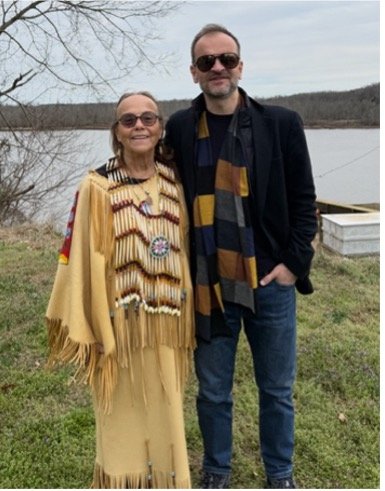
Boris Georgievski, Deutsche Welle, Bonn
It is rare to walk more than 162,000 steps on a single trip — precisely 162,733, my phone says — and feel that each one had purpose. Our week in Washington, D.C., flew by, perfectly in tune with the political turbulence shaping the U.S. capital for the past 14 months. We saw the White House only from afar, but felt its impact up close through meetings with think tanks, media outlets, a senator, a lawyer, and a political activist. My visit to North Carolina and radio station WUNC FM was a highlight — I learned a great deal about their work and even made it through a tornado warning. 😊 Three people I met in the U.S. left a lasting impression: Lois Custalow Carter (Morning Glory), Gordon Huie, and Gwen Ragsdale. I’ve met many people in my career, but never three in such a short span who so clearly embody the myth of Sisyphus. Lois, together with the Mattaponi Tribe, has spent decades seeking national recognition while running a small museum on what remains of their tribal land in Virginia. Pocahontas came from this tribe — yet what defines their story is not ancestry, but dignity after centuries of destruction and humiliation. Gordon and Gwen carry their own Sisyphus stones. Gordon, gravely ill from helping in the 9/11 rescue efforts, can barely climb two steps, yet he greets visitors at the Memorial with warmth, determined to keep telling the story that reshaped the world — and took both his sister and his health. Gwen, through her improvised “Lest We Forget Slavery” museum in a Germantown basement, recounts the history of slavery with a force that written accounts rarely convey. “Feel the weight of this shackle,” she said. Her mission in a country where African Americans theoretically have all rights is simple: to ensure the past is neither forgotten nor repeated — reminding us of Trayvon Martin, George Floyd, and many others. I cannot end without mentioning the wonderful group of journalists with whom I shared this journey. We arrived as strangers and left as friends. And of course, Pam and Chris — thank you for guiding us with such care and patience.
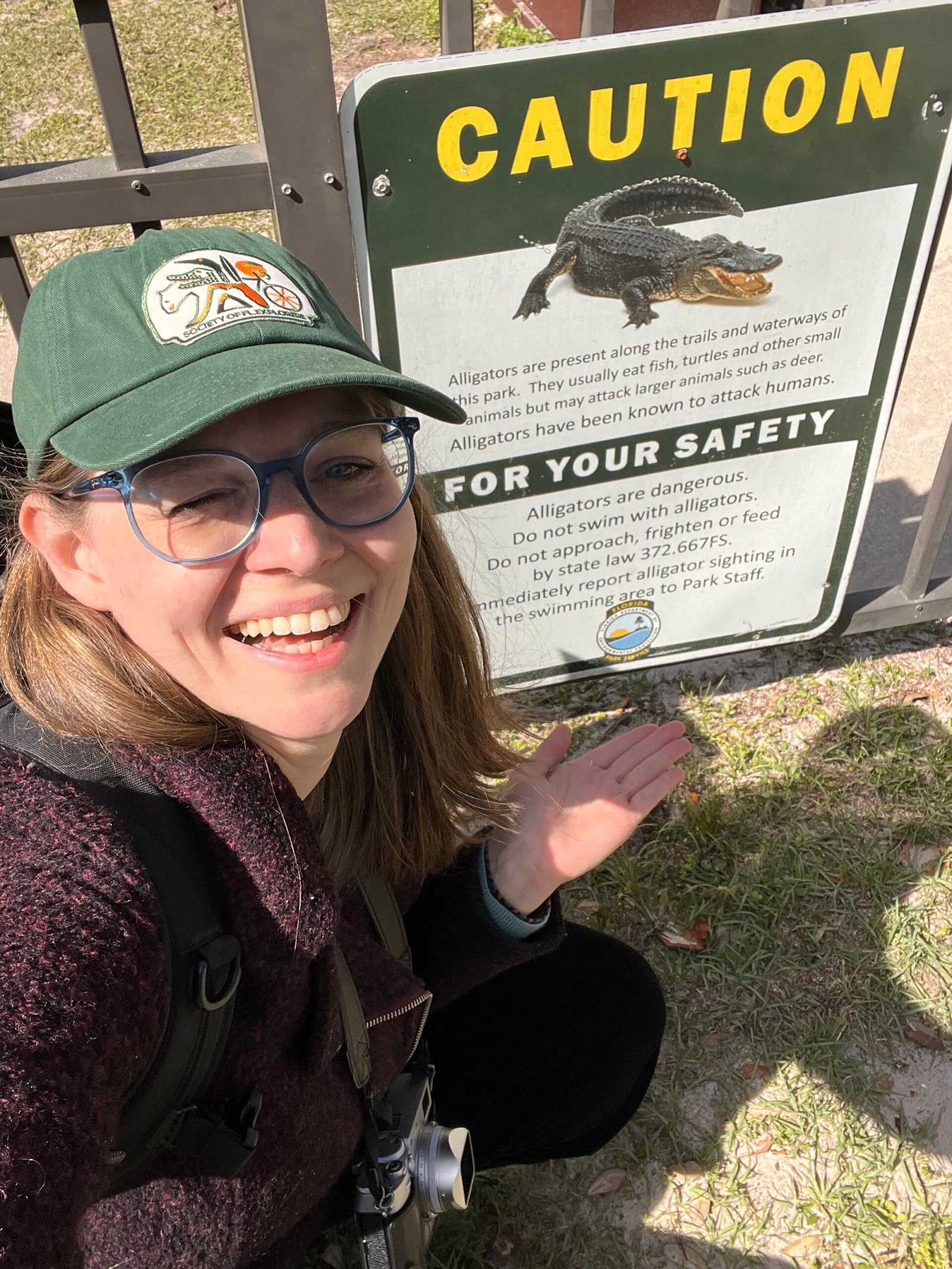
Mia von Hirsch, HR/WDR, Frankfurt am Main
The whole trip was a blast. Two weeks packed to the brim with experiences, learning and lots of fun – our RIAS trip gave us great insight into the US’ current political climate. Moreover, we gained a deeper understanding of Americans’ everyday lives and concerns about pressing issues such as affordability. Our group of 12 journalists got the opportunity to ask anything and everything at our appointments at think tanks, news organizations and NGOs. We were eagerly discussing topics ranging from Trump’s claim on Greenland and the trajectory of journalism and freedom of the press to the wars in Iran and Ukraine, as well as the upcoming U.S. midterm elections. One of the most memorable moments was our visit to the Mattaponi Indian Reservation, where we met Lois Morning Glory Custalow Carter and learned more about Native American life and its challenges. In New York, we met up with 9/11 triple survivor Gordon Huie, who gave us an impressive tour of the memorial site and shared his experiences with us. During my station days at WFSU, Tristan Wood, Rob Diaz de Villegas and Lynn Hatter gave me a warm welcome to Tallahassee. I learned about reporting on climate issues in a red state, historically Black colleges, and Florida’s political landscape—and even saw manatees and alligators. I returned home with many new insights, contacts and ideas for future stories, and I look forward to continuing the transatlantic dialogue. Thank you so much to Pam Ortega, Christoph Jumpelt, Christina Reif and everyone at RIAS who made this possible – I encourage every journalist to apply for this truly unique and eye-opening experience.
Felix Schlagwein, MDR, Leipzig
Early in the morning, my host, Faith Jessie, picks me up at the airport in Atlanta. A short while later, we’re sitting in a service at Ebenezer Baptist Church—the very church where Martin Luther King Jr. preached as a young man. A full orchestra and a big band accompany a massive gospel choir, and the pastor—who serves as a U.S. senator in Washington, D.C. —delivers the sermon. The room is filled with music, fellowship, and prayer. The service in Atlanta is the first item on the agenda for my stay in Atlanta. Afterward, I was able to go behind the scenes at CNN and 11Alive and learn a great deal about how colleagues in the U.S. work—and under ever-increasing pressure. During the trip, we spoke with journalists, media lawyers, and think tanks about Trump’s attacks on press freedom. Another topic that shaped the discussions on this trip: the U.S.-Israeli attack on Iran and its repercussions in the U.S., especially with regard to the upcoming midterm elections in November. Analysts, scholars, and journalists provided us with incredibly valuable assessments and insights into the state of the United States. We heard from staunch Trump supporters about how they view the U.S. and the world. And from Democratic supporters about the strategies they are developing against Trump. Every day brought one highlight after another, both in the regular program with the group and during the Station Days. These are experiences that I—and the other members of the RIAS group, who grew very close during this time—will never forget. It was an intense and exciting two weeks, during which we were able to learn so much about the U.S. in such a short time—something that is probably only possible through this program. A big thank you therefore goes to the RIAS Commission, especially Chris and Pam, who made this trip so special. See you again!
Anna Wulffert, MDR, Leipzig
A morning in a hotel room in Charlotte, North Carolina. ABC News reports that U.S. President Trump is suggesting to “take” Cuba. After that, I drive to WSOC-TV, the local television station where I’m spending my Station Days. Are they in turmoil here? How are they handling the news? The answer is: not at all. Journalists in the United States are confronted with a president whose statements they cannot trust and whose news value they must therefore carefully assess. “Everything he says is either factually incorrect or a straight lie,” as one reporter summed up the situation during a meeting in Washington, D.C. As a German journalist, I sometimes can hardly believe it: we are in one of the longest-standing democracies in the world—and yet we occasionally find ourselves discussing what you need to wear so that Donald Trump will answer your question in the press briefing room. At the same time, life in the United States goes on in a surprisingly normal way. And honestly, as a visitor, I find myself getting swept up in it. I sit in the eighth row at an NBA game in Charlotte (thanks, Channel 9!), attend the First Amendment Award at the historic Watergate Hotel in Washington, take the Amtrak for a day trip to Philadelphia, and get to see everyday life on an Indian reservation in eastern Virginia. On top of that, there are countless fascinating and sometimes emotional meetings – such as with Gordon Huie, who lost his sister in the terrorist attacks of September 11, and whose tour of Ground Zero will always stay with me. All in all, the two weeks were incredibly intense, insightful, and engaging. A thousand thanks to Chris and Pam for the fantastic program and their warm support – and special thanks as well to the wonderful group of smart and humorous journalists I had the chance to travel with.
Julian Gräfe, SWR/ARD, Stuttgart
I traveled to the United States with many questions. During the program, I had the opportunity to engage deeply with topics such as journalistic independence in the American media landscape, production conditions in the U.S., the power of think tanks, and increasingly polarized spectrums of opinion, among many others. I found the exploration of “freedom of speech” particularly fascinating—especially the question of why American politicians portray European freedom of expression as being under threat. In the U.S., speech is often given wide latitude: it can be opinionated, provocative, even offensive or at times defamatory—widely understood as an expression of personal freedom. At the same time, I was able to continue working on my own research during the trip. I met with individuals and companies affected by U.S. tariffs, and interviews based on these conversations were published in the ARD business magazine plusminus. What I found especially valuable was the exchange with my American and German colleagues. Our German RIAS group quickly felt like a close-knit community—almost like a family that has known each other for years and will continue to stay connected in the future. I return with many answers and new insights—but also with new questions that will continue to shape my work as a journalist.
Karen Münster, ARD/NDR, Hamburg
Two weeks in the U.S. with the RIAS program—that means a head full of impressions, a heart full of stories, and a network that spans the Atlantic. In the political powerhouse of Washington, D.C., we dove straight into the engine room of U.S. politics. Behind the doors of influential think tanks like the Heritage Foundation and the Center for American Progress, we had intense debates about how the political camps are gearing up for the midterms and 2028. Meanwhile, journalists from various media outlets gave us an unfiltered look at how they are navigating the ultimate stress test of Trump’s second term. Then came my Station Days in Chicago—a high-speed, unfiltered crash course in the reality of American local journalism. Plunged straight into the frenzy of the Illinois Primary Elections, I got a front-row seat to the political machinery and suddenly found myself thrust in front of a microphone reporting "live on air." It was a masterclass in contrasts: witnessing firsthand just how vital these stations are as lifelines for their communities, while navigating the surreal whiplash of American TV, where gritty breaking news cuts seamlessly to a cheerful burger commercial. The most emotional moment of the trip awaited us in New York. Gordon Huie, a 9/11 survivor and first responder, shared his story with us. I return home with invaluable insights into the U.S. media landscape and new friends. A massive thank you to the RIAS Berlin Commission and our wonderful group—we learned a lot, laughed a lot, and this experience will shape my work for a long time to come.
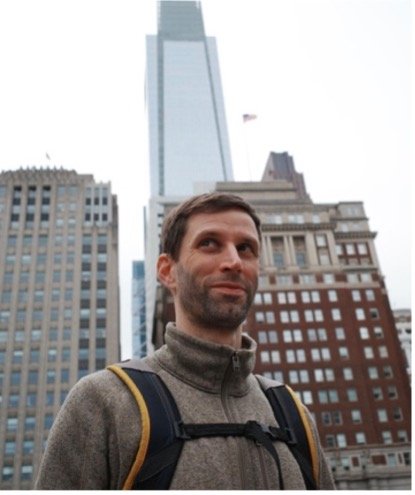
Christian Röther, Deutschlandfunk, Cologne
In Washington, “he” has had meter-high portraits of himself installed on the facades of several government buildings. Across from our hotel in Chicago, his name looms in oversized letters on a skyscraper. He is also omnipresent in the U.S. media and in our conversations on the ground. Yet in these conversations, many Americans avoid using his name, referring to him only as “him.” Perhaps they want to distance themselves from him this way, to avoid paying him any kind of tribute. Or perhaps they simply want to prevent others from noticing the conversation—others who might hold a different political opinion. We are visiting a deeply polarized country, yet at first this polarization is surprisingly little noticeable in everyday life—many people presumably have other concerns. But in the details, the tense political situation becomes apparent—such as in the avoidance of his name. Or in the posters against the ICE agency, neatly pasted onto the bases of traffic lights in Washington. Or in the National Guard, which seems to be idling around at metro stations. All of this forms the backdrop to our conversations with figures from politics, think tanks, academia, civil society, and the media. Two weeks in Washington, Virginia, Chicago, New York, and Philadelphia—with a packed schedule and full of impressions, insights, and encounters that will complement, reshape, and from now on leave a lasting mark on my image of the United States and its people. Some conversations stay with me because of their honesty: because the mistakes of one’s own political side are clearly acknowledged, or because the deep concern about the country’s future is manifest. Other interlocutors deepen our understanding of U.S. history and at the same time bring that history to life through personal experience and commitment: when it comes to slavery and racism, the situation of Indigenous populations and their reservations, or the attacks of September 11 and their consequences. There is also a sizable increase in political pressure on both foreign and U.S. journalists in the country. Many seem to have become more cautious, scrutinizing even more carefully what they publish—so as not to be sued by the government or publicly shamed by individual government officials. Nevertheless—and this, too, is clear in every meeting—many journalists in the United States are not willing to bow to “him” and his attacks on liberalism and truth. Last but not least, our colleagues welcomed us openly and warmly, and the RIAS team organized the trip outstandingly. Both contributed to my returning from my journalistic trip to the U.S. inspired and with renewed motivation.
 English
  German