
Gargiulo named RIAS Berlin Commission Alumnus of Year
November 22, 2021
Gargiulo named RIAS Berlin Commission Alumnus of Year
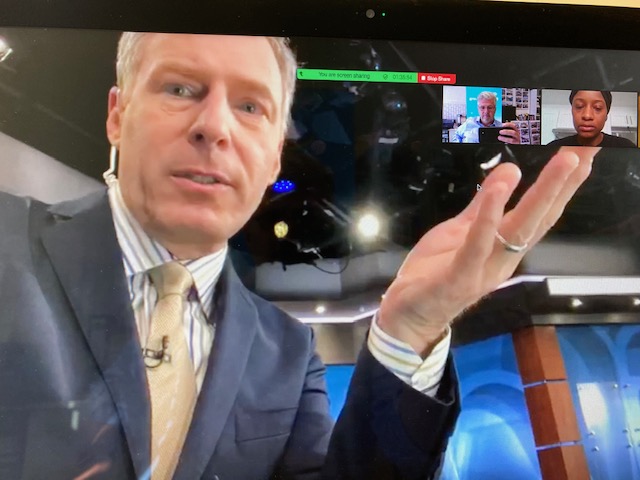
The RIAS Berlin Commission has awarded Michael Gargiulo, a morning anchor at WNBC TV in New York, with its new Alumnus of the Year title for his indefatigable efforts to bring together American and German journalists. Gargiulo, who first took part in a RIAS program to Germany in 2002, has led the New York City alumni chapter for the last four years and helped organize a group of 17 American RIAS alumni for a week-long program to Berlin in September. The veteran journalist has also been a featured guest speaker at WNBC in New York for visiting groups of German journalists for many years, has recruited American journalists for RIAS programs, helped increase the numbers of entries from the United States for the RIAS Media Prize and has also served on the RIAS jury. But beyond all that Gargiulo has helped connect German journalists with contacts and tips for their stories in the United States and also helped connect American journalists with German contacts.
We had the chance to talk to Gargiulo about being named as the first RIAS Alumnus of the Year:
Gargiulo: I’m both honored and humbled, because so many German and American journalists do so much for RIAS. They invite us into their newsrooms and studios, or set up meetings on a porch in Washington DC in the midst of COVID lockdowns. They host German journalists and allow them to experience what it’s like to be a “one man band” covering an event in West Texas. They even bring us to the roof of RBB’s building in Berlin to discuss how German broadcasters worked through the pandemic. My own association with RIAS has meant so much to me in terms of new German and American friends,
professional growth and the chance to learn the German language and understand more about the country I’ve been fascinated with since childhood.
Why are you so interested in involving the Alumni Network?
Gargiulo:The Alumni Network is the ‘secret sauce’ of RIAS. It’s the biggest benefit of becoming a Fellow. This week, a Fellow e mailed me about job openings at their network. This summer, I gave two fellows advice on selecting an agent and avoiding bad contract deals. American Fellows helped a German journalist line up interviews on the German astronaut headed up to the International Space Station. I also love getting together with my German Fellows, who are now great friends, whether it’s in New York or Berlin. It’s a professional connection that works in so many ways.
Isn’t it all time consuming? You’ve got a full-time job as well?
Gargiulo: Well, when you arrive at NBC Studios, as I do, every morning at 3 AM, it’s actually a perfect time to connect with my German colleagues who are 6 hours ahead! As journalists, we learn to make time count and to get a lot done on deadline so I set aside some time for my RIAS work and it fits fine.”
Wasn’t it difficult to organize 17 American Alumni for the Berlin Program?
Gargiulo: It was really a challenge. The RIAS alumni and fellows programs had been canceled for over a year at that point. We were in uncharted waters. Most of the journalists I contacted weren’t even back in their newsrooms, and we were asking them to fly overseas. We got a great response and people
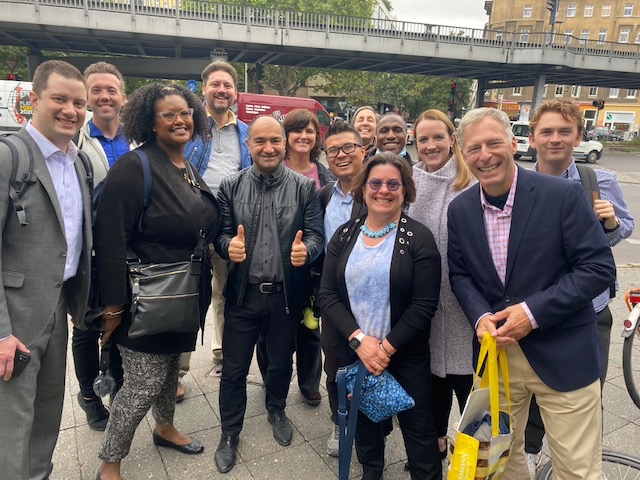
really wanted to go. Then Germany put the US back on the High Risk list. We were unsure if we would even be allowed into the country, or if we would be able to get into newsrooms and studios but the Fellows still wanted to go. We had about 23 folks committed, but just before we left, 5 dropped out. Two couldn’t get passports they had applied for months before. Others cited COVID concerns or were dealing with family health issues. We wondered “Should we just cancel?” We decided though that we should go ahead if the Fellows were still willing … they were and it was an amazing experience.
Were you happy with the outcome of the Berlin Alumni Program ?
Gargiulo: It succeeded beyond my best hopes. I think we understood if this didn’t work it was likely RIAS would cancel other programs for this year. So we were determined to show RIAS was back. Everyone was enthusiastic and cooperative .. We followed the COVID rules and embraced the changes, like only 4 to an elevator. Most of all, we were so happy to rediscover what we loved about RIAS, meeting fascinating people , having great discussions, and feeling like Berlin is a “second city “ for many of us .
What was the difference between your first RIAS trip in 2002 and the Alumni program?
Gargiulo: My first RIAS trip was a great experience, but in some ways it was more passive … we had a group of around 20 and we traveled in a chartered bus much of the time. My college German was limited and I didn’t know Berlin at all. In 2021, our group used buses and subways and one memorable Uber ride to get around. That forces you to learn the city. I used my B1/2-level German every day and all of us seemed to know of a favorite place in Berlin to eat, or hang out, or get a good deal on a remote phone charger. It was almost the difference between a high school trip and a university semester abroad
.
How can the RIAS Alumni network be further strengthened?
Gargiulo: One word: “engagement”. We can’t only reach out to Alumni when we need something from them: like hosting a German or American journalist in their newsroom. RIAS has to be something they can enjoy: a special event they are invited to in their city, like a private tour of the 9/11 museum or lunch at the German Consulate. Most of all, I think there should be more Alumni programs like this year’s trips to Berlin, Washington and New York. They don’t have to be long , a week at most , but it’s what RIAS members love most about the organization and it will keep people involved.
Do you enjoy seeing your NY chapter grow or is it frustrating so few take part in your get-togethers?
Gargiulo: The answer is “both”. Our NY chapter has an E mail list of 75 and these are Alumni who asked to be on the list. The challenges for us as a chapter are enormous. The New York Chapter is a media market of almost 20 million people in three states. While many news organizations are headquartered in midtown Manhattan, it’s not always convenient for people who live in Brooklyn or New Jersey to go there for a RIAS NY get together. Everyone works different schedules. What we try to do is to keep everyone engaged through e mails… and offer up events, as we did recently at 1014.NYC, a building co-operated by the German Government as an art and cultural space. If we can get groups of 10-12 people out at a time, I think that’s pretty good. The goal is to keep coming up with fun and educational events to keep our chapter members interested in RIAS.
Does the RIAS Alumni Network benefit you at all?
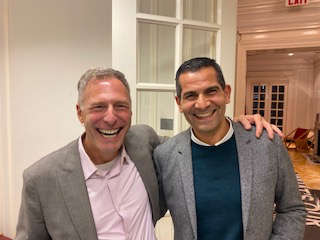
Gargiulo: When I first started my involvement with RIAS, I noticed that the German journalists would hang out together at an event and the Americans would gather in their own group… and after my first RIAS trip, my contacts were only with the American journalists I had traveled with. That’s totally changed. During and after 2021’s exchange programs, Americans and Germans went out to dinner together on their own… arranged outings together and sent group messages back and forth across the Atlantic on Slack. Personally, German journalists went from being someone we met during a tour at ARD or RBB… to friends. Martin Richter, Petra Gute, Mitri Sirin, Vladimir Balzer, Bartosz Dudek… I love the fact that they are my community in Germany … and that professionally I can call on them to help me go the right way on a story…but most of all, I treasure our friendships and look forward to when we can get together in Berlin or New York .
You not only help recruit Americans for programs and media, but you also help Germans in the USA with media and military contacts. Why do you do all that?
Gargiulo: I’ve worked at 7 television stations in 5 states and the District of Columbia in my career. Everytime you are in a new place, it can be tough to figure out who to call to get an interview, to get information or to set up a story…and the procedures for that in Germany may be very different than in Minnesota. That’s why I try to help my German colleagues navigate our American journalistic practices. I remember my first days at WLKY in Louisville or WTTG in Washington DC and being totally lost trying to get information on a story. I like to do what I can to ease that transition for our RIAS members.
What is your favorite part of RIAS?
Gargiulo: RIAS has quite literally opened a new world for me. For many local TV reporters and anchors, our professional lives tend to be limited to local politics, crime and the stories that concern the city we’re working in at the time. Thanks to RIAS, I’ve been involved in discussions over what the new “Ampel coalition” will look like in Berlin. I’ve walked through Kreuzberg to see how it’s changing and how it came to symbolize a more diverse Germany. I’ve seen how Germans deal with redistricting political boundaries without resorting to the American practice of Gerrymandering. RIAS has made me a better journalist back here at home but also provided me with experiences I would never be able to have as a local TV reporter, covering the latest at City Hall.
What is your least favorite part of RIAS?
Gargiulo: It is always a challenge to convince our own news organizations in the United States how valuable RIAS is. Unlike our German colleagues, we have to fight to take even a week off from work to participate in a program ..and getting two weeks, as I did back in 2002, often means giving up vacation time for the rest of the year. Employers are often skeptical despite our arguments that it is a cost free way to give their employees an experience that will make them better journalists and more motivated in their careers. I can’t tell you how often I am trying to recruit a reporter in Boise or Chicago and I hear back…. I’d love to, but I can’t get the time off.
How would you make RIAS even better?
Gargiulo:
I
think we have to work on two tracks. One is to increase our efforts to recruit American journalists and to try and convince their employers that RIAS works for them too. I think we have to hold more Alumni events and invite more prospective participants to those events. Recruitment is going to be a one to one effort. We have to keep appealing to our contacts who employ journalists to make the RIAS program a reward for promising journalists. I always say if a TV station can give an employee something other than money to motivate them, it’s a good deal! The second track is to expand the Alumni programs the costs of which are partially paid by the Alumni themselves. These trips really motivate the Alumni and encourage them to do more for RIAS. I think we should try and do an alumni trip to the US and to Germany every year. It only has to be a week…and it can be 2 meetings a day, not a full schedule, but it will give something for our Alumni to really look forward to.


