
RIAS Berlin Media Prize Jury chair Gargiulo talks about competition as deadline nears
January 23, 2023
RIAS Berlin Media Prize Jury chair Gargiulo talks about competition as deadline nears
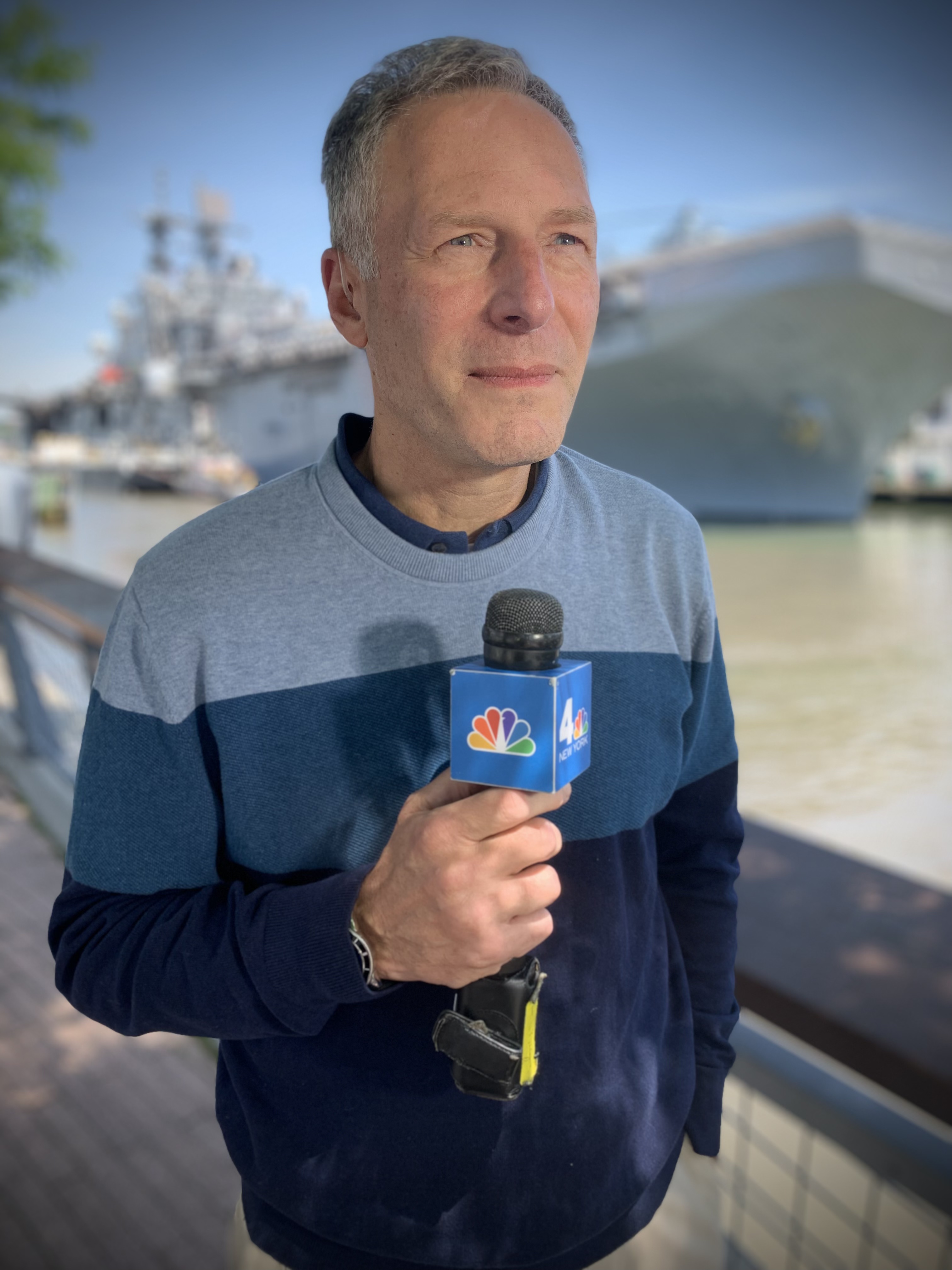
Michael Gargiulo, an anchor at WNBC TV in New York City, has been the co-chair of the RIAS Media Prize Jury since 2020 and a member of the independent German-American jury since 2018. There are three Americans journalists and three German journalists on the independent jury that has been awarding the prize annually since 1994. The other Americans on the jury are: Melissa Eddy, a correspondent for the The New York Times in Berlin; and Yami Virgin, a reporter at KAAB Fox in San Antonio, Texas. The German co-chair is Anja Heyde (a reporter/anchor at ZDF/MDR TV, Berlin/Magdeburg) and other members are: Helge Fuhst (editor-in-chief of Tagesthemen at ARD, Hamburg) and Christian Wilp (reporter at NTV, Berlin)
Question:
Can you tell us, based on your many years’ experience on the RIAS jury, what kind of story tends to grab the attention of the jury members? What kind of stories do jury members like to watch or listen to?
Michael Gargiulo: The stories that grab the judges’s attention are the ones that are the most personal. I remember being so moved by Jan Philipp Burgard’s story of a young German banker who died on 9/11. His father still drove his son’s car and that video of him behind the wheel brought me to tears because it was his way of connecting with the child he will never see again. We also are drawn to “I didn’t know that ” stories. One of the best was when Bill Whitaker of “60 Minutes” visited a German prison housing its worst offenders and how their approach inspired change in Connecticut prisons. It went against everything we thought we knew about prison reform.Question
: Isn’t it difficult, if not almost impossible, to judge American broadcast journalism stories and compare them in the same competition with German broadcast stories submitted? The media markets are so completely different with most of the submissions from the United States coming from commercial networks and are usually far shorter at just a few minutes to at most 12 or 15 minutes compared to many of the German submissions, which are often from public broadcasting networks and can run for 30 to 45 minutes or even longer?
Michael Gargiulo: Yes, absolutely! I am a local broadcaster and have worked at six localstations from Huntington West Virginia (WSAZ) to New York City (WNBC). No matter the market size, American journalists rarely have the time or resources our German colleagues have. I always try to look at what it took get get a story on the air. A good example is a Media Prize winningentry by two Texas anchors… they shot a half hour special report while on their RIAS Program in Germany. No producers, no photogs, just their own effort on their own time . I appreciate that. At the same time, I have huge respect for the commitment our German colleagues make to try and understand what’s happening in America. Often, what’s most impressive is the depth of their reporting, and not just the length or the size of the crew they had to work with. In the end, its the quality of the reporting that matters and that’s ultimately what makes a winning entry .Question
: How do you and the jury bridge that transatlantic divide and yet still find outstanding submissions from both the United States and Germany each year?
Michael Gargiulo: It is a challenge because many German journalists came to the US in 2022 to do stories on the mid term elections, but we also want to encourage submissions from the American side of the transatlantic relationship. For that reason, I always ask my American colleagues to look at stories they did that may involve Germany …it could be about a German company operating in their area.. it could be a National Guard Unit on their way to train Ukrainian soldiers at the complex in Grafenwoehr. Many times, there are stories done about the Cold War, education …even wind power in Germany. US journalists are used to submitting for Emmys and APAwards and Murrows… we have to get the word out to include the RIAS Media Prize in their minds as well. Also, this is one of the hardest parts of the RIAS Media Prize jury but also one of the most satisfying things at the end of the day – we are able to find a half dozen outstanding stories that do bridge that transatlantic divide when it comes to broadcasting. We’ve discussed having separate. categories for American and German entries… but I honestly feel that is contrary to the spirit of RIAS because RIAS Berlin Commission is trying to build bridges and find common ground between the USA and Germany so that spirit has to be on display with the winners of the RIAS Berlin Commission. The winners are simply outstanding pieces of journalism.Question
: Can you talk a little bit about that buzz in the jury room (or lately in the jury zoom talks) when the jury starts talking about a radio or tv or digital story that really seems to excite everyone or almost everyone in the room? Isn’t that a powerful feeling when pretty much everyone in the jury thinks ‘Oh my god, this story is really special’?”
Michael Gargiulo: It always happens! Especially when we first get together and just start naming some of the submissions we like… there are always one or two stories that seem to some up spontaneously. I always think that’s a good sign that we are going to agree right away on some of the categories.Question
: What happens, in general, when the jury seems divided or even hopelessly divided and unable to pick a winner in one category? What do you, as jury co-chair, do to help break the deadlock?
Michael Gargiulo: It’s like building a coalition in the Bundestag….ok , maybe not that difficult. I find a lot of our differences are cultural. I remember one year, there were some entries that involved a lot of live reporting… the Americans were really impressed because live reporting is really valued at US TV stations. The Germans were more like ‘Big deal.. they were just observing what was going on.” When we have a deadlock on a particular category, as a co-chair (along with my colleague Anja Heyde), I always ask everyone to take a step back and discuss with their fellow jury members what they liked and did not like about a story. Then we try again to reach a compromise.Question
: You’ve been on juries that have picked some really powerful TV film stories as the RIAS grand prize winners in recent years – such as the CBS News “60 Minutes” story you mentioned earlier from Bill Whitaker on how Connecticut has successfully adopted some of the rehabilitate-the-prisoner policies used in Germany instead of the lock-em-up-for-life policies in the USA, an ARD TV story from Ingo Zamperoni on how one journalists’ family was so badly divided politically over President Donald Trump and that WeltTV story from Jan Philipp Burgard on how an elderly German couple successfully fought to have a memorial in Germany for the dozens of Germans who died in the 9/11 attacks in the USA. What do you think of those grand prize winners and do you have any special favorites?
Michael Gargiulo: All those stories are among the very best winners we have chosen. JanPhilipp’s 9/11 story had special meaning for me as a New Yorker, because 25 graduates and family members from my high school died on September 11th. I could really relate to Ingo’s story on his American family and their political divisions because it’s something so many American families wrestle with. I love history and so many of the winning entries have been about the legacy of the Cold War or about the era of a divided Berlin.. it’s fascinating to watch those stories come aliveagain.Question:
When will the 2023 jury meet and pick its winners?
Michael Gargiulo: Our jury is ready to roll! We will start reviewing the entries right after thesubmission deadline on January 31st… we are hoping to get together (virtually) at the end of February for our big meeting to talk about the finalists in each category and decide on the winners.Question
: Anything you’d like to add?
Michael Gargiulo:Yes.. two things . I love the fact that the Media Prize is for journalists and it’s judged by a panel of working journalists. I think we appreciate what went into these stories and what truly makes a winning entry. Secondly, I would urge all my colleagues to go back through the work they did in 2022..maybe you didn’t travel to the US or to Germany, but your stories involved the transatlantic relationship in some way ..if so please enter for this year’s Media Prizes.


